
Pelvic floor recovery rarely looks the way people expect. You might be weeks or months after birth, back at the gym, walking to work, or simply trying to get through a day without heaviness, leaking or discomfort - and still feel that something is not quite right. A good guide to pelvic floor recovery should make sense of that gap between what you were told to expect and what your body is actually doing.
The pelvic floor is a group of muscles and connective tissues that sits at the base of the pelvis. It helps support the bladder, bowel and uterus, and it plays a role in continence, core control, breathing and sexual function. When these tissues are under strain, stretched, overactive or not coordinating well, the effects can show up in ways that are easy to dismiss at first. A bit of leaking when you cough. A dragging feeling by the end of the day. Pain with sex. Difficulty fully emptying your bladder. A sense that your core strength has gone, even when you are trying hard to rebuild it.
Recovery is possible, but it is not just about doing a few squeezes whenever you remember. The best results usually come from understanding what your pelvic floor needs, what might be slowing progress down, and how to build strength and control without creating more tension.
What pelvic floor recovery actually involves
Pelvic floor recovery is not simply about making the muscles stronger. For some people, weakness is part of the picture. For others, the muscles are already gripping too much and need to learn how to relax and lengthen before strengthening work can help. Quite often, it is a combination of reduced strength, poor timing, altered breathing mechanics and a body that has adapted around pain, pregnancy, surgery or persistent pressure.
That is why generic advice can fall short. Two people can both have leaking, but for one person the main issue may be deconditioning after birth, while for another it may be tension, constipation, heavy lifting technique or a return to running that happened too quickly. The symptom may sound similar, but the plan should not be identical.
A practical guide to pelvic floor recovery should also acknowledge that healing is influenced by sleep, stress, scar tissue, hormone changes, bowel habits and everyday load. If you are repeatedly straining on the loo, bracing through every exercise class, or holding tension in your jaw, ribs and abdomen all day, your pelvic floor does not work in isolation.
Common signs your pelvic floor may need support
Some symptoms are widely recognised, and some are not. Leaking with coughing, sneezing, laughing or exercise is one of the most common reasons people seek help. So is a sensation of heaviness or pressure in the vagina, particularly later in the day or after standing for long periods.
Other signs can be less obvious. You may feel lower back or pelvic discomfort that lingers despite stretching. You may notice tampons feel as though they are slipping, or that intimacy has become painful or difficult to enjoy. Some people struggle more with bowel emptying than bladder control. Others feel disconnected from their lower abdomen and pelvic region after pregnancy, abdominal surgery or a period of persistent pain.
If any of this sounds familiar, it does not mean you have done something wrong. It means your body may need more specific support than broad postnatal or fitness advice can offer.
The first step in a guide to pelvic floor recovery
The first step is not usually harder exercise. It is awareness.
Can you feel your pelvic floor contract and fully let go? Are you holding your breath when you try? Do you grip your glutes or inner thighs instead? Do your symptoms appear during impact, with lifting, after long walks, or only when you are tired? Patterns matter because they point towards what the body is struggling to manage.
Breathing is often the missing piece. The diaphragm, abdominal wall and pelvic floor work as a pressure system. When you inhale, the pelvic floor should gently respond and lengthen. When you exhale, it should recoil and support. If breathing is shallow or you habitually brace your stomach, that pressure system becomes less efficient. The result can be weakness, overactivity or both.
This is why early rehab often starts with simple coordination work. That might mean learning a softer inhale, a supported exhale, and a small but well-timed pelvic floor contraction rather than repeatedly doing maximal squeezes. It can feel almost too basic, yet this stage is often what makes later strength and impact work more successful.
What helps recovery and what can slow it down
The right plan depends on symptoms, history and goals, but several themes come up again and again.
Consistency helps more than intensity. A few well-executed exercises done regularly usually beat occasional determined efforts. It also helps to match rehab to real life. If your biggest challenge is carrying a baby seat up stairs or getting through a gym session without leaking, your programme should prepare you for that specific demand.
Bowel health matters more than many people realise. Ongoing constipation and straining place repeated pressure through the pelvic floor. Hydration, fibre, foot support on the toilet and enough time to empty properly can make a meaningful difference.
Load management matters too. Recovery does not mean avoiding movement. In fact, gentle walking, mobility work and graded strength training can be very helpful. The key is choosing the right amount at the right time. Returning to high-impact exercise before your body can manage pressure well may keep symptoms going, but avoiding all activity can leave you weaker and less confident.
Stress can also influence pelvic floor recovery. When the nervous system is on high alert, muscles often hold more tension. If your symptoms flare during busy work periods, poor sleep or emotional strain, that is not imagined. It is a clue that your recovery plan may need to include down-training and not just strengthening.
Recovery timelines and realistic expectations
People understandably want a clear answer to how long pelvic floor recovery takes. The honest answer is that it depends.
Some people notice early improvements within a few weeks once they have the right exercises and stop doing the things that are aggravating symptoms. Others need longer, especially if symptoms have been present for months or years, if there is scar tissue restriction, or if the body has been compensating in several areas.
Recovery is also rarely linear. You may feel stronger, then have a flare after a poor night of sleep, a heavy week at work or a return to exercise that was a little too ambitious. That does not mean you are back to square one. It usually means the system needs adjusting, not abandoning.
A helpful way to judge progress is to look beyond symptoms alone. Are you moving with more confidence? Are you less afraid to lift, walk or exercise? Is urgency improving? Are you recovering faster after a busy day? Small changes in function often come before complete symptom resolution.
When to get specialist help
If symptoms are persistent, affecting your confidence or limiting your day, it is worth getting assessed. The earlier you understand what is driving the problem, the easier it is to build an effective plan.
Specialist support can help if you have leaking, heaviness, pelvic pain, painful sex, ongoing postnatal weakness, scar tightness, difficulty returning to exercise, or a sense that standard advice has not worked for you. Good care should be individual, respectful and clear. You should come away understanding what is happening, why it is happening, and what you can do about it.
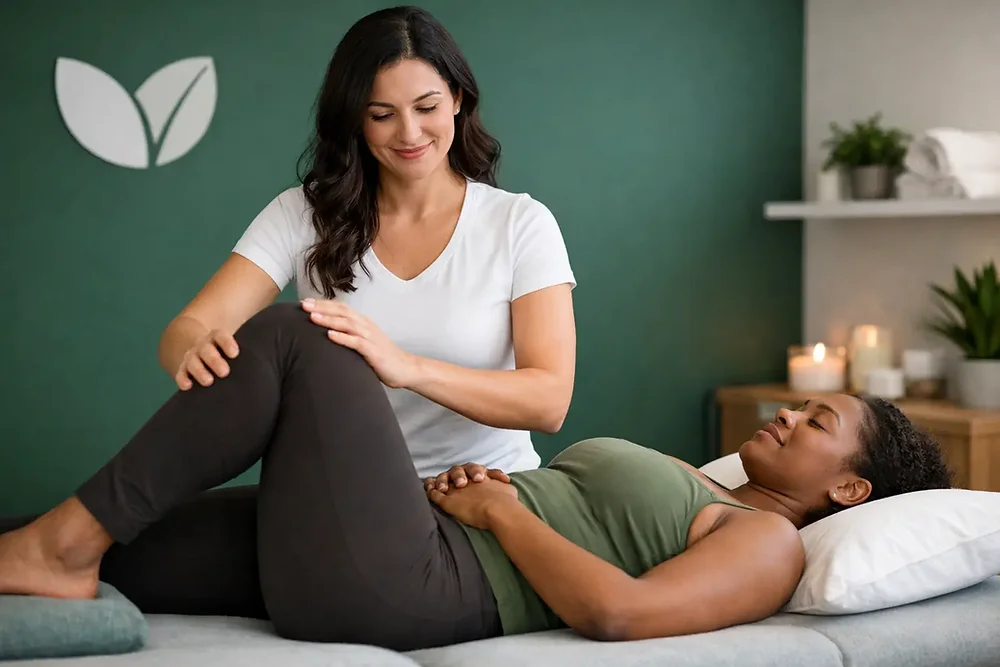
In a clinic setting, assessment often looks at more than the pelvic floor alone. Posture, breathing, abdominal wall function, hip strength, movement habits, scar mobility and training load can all influence recovery. Hands-on treatment may be useful in some cases, especially where there is tension, restriction or sensitivity, but it should sit alongside tailored rehabilitation and practical advice you can apply at home.
For many people, that combination is what finally makes things click. Not more conflicting information. Not being told to just wait it out. A plan that fits your body and your life.
Building confidence as part of pelvic floor recovery
Pelvic floor symptoms can quietly shrink your world. You might stop running, avoid jumping, plan every journey around toilets, or feel anxious about intimacy. Recovery is not only about reducing physical symptoms. It is also about restoring trust in your body.
That takes patience, and it usually takes progression. Starting where you are, not where you think you should be. Practising movements in a graded way. Learning which sensations are part of rebuilding and which suggest your body needs a different approach. This is where personalised rehabilitation can be especially valuable, because it turns vague advice into something measurable and reassuring.
At eve Clinic, that kind of one-to-one care is central to how pelvic health support is approached - with time to listen, assess properly and create a plan that helps you recover, move better and live more freely.
If your symptoms have been brushed off, or if you have been trying to manage on guesswork alone, you do not need to settle for that. Pelvic floor recovery is not about chasing perfection. It is about helping your body feel supported, capable and more like your own again.