
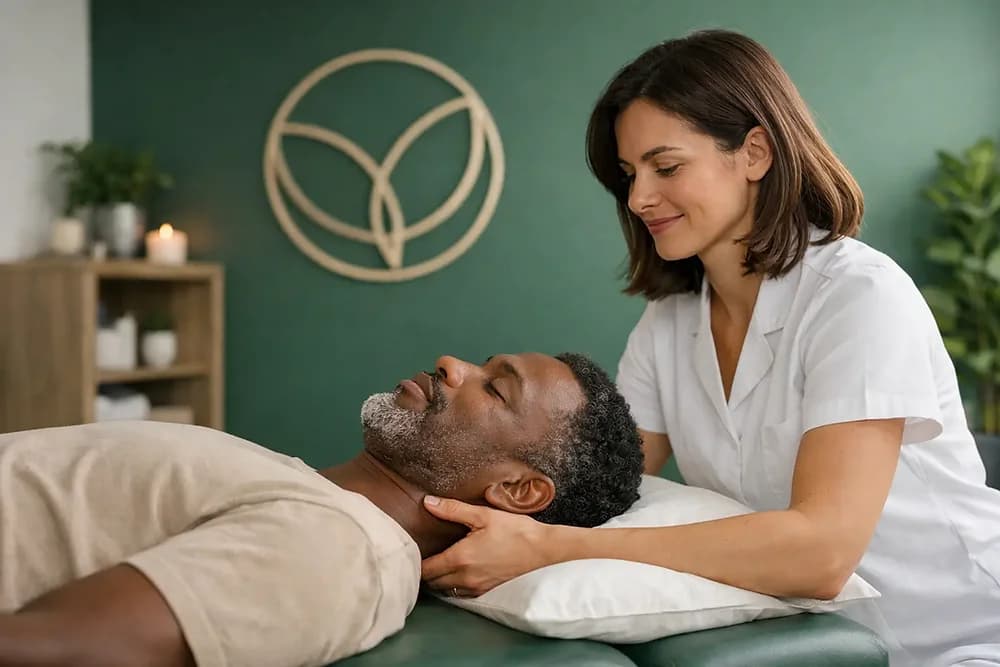
If you have ever left a short appointment thinking, "I only just started explaining," you already understand one of the main benefits of longer osteopathy sessions. Pain and restricted movement rarely sit neatly in a ten-minute story. They affect how you work, sleep, exercise, care for children, commute and cope with stress. Giving that fuller picture enough time can change the quality of care you receive.
At eve Clinic, longer one-to-one sessions are not about filling time for the sake of it. They create space to listen properly, assess thoroughly, treat hands-on and build a plan that fits real life. For many people, that leads to more clarity, more confidence and a stronger sense that their treatment is working towards something meaningful.
Why session length can make a real difference
A musculoskeletal problem is not always just a sore neck, an aching back or a painful hip. Sometimes the painful area is only part of the story. You may have changed how you move after an old injury, started avoiding certain positions, or been pushing through discomfort for months because life is busy.
In a shorter appointment, the focus often has to narrow quickly. That can be appropriate in some settings, particularly for a straightforward review when the diagnosis is already clear and progress is steady. But when symptoms are persistent, complex or affecting several parts of your life, more time can lead to better clinical decision-making.
Longer sessions allow your osteopath to look at patterns rather than isolated symptoms. That matters whether you are dealing with a sports injury, recurring headaches linked to neck tension, pregnancy-related discomfort, postnatal strain, pelvic pain, or persistent stiffness that is starting to affect your confidence in movement.
The benefits of longer osteopathy sessions during assessment
Good treatment starts with a good assessment. That sounds obvious, but it is where many patients feel the difference most strongly.
With more time, your osteopath can ask better questions and actually hear the answers. Not just where it hurts, but when it started, what aggravates it, what eases it, how it changes across the day, how it affects sleep, training, work or your cycle, and what you have already tried. These details are not small talk. They help shape treatment choices and rehabilitation advice.
This is especially valuable when symptoms are layered. A runner with hip pain may also have old ankle stiffness. A new parent with back pain may be carrying differently, feeding in awkward positions and sleeping in short bursts. A woman with pelvic discomfort may notice symptoms changing around menstruation, exercise or stress. Those patterns can be easy to miss if the appointment feels rushed.
Longer assessments also give more room for examination without making the experience feel abrupt. You are more likely to understand what your osteopath is looking at, what they find, and what that means for your recovery. For many people, that clarity reduces anxiety almost as much as the hands-on treatment itself.
More time for hands-on treatment
One of the practical benefits of longer osteopathy sessions is simple: there is enough time to treat properly.
Hands-on osteopathic care often works best when it is not squeezed between a brief history and a hurried goodbye. Longer sessions can allow your osteopath to work through more than one contributing area, adapt techniques as your body responds, and choose an approach that suits your comfort level.
That does not mean more treatment is always better. Sometimes a focused intervention is exactly right. But when someone has significant tension, multiple painful areas or a long-standing movement pattern that has built up over time, a little more time can mean a more complete treatment session.
Patients often notice this as a feeling of being less "patched up" and more genuinely helped. Instead of just calming the loudest symptom, treatment can address the surrounding stiffness, compensation and sensitivity that may be keeping the issue going.
Space to connect treatment with rehabilitation
Hands-on treatment is only part of good osteopathic care. If you want results that last, the next step matters just as much.
Longer sessions make it easier to bridge the gap between what happens on the treatment table and what happens in daily life. That may include advice on pacing, desk set-up, gym modifications, breathing strategies, mobility work, strength exercises or ways to reduce flare-ups during a busy week.
This matters because recovery is rarely about one perfect appointment. It is usually about combining skilled treatment with small, realistic changes that support the body between visits. If exercises are rushed, overcomplicated or not explained clearly, patients are less likely to do them. If advice feels relevant and manageable, they are far more likely to follow through.
For professionals with packed schedules, active patients keen to return to sport, or women balancing symptoms with work, family and everyday demands, this personalised guidance can be one of the most useful parts of the appointment.
Longer osteopathy sessions can support complex or sensitive concerns
Some issues need a little more care, not because they are unusual, but because they deserve sensitivity and context.
Women’s health is a good example. If you are dealing with period-related pain, endometriosis support needs, pregnancy discomfort, postnatal changes, pelvic health concerns or menopause-related aches and stiffness, the physical symptoms are often tied closely to daily function and emotional wellbeing. Being able to discuss those experiences without feeling rushed can make treatment feel safer and more respectful.
The same applies to persistent pain, post-operative recovery, neurological rehabilitation and longstanding injuries. In these situations, patients often need two things at once: hands-on help and a clear explanation of what recovery may realistically involve. Longer sessions can provide both.
That does not mean every condition needs extended appointments forever. Often, more time is most useful at key stages - early assessment, a symptom flare, a change in symptoms, or when introducing a new rehabilitation plan.
Better understanding often means fewer wasted visits
One concern some patients have is whether longer sessions simply mean paying for more time. A fair question.
The better way to think about it is value, not just duration. If a longer appointment leads to a clearer understanding of your problem, a more tailored treatment approach and practical self-management that actually fits your life, it may reduce the stop-start cycle that so many people fall into.
That cycle is familiar. You get temporary relief, carry on as normal, flare up again, then book another appointment because nothing has really changed. When treatment includes enough time to look at why the issue keeps returning, you are more likely to make progress that lasts.
Of course, it depends on the individual. Some people with a straightforward issue do very well with shorter follow-ups after an initial longer assessment. Others benefit from keeping a little more time in future sessions because their work, sport, hormonal changes or pain history make recovery less linear. Good care should reflect that, rather than forcing everyone into the same appointment length.
The emotional benefit of not feeling rushed
There is also a human side to this that should not be overlooked.
When people feel rushed in healthcare, they often leave out important details, agree to plans they do not fully understand, or assume they are expected to "just get on with it". That can chip away at trust. A longer osteopathy session gives room for questions, reassurance and shared decision-making.
That matters whether you are seeking help for a recent injury or something you have been living with quietly for years. Feeling heard does not replace clinical skill, but it supports it. Patients who understand their treatment are usually more confident, more engaged and better able to notice meaningful progress.
Are longer sessions always necessary?
Not always. There is no single appointment length that suits every person or every stage of care.
If you are attending for a simple review, progressing well and only need a brief check-in or treatment top-up, a shorter session may be perfectly reasonable. But if this is your first appointment, your symptoms are persistent, your pain is affecting several parts of life, or you want a plan that includes rehabilitation and practical advice, more time is often a smart investment.
The key question is not "What is the shortest appointment available?" It is "What kind of care do I need to recover, move better and live more freely?"
For many patients, that is where the benefits of longer osteopathy sessions become clear. They offer the time needed to understand the whole picture, deliver treatment with purpose and build a plan around the person, not just the painful area.
If you have been putting off care because you worry you will feel hurried, unheard or sent away with generic advice, it may be worth looking for a clinic model that gives your recovery a little more room.