
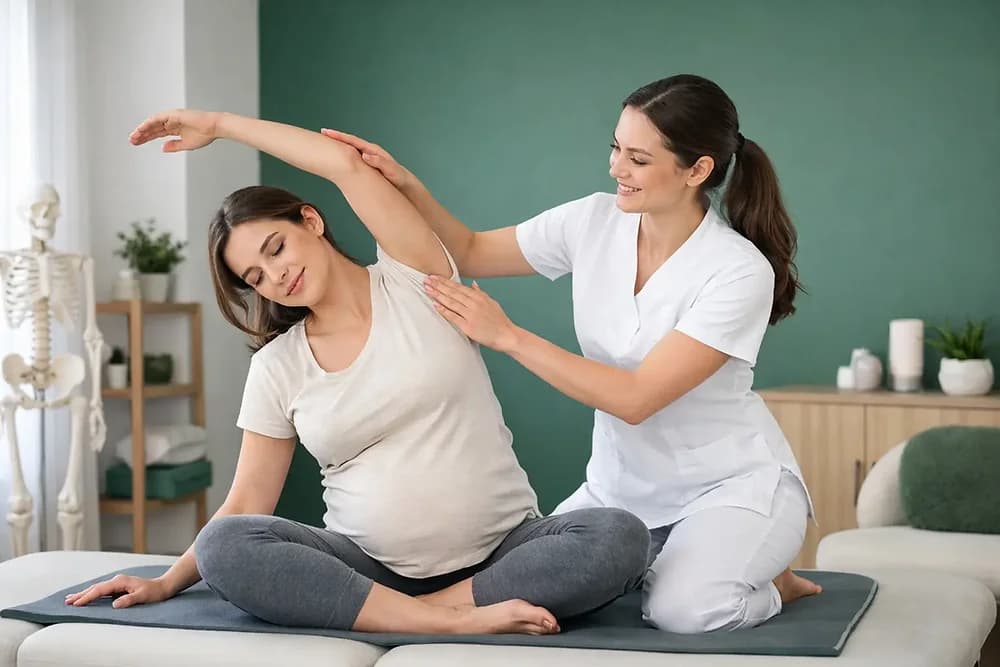
Some stiffness in pregnancy can creep up slowly. One week it is a bit of tightness getting out of bed, and the next it is your hips, lower back and shoulders all feeling less cooperative than usual. The best exercises for pregnancy stiffness are usually not intense or complicated. They are gentle, well-chosen movements that help you stay mobile, reduce tension and feel more at ease in your changing body.
Pregnancy places new demands on joints, muscles and posture. As your bump grows, your centre of gravity shifts, your ribcage may feel tighter, and areas like the lower back, glutes, calves and neck often start working harder. Hormonal changes can also affect how supported or stable you feel. That means the right kind of movement matters. Too little can leave you feeling more rigid, but too much or the wrong type can make symptoms worse.
Why pregnancy stiffness happens
Stiffness during pregnancy is not just about muscles becoming tight. Often, it is a mix of reduced mobility in some areas and overload in others. If your upper back becomes less mobile, your neck and shoulders may compensate. If your hips feel restricted, your lower back may take on more strain. Long days at a desk, commuting, poor sleep and general fatigue can all add to the picture.
This is why blanket advice rarely works. The best exercises for pregnancy stiffness are the ones that match what your body is asking for right now. A person with rib tightness and shortness of breath needs a different approach from someone whose main issue is pelvic heaviness or glute stiffness after walking.
Best exercises for pregnancy stiffness at home
A short daily routine is often more helpful than an occasional long session. Think in terms of gentle mobility, breathing and circulation rather than stretching as hard as possible.
Pelvic tilts for lower back relief
Pelvic tilts are often one of the most useful starting points. They gently mobilise the lower back and pelvis without putting much strain through the body. You can do them standing against a wall, on all fours, or seated on a chair if that feels more comfortable.
Move slowly, tipping the pelvis forwards and backwards within a comfortable range. The goal is not a big movement. It is to reduce stiffness and help you reconnect with the muscles supporting your trunk. If your back feels sore first thing in the morning or after sitting, this can be especially helpful.
Cat-cow for spinal mobility
On hands and knees, a gentle cat-cow movement can ease tension through the spine and help with that heavy, compressed feeling many people get in the mid and lower back. Let the movement stay small and easy. There is no need to push into an exaggerated arch.
If wrists are uncomfortable, place your hands on a raised surface such as a sofa or sturdy table. This small adjustment can make the exercise far more practical, particularly later in pregnancy.
Hip circles and rocking for tight hips
Stiff hips are common, especially if you are sitting a lot or sleeping less comfortably. Gentle hip circles on a birthing ball or slow rocking on all fours can reduce that locked-up feeling around the pelvis and glutes.
These movements also encourage variety. Pregnancy often narrows your range of comfortable positions, so anything that helps the hips move little and often can improve daily comfort. If you feel unstable, use a chair or wall for support.
Thoracic rotation for upper back and rib tightness
As your bump grows, your upper back can become rounder and your ribs may feel less free to move. Gentle thoracic rotation can help. Lying on your side with knees supported by a pillow, rotate your top arm open across your body as far as feels comfortable, then return.
This should feel like a release across the chest and upper back, not a forceful stretch. If you notice shoulder discomfort, reduce the range. Breathing out as you rotate often helps the movement feel easier.
Calf raises and ankle pumps for circulation
Not all pregnancy stiffness comes from the back and hips. Calves and ankles can become tight too, especially with swelling, standing, or commuting. Simple calf raises while holding onto a kitchen counter, or ankle pumps while sitting, can improve circulation and reduce that heavy, tight feeling in the lower legs.
These are useful on busy workdays because they are easy to fit in. A minute here and there can make a real difference if you are spending long periods on your feet or at a desk.
Chest opening and shoulder rolls for desk-related tension
If you are working at a laptop and noticing a stiff neck, tense shoulders or tingling into the arms, upper body mobility deserves attention too. Gentle shoulder rolls, chest opening stretches and supported arm movements can reduce tension through the front of the chest and upper back.
Try clasping your hands lightly behind your back if comfortable, or simply place your forearms on a doorframe and lean forward very gently. This should feel relieving, not straining.
How to make these exercises actually help
The biggest mistake is often doing too much on a good day, then feeling worse later. During pregnancy, consistency tends to beat intensity. Five to ten minutes most days is often more effective than a 40-minute session once a week.
It also helps to pair movement with everyday triggers. A few pelvic tilts after brushing your teeth, calf raises while the kettle boils, or shoulder rolls between meetings are easier to maintain than a perfect routine that never quite fits real life.
Breathing matters as well. If you are holding your breath or pushing through discomfort, the body often responds by bracing more. Slow, steady breathing can help muscles soften and movement feel safer.
What to avoid when you feel stiff
Stiffness can tempt people to stretch aggressively, but pregnancy is usually not the time to force range. Because tissues may already be more lax in some areas, the answer is not always deeper stretching. Often, controlled mobility and light strengthening are more useful.
It is also worth being cautious with any exercise that leaves you feeling more pelvic pressure, sharper pain, dizziness or increased discomfort later in the day. That does not mean movement is wrong. It usually means the type, position or amount needs adjusting.
If an exercise feels fine while you are doing it but flares symptoms several hours later, that still counts as useful information. Your body is giving feedback, not failing.
When stiffness needs more tailored support
Sometimes pregnancy stiffness is straightforward and improves with small changes. Sometimes it starts affecting sleep, walking, work or exercise confidence. If pain is building, movement feels more restricted week by week, or you are no longer sure what is safe, personalised input can be very helpful.
This is especially true if you are dealing with a mix of symptoms such as back tension, pelvic discomfort, rib tightness and breath restriction together. Those patterns often need more than generic online advice. A one-to-one assessment can help identify what is actually driving the stiffness and which movements are likely to help rather than aggravate it.
At eve Clinic, this kind of support is built around practical function. The aim is not just temporary relief, but helping you move better, feel more confident in your body, and manage the day-to-day demands of pregnancy with less strain.
A simple routine to try
If you want a starting point, try this once a day: one minute of steady breathing, 8 to 10 pelvic tilts, 6 to 8 cat-cow movements, 30 seconds of hip rocking, 5 gentle thoracic rotations each side, and 10 calf raises. Keep everything comfortable and unforced.
That may not sound like much, but the best exercises for pregnancy stiffness are often the ones you can repeat regularly without dread, confusion or a flare-up afterwards. Good movement should leave you feeling a little looser, a little steadier and more able to get on with your day.
Pregnancy asks a lot of your body, and stiffness is one of the ways it tells you it needs support, not punishment. Start gently, pay attention to what changes, and give yourself permission to choose movement that helps you feel more comfortable and more in control.