
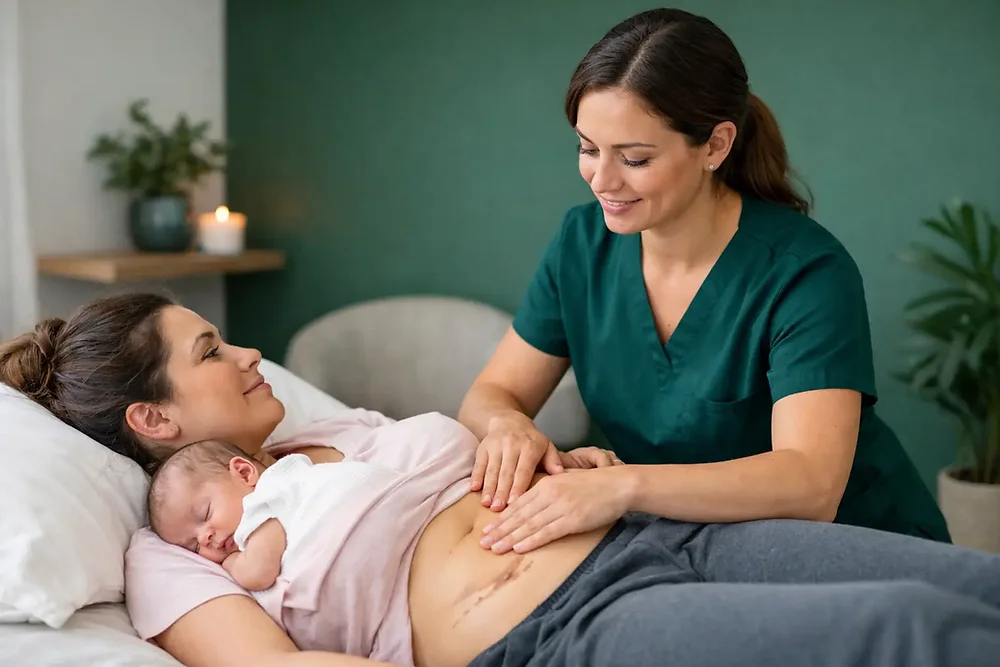
The first time you try to sit up, laugh, cough or lift your baby after a caesarean, recovery stops feeling like an abstract idea and becomes very real. The best recovery tips after C-section are rarely about doing one perfect thing - they are about reducing strain, supporting healing and giving your body enough time, movement and care to regain confidence.
A caesarean is major abdominal surgery as well as childbirth. That matters, because many women feel pressure to "bounce back" while also feeding, soothing and bonding with a newborn. A steadier, more realistic approach usually works better. Good recovery is not about pushing through discomfort. It is about helping your body heal well, move well and feel supported in the weeks that follow.
Best recovery tips after c section in the early weeks
In the first days and weeks, think gentle rather than ambitious. Rest is essential, but complete stillness is not usually the goal. Short, regular movement helps circulation, reduces stiffness and can make you feel more like yourself again. That might simply mean getting up little and often, walking to the kitchen, or taking a slow lap of the room before sitting back down.
Pain relief matters too. If you have been advised to take medication, staying on top of it can make movement, sleep and feeding more manageable. Waiting until pain becomes intense often makes everything feel harder. The aim is not to ignore what your body is telling you, but to keep discomfort at a level where you can breathe comfortably, change position and care for your baby without bracing through every movement.
Support around the incision can also help. Holding a pillow against your abdomen when you cough, sneeze or laugh may reduce pulling and make you feel more secure. Small practical adjustments like this can make the day feel less daunting.
How to move without overloading your body
One of the most helpful postnatal habits is learning how to move in a way that reduces pressure through your abdomen. Rolling onto your side before pushing up to sit is often more comfortable than trying to do a straight sit-up. The same principle applies when getting back into bed.
Standing up from a chair is easier if both feet are grounded and you use the arms of the chair or nearby support. Try not to twist sharply while lifting your baby, especially in the early days. Instead, bring yourself and the baby closer together before lifting.
It is also worth setting up your space so that essentials are within easy reach. If you are repeatedly bending low, carrying heavy items upstairs or stretching awkwardly for nappies and muslins, your body will feel it. Recovery is not just about exercise - it is also about reducing unnecessary strain in everyday tasks.
Walking is often the right starting point
When people ask what exercise is best after a caesarean, the answer is often walking, at least initially. Gentle walking can support circulation, reduce stiffness and improve confidence without asking too much from healing tissues. The key is to build gradually. A slow five-minute walk may be enough at first.
More is not always better. If you feel more soreness, heaviness or fatigue later in the day, that is useful feedback. Recovery is rarely linear, and some days will feel easier than others.
Rest is treatment, not a luxury
Sleep with a newborn is unpredictable, so "get more rest" can sound unrealistic. Still, rest is one of the best recovery tips after c section because healing tissue needs energy. If long stretches of sleep are not possible, look for smaller opportunities to reduce your overall load.
That may mean accepting help with meals, asking someone else to carry the car seat, or letting non-essential jobs wait. Many women are comfortable caring for everyone else before they consider their own recovery, but this can slow progress. Conserving energy is not laziness. It is a sensible part of post-operative healing.
If you notice that everything feels harder by late afternoon, pace your day differently. Spread tasks out, sit down to feed if standing makes you tense, and avoid the trap of doing more just because you have one better morning.
Scar care and abdominal healing
Your scar is only one part of healing, but it does deserve attention. In the early stage, follow the advice given by your medical team about keeping the area clean and monitoring for signs of irritation or infection. If something does not look or feel right, get it checked.
Once the wound has healed and you have been told it is safe, gentle scar work can sometimes be useful. A caesarean scar may feel tight, numb, sensitive or stuck, and those sensations can affect how comfortably you stand upright, twist or return to exercise. Not everyone needs the same approach, which is why individual assessment matters.
It is also common to feel disconnected from your lower abdomen at first. That does not mean you have done anything wrong. Tissues have been through surgery, your nervous system has been on high alert, and rebuilding trust in movement can take time.
Don’t rush abdominal exercises
Many women are eager to know when they can start core work again. The honest answer is that it depends on pain levels, energy, bleeding, wound healing and how your body is managing day to day. Starting too aggressively can leave you feeling more vulnerable rather than stronger.
Breathing work, gentle pelvic floor connection and simple lower-level abdominal activation are often more useful in the early phase than intense core routines. The goal is not to force your body back into shape. It is to restore function so you can lift, carry, walk and eventually return to fuller activity with better control.
Pelvic floor symptoms deserve attention too
A caesarean does not automatically protect you from pelvic floor issues. Pregnancy itself places significant demand on the pelvic floor, and some women still notice heaviness, leaking, pressure or reduced control after birth. Others hold a lot of tension through the pelvic area, especially if feeding positions, stress and poor sleep are all adding up.
If you are noticing symptoms, do not assume they are something you just have to put up with. The same is true if sex remains painful or if certain movements feel oddly uncomfortable months later. Postnatal rehabilitation should look at the whole picture, not just the scar.
Feeding positions, posture and upper body pain
Caesarean recovery is often discussed in terms of the abdomen, but neck, shoulder and mid-back pain are extremely common too. Feeding in a hunched position, carrying your baby on one side and spending long periods sitting can all build tension quickly.
A few small changes can make a genuine difference. Bring your baby to you rather than curling your body downwards. Use cushions to support your arms. Alternate sides when possible, and change position before you become stiff. If your upper body is already sore, you may brace more through your abdomen as well, which can make recovery feel harder overall.
When to ask for extra support
There is a difference between expected soreness and feeling that recovery is not progressing. If you are weeks down the line and still struggling to move comfortably, feeling very pulled around the scar, worried about your abdominal strength, or dealing with ongoing pelvic floor symptoms, it may be time for more tailored support.
Hands-on treatment and rehabilitation can be helpful when pain, stiffness or movement fear are lingering. For some women, the biggest benefit is not just symptom relief but having someone assess how they are moving, explain what is happening and build a plan that fits real life. At Eve Clinic, this kind of postnatal support is designed to help women recover, move better and feel more confident in their bodies again.
A realistic timeline matters
One reason caesarean recovery feels emotionally difficult is that healing does not always match expectations. You may feel much better at two weeks and then unexpectedly sore after doing too much. You may be cleared for activity on paper but still not feel physically ready for certain tasks. Both experiences are common.
Try not to measure your recovery against someone else’s. Previous fitness, sleep, birth experience, support at home, feeding demands and your general health all influence how quickly you feel stronger. Progress counts even when it is quiet - standing straighter, walking further, lifting with less fear, or getting through the day with less pain.
If there is one principle behind the best recovery tips after c section, it is this: healing tends to go better when you respect what your body has been through. Gentle movement, sensible pacing, good support and early help when something feels off can make a meaningful difference. You do not need to rush your way back to normal - you need space to recover well.