
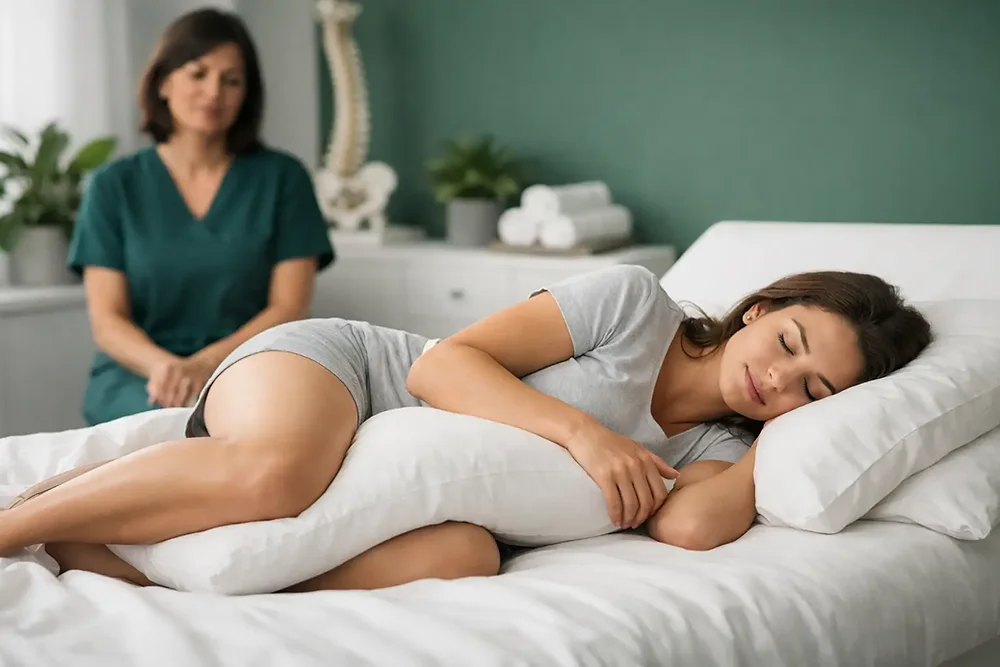
Pelvic discomfort has a habit of feeling louder at night. The distractions drop away, you try to settle, and suddenly every turn in bed seems to pull, ache or jar. If you are searching for the best sleeping positions for pelvic discomfort, the aim is not to find one perfect posture for everyone. It is to reduce pressure, calm irritated tissues and help your body rest without constantly bracing.
For some people, the discomfort is linked to periods, pregnancy, postnatal changes, endometriosis-related tension, hip or lower back strain, or simply a build-up of muscular guarding through the day. That is why sleeping position matters, but so do the details around it - pillow placement, mattress firmness, how you turn over, and whether your hips and lower back are being asked to do too much overnight.
The best sleeping positions for pelvic discomfort
In most cases, side sleeping is the easiest place to start. It tends to take direct pressure off the front of the pelvis and can reduce strain through the lower back. The key is alignment. If your top leg drops forwards or your waist collapses into the mattress, the pelvis can twist and irritated areas may complain.
A pillow between the knees often makes the biggest difference. It keeps the hips more level and stops the top thigh from pulling the pelvis round. If the discomfort feels quite central or spreads into the hips, a slightly thicker pillow that also supports the ankles can work better than a slim one.
Many people also do well with a small pillow or folded towel gently supporting the waist or lower abdomen. This is not about wedging yourself rigidly into place. It is simply about taking away that unsupported, dragging feeling that can build tension through the pelvis.
Back sleeping can also be comfortable, particularly if side lying makes you feel compressed or sore. The adjustment that usually helps is placing a pillow under the knees. That softens the pull through the front of the hips and lower back, allowing the pelvis to rest in a more neutral position. If your pelvis feels heavy, tight or aggravated by arching, this can be a good option.
Front sleeping is usually the least comfortable choice for pelvic discomfort. It often forces one hip to rotate or the lower back to arch, which can increase irritation. Some people naturally end up there because it feels familiar, but if you are waking stiff, achy or needing time to straighten up, it is worth trying an alternative.
Why side sleeping often works best
Side sleeping is often recommended because it helps distribute load more evenly through the trunk, hips and legs. It can be especially useful if discomfort is worse on one side of the pelvis, around the sacroiliac area, through the groin, or when the pubic area feels sensitive.
That said, it is not automatically comfortable on both sides. One side may feel easier than the other depending on where the tension is sitting. If one hip feels compressed, try the opposite side first. If both sides feel awkward, focus less on choosing the "right" side and more on how well you are supported.
A common mistake is curling up tightly. It can feel protective in the moment, but too much flexion through the hips and trunk may leave you stiffer by morning. A gentler bend in the knees is often better than a full foetal position.
How to set up a side-sleeping position
Start by lying on your side with your head supported so your neck stays level rather than tilted. Place a pillow between your knees and, if possible, let it reach the ankles too. Keep your knees softly bent, not pulled right up to your chest.
If there is a sense of dragging at the front of the pelvis or lower tummy, hug a pillow or place a small one in front of you so the top arm and shoulder can rest. That slight support can stop the trunk from rolling forwards and taking the pelvis with it.
If turning in bed is painful, keep the knees together as you roll and move the shoulders and hips as one unit. It sounds simple, but this can reduce the sudden twist that often triggers a sharp catch.
When back sleeping is a better fit
Back sleeping suits people who feel more uncomfortable with side pressure, or whose symptoms flare when the hips are stacked. It can also help if discomfort spreads into the lower back and you wake feeling as though your front hips have tightened overnight.
The main issue with lying flat on your back is that some people drift into an arched position. A pillow under the knees usually solves that. If you still feel strain, a second very small folded towel beneath the lower legs can create a little more ease.
If your upper body needs to be more elevated, use a wedge or an extra pillow rather than propping just the head high and leaving the rest of the spine behind. Too much bend at the neck without support through the trunk can increase tension elsewhere.
What to avoid when lying on your back
Try not to sleep with one knee flopped out to the side unless it genuinely feels better and stays comfortable. For many people, that asymmetry feeds straight into the pelvis. Equally, if you notice yourself tucking one hand under the lower back or pelvis for relief, take that as a sign your current setup is not supporting you well enough.
Pillows matter more than people think
When someone says a sleeping position does not work for them, it is often the support around the position that is the problem. A good setup should help your pelvis feel held, not fixed. There is a difference.
A pillow between the knees reduces twisting. A pillow under the knees softens the pull through the hip flexors. A small cushion under the bump during pregnancy, or under the lower abdomen when side lying, can reduce that sense of weight and strain. If postnatal tissues feel sensitive, gentle support can also make getting settled less effortful.
Mattress firmness plays a part too. A very soft mattress can let the pelvis sink and rotate. A very hard one can create pressure through the hips and front of the pelvis. If replacing the mattress is not realistic, a topper sometimes makes enough difference to change how supported you feel.
It depends on the cause and the pattern
The best sleeping positions for pelvic discomfort are not identical for every body. Period-related tension may feel different from pregnancy-related pelvic girdle discomfort. Postnatal recovery can bring sensitivity, weakness or a feeling of instability. Discomfort linked with prolonged sitting, training load or lower back stiffness may respond differently again.
This is why it helps to notice your pattern. Is the discomfort worse when your knees separate? When one leg is ahead of the other? When you arch? When you curl tightly? Those clues tell you more than any generic sleep advice ever will.
If nights are consistently difficult, it is worth looking at the bigger picture too. Daytime habits often show up in bed. Long hours sitting, clenching through pain, reduced hip movement, scar tightness, deconditioning or ongoing stress can all keep the pelvis in a more guarded state. Sleep position can help, but it may not be the whole answer.
When to get support
If you are regularly losing sleep, relying on painkillers just to get comfortable, or waking more sore than when you went to bed, it is sensible to get individual advice. The same applies if pelvic discomfort is affecting pregnancy, postnatal recovery, exercise, work or intimacy.
A more tailored approach can help you work out whether the issue is mainly load, muscle tension, movement strategy or a mix of factors. At eve Clinic, this often means combining hands-on treatment, clear rehabilitation advice and simple positioning changes so you are not left managing nights by trial and error.
There is rarely one magic sleeping position that fixes everything. Usually, improvement comes from small changes that reduce irritation enough for your body to stop fighting the bed. If you can create even a little more ease at night, you give yourself a better chance to recover, move better and wake with more confidence in your body.