
Nerve pain has a way of shrinking your world. It might start as a sharp line down the leg when you sit at your desk, tingling into the hand during your commute, or a burning ache that makes sleep harder than it should be. When symptoms feel electric, persistent or oddly unpredictable, many people want to know whether osteopathy for nerve pain is a sensible option - and what it can realistically do.
The short answer is that it can be helpful for some people, particularly when nerve-related symptoms are linked to joint stiffness, muscle tension, posture, movement habits or loading issues. But it is not a one-size-fits-all answer. Good care starts with working out what is driving the pain, what is aggravating it, and what needs to change so the problem settles rather than repeatedly flaring.
What nerve pain can feel like
People often use the term nerve pain to describe several different sensations. Sometimes it is sharp, shooting or burning. Sometimes it feels like pins and needles, numbness, buzzing or an area that is unusually sensitive to touch. You may also notice weakness, heaviness or reduced confidence using part of the body.
Common examples include pain travelling from the lower back into the buttock or leg, symptoms moving from the neck into the shoulder or arm, or irritation around the wrist, elbow or ankle. For some women, nerve-related symptoms can also sit alongside pregnancy-related postural changes, pelvic discomfort, postnatal recovery or longer-term tension patterns that have built up around pain and fatigue.
That variation matters. Not every pain that spreads is nerve pain, and not every case of nerve pain behaves in the same way. The best treatment plan depends on the pattern.
How osteopathy for nerve pain may help
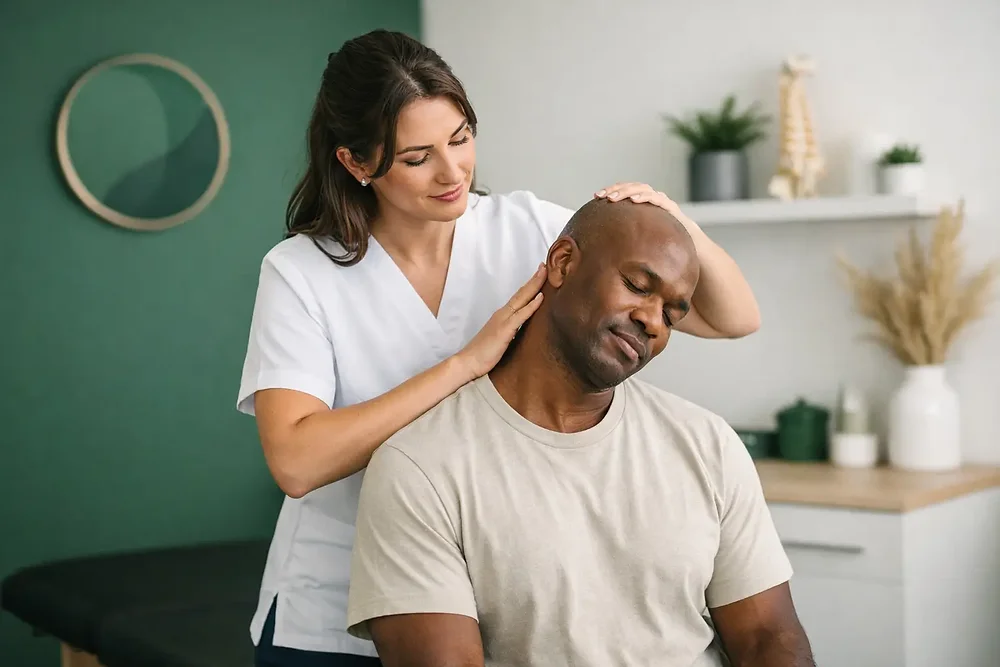
Osteopathy looks at how the body moves and functions as a whole. In practice, that means assessing the area where symptoms are felt, but also the joints, muscles and movement patterns around it. If a nerve is being irritated by reduced spinal movement, persistent muscular guarding, altered biomechanics or poor tolerance to certain positions, hands-on treatment and rehabilitation may help reduce the strain.
Treatment is usually not about chasing symptoms from one painful spot to another. It is about identifying the mechanical factors that may be keeping the area sensitive. That might include improving movement through the spine, easing tension in surrounding tissues, helping the ribcage or pelvis move more freely, or building strength and control so the area is less easily provoked.
This is also where expectations need to be realistic. If nerve symptoms have been present for a while, they may not switch off after one appointment. Nerves can stay sensitised, and the body often becomes protective around them. A thoughtful plan often combines hands-on treatment with exercises, pacing advice and practical changes to work, training or sleep positions.
Why assessment matters more than the label
Two people can both say they have sciatica and need very different care. One may have symptoms that flare mainly when sitting and improve quickly with movement. Another may struggle with walking, sleeping and calf weakness. The same is true for neck-related arm pain, wrist tingling or persistent nerve sensitivity after an injury.
A proper osteopathic assessment should look at the nature of the symptoms, what makes them better or worse, how long they have been present, and whether there are any signs that need medical input elsewhere. It should also consider your daily life. If you spend long hours at a laptop, carry a baby on one hip, train heavily, or are returning to activity after surgery, those details are not background information - they are part of the clinical picture.
For many patients, being listened to carefully is not a bonus. It is the point at which treatment starts to make sense. When you understand why symptoms are happening and what influences them, recovery feels more manageable and less alarming.
What treatment may involve
Osteopathic care for nerve-related symptoms often includes manual treatment, but not in isolation. Hands-on work may be used to reduce stiffness, ease protective tension and help painful areas move more comfortably. The exact approach varies from person to person and should be adapted to symptom irritability, general health and confidence with treatment.
Rehabilitation is usually the piece that turns short-term relief into longer-term progress. Depending on the presentation, that could mean gentle mobility work, nerve gliding exercises, strength work for supporting muscles, or graded return to running, lifting or longer periods of sitting. Small changes can matter. The right exercise at the right stage can calm symptoms. Too much too soon can stir them up.
Advice should also be practical rather than generic. You may not need a perfect desk set-up or a dramatic lifestyle overhaul. You may need a better way to break up sitting, a modified gym plan for two weeks, or a different feeding position if you are postnatal and your neck and arm symptoms are worsening.
When results are often better
In general, outcomes tend to be better when treatment is started before pain has become deeply embedded in daily habits and movement patterns. That does not mean long-standing symptoms cannot improve. They can. But persistent nerve pain often needs more patience and a more layered plan.
People also tend to do better when care is individualised. A rushed appointment can miss the wider reasons symptoms keep returning. Longer one-to-one sessions allow time to assess properly, treat thoughtfully and explain what you can do between visits. That is especially valuable if your symptoms are affecting work, exercise, sleep or confidence in your body.
This matters for women whose symptoms sit alongside hormonal changes, pregnancy, postnatal recovery or pelvic health concerns. The nervous system does not exist in a vacuum. Stress, fatigue, previous pain experiences and physical changes through different life stages can all influence how symptoms are felt and managed. Care should reflect that, without dismissing the physical side of the problem.
When osteopathy for nerve pain may not be enough on its own
There are times when osteopathy is only one part of the answer. Some nerve-related symptoms need onward investigation, shared care or a different primary route altogether. That is why clinical judgement matters.
If pain is severe and rapidly worsening, if there is significant weakness, major changes in sensation, or symptoms affecting bladder or bowel control, urgent medical assessment is needed. Equally, if symptoms are not improving as expected, the plan may need to change. Good care is not about keeping someone in treatment unnecessarily. It is about helping them move forwards safely and efficiently.
That honesty is important. Patients usually do not want endless appointments. They want to recover, move better and live more freely. Sometimes that means hands-on care plus rehabilitation. Sometimes it means integrating with another clinician’s input. Sometimes it means adjusting goals in stages so progress feels achievable rather than frustrating.
What to expect if you are considering care
A useful first appointment should leave you clearer, not more confused. You should come away with an understanding of what may be contributing to your symptoms, what treatment is aiming to change, and what you can do to support progress at home. You should also know what kind of timeframe is realistic.
For some people, the early goal is to reduce pain enough to sleep, sit or walk more comfortably. For others, it is getting back to the gym, running for the train without a flare, or holding a baby without arm tingling. Those goals shape the plan.
At eve Clinic, that often means combining hands-on osteopathy with tailored rehabilitation and clear advice that fits real life. If you work around London Bridge and need appointments that respect both your time and your concerns, that kind of joined-up care can make recovery feel much less overwhelming.
The real question: is it right for your situation?
The most helpful question is not whether osteopathy works in theory. It is whether your nerve pain appears to be influenced by factors that osteopathic treatment and rehabilitation can change. If the answer is yes, treatment may help settle symptoms, improve movement and build confidence in using your body again. If the answer is partly, it may still be valuable as part of a broader plan.
You do not need to wait until pain becomes unbearable to ask for help. And you do not need to accept vague reassurance if symptoms are affecting your day-to-day life. A careful assessment, a clear explanation and a plan built around how you actually live can go a long way.
If nerve pain is making you move cautiously, sleep poorly or second-guess ordinary tasks, the next useful step is simple: get it assessed properly, and choose care that treats you like a person, not a pattern.