
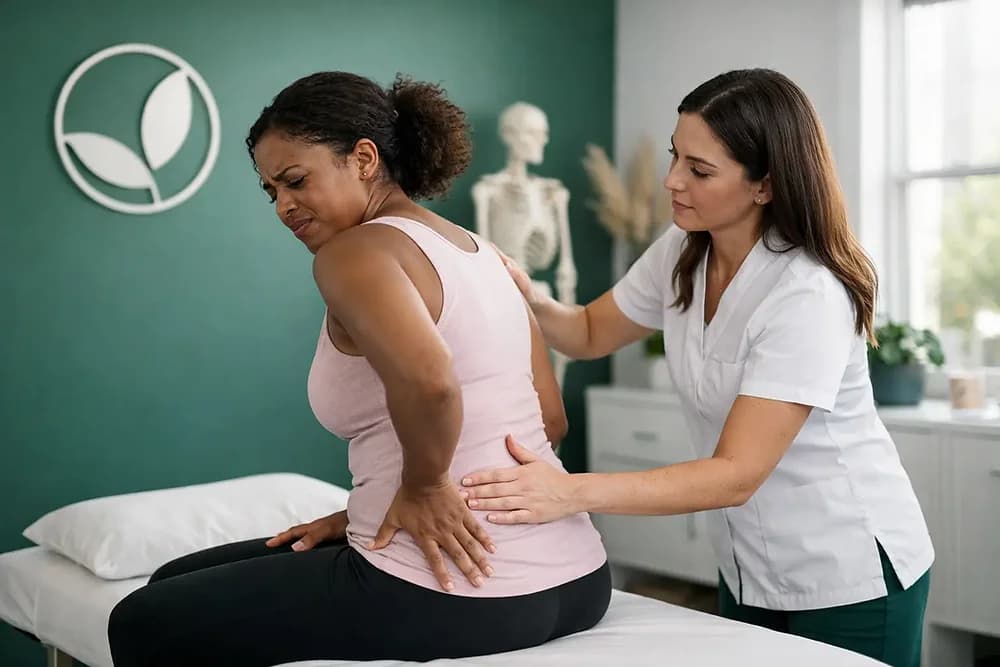
If you have started standing with more weight on one leg, sitting in a very specific position, or avoiding longer walks because your body just feels "off", you may be asking: can pelvic pain affect posture? The short answer is yes. Pain around the pelvis often changes the way you hold yourself, move and rest, sometimes so gradually that you barely notice it happening.
This matters because posture is not just about sitting up straight. It is your body’s way of organising itself against gravity while you breathe, walk, work, exercise and recover. When pelvic pain enters the picture, the body often adapts to protect you. Those adaptations can be useful in the short term, but if they persist, they may start to create extra tension in the lower back, hips, abdomen, glutes and even the upper body.
How pelvic pain changes the way the body moves
Pelvic pain rarely stays in one neat, isolated spot. The pelvis sits at the centre of the body, linking the spine and ribcage above with the hips and legs below. If that area feels sensitive, stiff or painful, your body often changes its movement strategy to reduce discomfort.
You might tuck your pelvis under when standing, arch your lower back, hold your breath, clench through the abdominal wall or shift your weight away from one side. Some people take shorter steps when walking. Others avoid fully loading one hip, or they sit perched on the edge of a chair because certain positions feel aggravating.
None of this means you are doing anything wrong. It means your nervous system is trying to help. Pain can lead to guarding, and guarding changes posture.
Can pelvic pain affect posture in everyday life?
Yes, and often in ways that feel surprisingly ordinary at first. You may notice that your favourite desk chair suddenly feels uncomfortable, or that driving, commuting and sleeping become harder to get right. Some people feel twisted through the waist. Others notice one hip hiking up, their ribs flaring, or their shoulders becoming more tense because they are subtly bracing all day.
The posture changes are not always dramatic. In fact, they are often small but repeated. A slight lean to one side, a habit of crossing the same leg, or a reluctance to bend fully can add up over weeks and months. Over time, what began as a response to pelvic discomfort may become a wider pattern of stiffness, fatigue and reduced confidence in movement.
That is one reason pelvic pain can feel so draining. It is not only the pain itself. It is the constant background effort of protecting the area.
Why this can lead to pain elsewhere
When one area stops moving well, another area usually does more work. If the pelvis is sore or guarded, the lower back may compensate. If the hips are not rotating freely, the knees or feet may take extra strain. If the abdominal wall stays tense, breathing can become shallower, which often feeds tension through the ribs, diaphragm, neck and shoulders.
This does not mean posture is the single cause of every ache. Bodies are more complex than that. But there is a clear relationship between pain, movement habits and load distribution. A body that feels safe tends to move with more variety. A body that feels threatened often narrows its options.
That is why a person with pelvic pain may also report back ache, buttock pain, groin tightness or discomfort during walking, exercise or longer periods at a desk. The symptoms can spread because compensation spreads.
Common patterns seen with pelvic pain
There is no single pelvic pain posture. Different people adapt in different ways depending on what movements feel uncomfortable, how long the issue has been present, and what demands their day places on them.
Some people become very still and stiff, almost holding themselves upright through tension alone. Others collapse into one side, seeking support from ligaments and joints rather than muscle control. During pregnancy or after birth, posture may also shift because the abdominal wall, pelvic floor, breathing mechanics and load management have all changed. With endometriosis, period pain or ongoing pelvic discomfort, the body may develop protective patterns around the lower abdomen and pelvis that continue even between flare-ups.
For active people, the changes may show up during running, lifting, cycling or yoga rather than at rest. For desk-based professionals, the problem may be most obvious after long meetings, tube journeys or days with very little movement variety. It depends on your baseline, your symptoms and how your body has learned to cope.
When the issue is not just posture
It is worth saying clearly that posture is not the villain. There is no perfect posture that guarantees a pain-free body, and there is rarely one single alignment fault behind pelvic pain. Trying to force yourself into an ideal position can sometimes make things worse, especially if you are already guarding.
What matters more is whether you can move in and out of positions comfortably, whether one area is working too hard, and whether your body has enough options. Good rehabilitation is usually less about holding yourself rigidly and more about restoring ease, variety and confidence.
That distinction can be a relief. If pelvic pain has affected your posture, the answer is not to spend every waking hour correcting yourself. It is to understand what your body is protecting against and gradually build better movement strategies around it.
Can pelvic pain affect posture long term?
It can, particularly if the pain has been present for months or keeps recurring. Persistent discomfort may reinforce unhelpful movement habits, reduce activity levels and increase sensitivity around certain tasks. You may stop trusting your body to bend, lift, exercise or even relax properly.
Long-term posture changes are usually less about bones being permanently out of place and more about muscles, fascia, breathing patterns and the nervous system becoming stuck in protection mode. The good news is that these patterns can change. The body is adaptable. With the right assessment and support, many people can reduce pain, improve movement and feel more balanced again.
That process works best when it is individual. A runner returning to training, someone recovering postnatally, and a person managing pelvic pain linked to their cycle may all need different advice, even if they share some similar posture changes.
What an assessment should look at
A useful assessment does more than observe how you stand. It looks at how you move, where you feel pain, what positions ease or aggravate symptoms, how you breathe, how you load each leg, and what your daily life actually demands.
That broader view matters because pelvic pain is rarely only a local issue. Sitting tolerance, walking pattern, hip mobility, abdominal tension, glute control and recovery habits can all play a part. The goal is not to label you with bad posture. It is to understand why your body has adopted certain patterns and what is needed to change them.
In practice, treatment may involve hands-on work to reduce tension and improve comfort, combined with tailored rehabilitation to restore control and confidence. Sometimes small changes make a big difference, such as improving how you breathe during effort, changing how you get in and out of the car, or building tolerance for positions you have been avoiding.
What you can do if pelvic pain is changing your posture
Start by noticing patterns rather than policing yourself. Which activities make you shift, brace or lean? Do you always unload one side? Do you grip your abdominals or buttocks when standing? Are you avoiding walking quickly, climbing stairs or sitting evenly?
Then think in terms of variation. Gentle movement, position changes and paced activity are often more helpful than staying completely still. If one posture feels uncomfortable, that does not always mean the posture is harmful. Sometimes it means your tolerance is low and needs rebuilding gradually.
Strength and mobility work can help, but only if it fits your presentation. For some people, relaxation and breath work are the missing piece. For others, it is hip strength, pelvic control or better load transfer through the trunk. This is where one-to-one guidance can be especially valuable, because generic exercises do not always match what your body needs.
If symptoms are affecting work, sleep, exercise or your confidence, getting assessed sooner can shorten the cycle of compensation. At eve Clinic, that often means looking not just at where it hurts, but at how your whole body is responding so you can recover, move better and live more freely.
Pelvic pain can make posture feel like a problem you need to fix, but most people do better when they stop chasing a perfect position and start building a body that feels safer, stronger and easier to live in.