
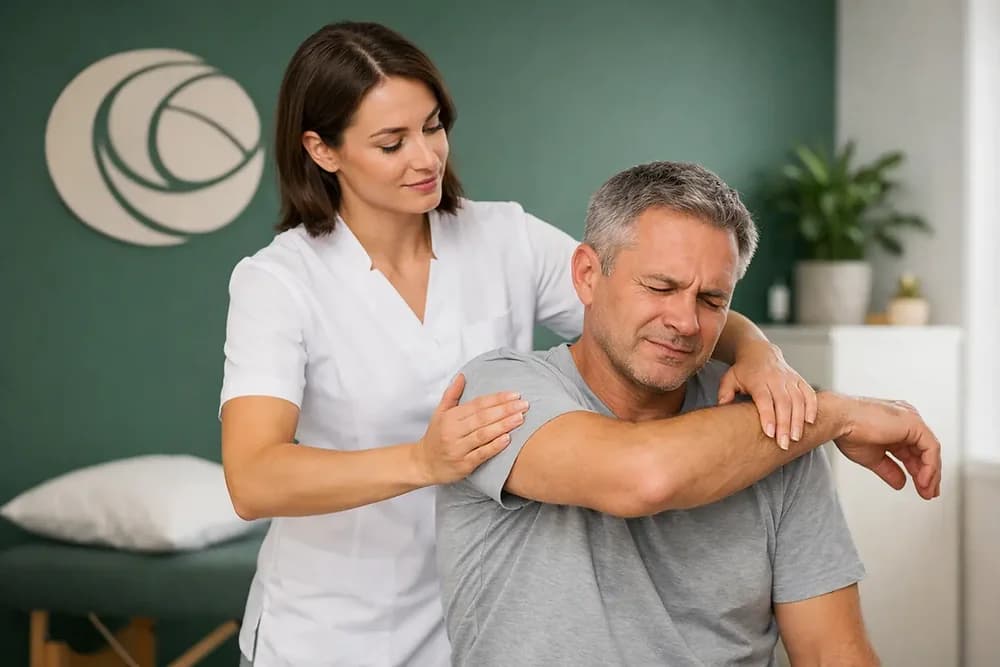
Trying to put on a coat, reach for a seatbelt or fasten a bra can suddenly become far more difficult than it should be. Frozen shoulder often creeps in gradually, then starts to affect sleep, work, exercise and the small movements you normally do without thinking. If you are wondering how osteopathy helps frozen shoulder, the short answer is that it can reduce pain, improve how the shoulder and surrounding areas move, and support a steadier return to day-to-day function.
Frozen shoulder can feel confusing because the pain and stiffness do not always match what you have done. Some people notice it after a minor strain, surgery or a period of not using the arm much. Others cannot pinpoint a clear trigger. What matters most is understanding why it feels so restrictive and what kind of treatment can genuinely help.
What frozen shoulder usually feels like
Frozen shoulder, also known as adhesive capsulitis, tends to develop in stages. Early on, pain is often the main issue. It may feel sharp with certain movements and worse at night, especially if you lie on that side. As it progresses, stiffness becomes more obvious. Reaching overhead, behind your back or out to the side can feel blocked rather than just sore.
This is not simply a weak shoulder. The joint capsule around the shoulder becomes irritated and tight, which limits movement. Because the shoulder cannot move normally, the body starts to compensate. The neck, upper back, rib cage and shoulder blade often begin doing extra work. That can create a wider pattern of discomfort and tension, which is one reason hands-on treatment is not just about the shoulder joint itself.
How osteopathy helps frozen shoulder in practice
Osteopathy looks at how the whole upper body is moving, not just where the pain is felt. With frozen shoulder, that matters because stiffness in one area quickly affects another. A thorough assessment helps identify which movements are limited, how you are compensating, and what is likely to aggravate symptoms.
Hands-on osteopathic treatment may help calm painful areas, ease muscle guarding and improve the movement of nearby structures such as the shoulder blade, thoracic spine, ribs and neck. When these areas move better, the shoulder often feels less overloaded. That does not mean a practitioner can force the shoulder back to normal in one session. Frozen shoulder usually needs a measured approach. Too much intensity can flare it up.
The aim is usually to create enough change that everyday movements feel easier and less threatening. That might mean being able to sleep more comfortably, reach a shelf with less pain or start using the arm with more confidence. Progress can be gradual, but the right treatment plan should make the direction of travel clearer.
Why gentle treatment often works better than pushing through
One of the most frustrating things about frozen shoulder is that it can tempt people to stretch aggressively. If the shoulder feels stuck, it is natural to assume you should force more movement. In reality, that can backfire, especially during the more painful stage.
Osteopathy for frozen shoulder is usually most effective when it respects irritability. In other words, treatment is adapted to how reactive the shoulder is on that day. Gentle mobilisation, soft tissue work and advice on movement pacing can be more useful than pushing hard into pain. The goal is to improve tolerance and quality of movement, not to win a battle against the joint.
This is where individual care matters. Someone who is struggling mainly with night pain may need a different approach from someone whose pain has settled but whose stiffness is lingering. The same diagnosis can look quite different from one person to another.
The role of rehabilitation alongside treatment
Hands-on treatment is only part of the picture. Rehabilitation is often what turns short-term relief into meaningful recovery. That does not have to mean long, punishing exercise programmes. In many cases, a few well-chosen movements done consistently are more effective than doing lots of exercises badly or too forcefully.
A tailored rehab plan for frozen shoulder might focus first on maintaining as much comfortable movement as possible, reducing protective tension and helping the shoulder blade and upper back work more efficiently. Later, as symptoms allow, exercises can progress towards restoring control, range and strength.
This matters because pain often changes how people use the arm. You may start avoiding movement, shrugging the shoulder, twisting through the back or relying more on the other side. These patterns are understandable, but they can make things feel harder over time. Practical rehabilitation helps you rebuild trust in the shoulder without constantly provoking it.
How osteopathy helps frozen shoulder at different stages
The stage of frozen shoulder often shapes what treatment should prioritise.
In the painful stage, the focus is usually on settling symptoms, easing surrounding tension and finding more comfortable ways to move, sleep and manage daily tasks. People often need reassurance here as much as treatment, because persistent night pain and growing stiffness can be worrying.
In the stiffer stage, treatment may place more emphasis on improving movement around the shoulder complex and gradually increasing what the joint can tolerate. The shoulder may still be painful, but stiffness tends to become the dominant limitation.
In the later stage, when movement is starting to return, rehabilitation becomes especially important. This is often the point where people want to get back to swimming, gym work, yoga, lifting children or simply moving normally at work. Osteopathy can support that transition by helping the body move more efficiently and reducing the compensations that developed earlier.
What an osteopathic appointment should include
A good appointment for frozen shoulder should leave you with more than a few minutes on the treatment couch. You should come away understanding what seems to be driving your pain and stiffness, what to avoid for now, what is safe to keep doing and what realistic progress may look like.
That conversation matters. If your shoulder has been painful for weeks or months, you may already be frustrated, sleep-deprived and wary of movement. Clear explanations can reduce some of the fear around using the arm. That often makes rehabilitation easier, because movement feels less unpredictable.
At a clinic such as eve Clinic, where one-to-one time allows for deeper assessment and tailored rehabilitation, that extra space can be particularly valuable. Frozen shoulder rarely responds well to rushed, generic advice.
What results can you realistically expect?
Osteopathy can help many people with frozen shoulder, but it is not a magic fix. Recovery usually takes time. The benefit of treatment is often that it helps reduce unnecessary strain, supports more comfortable movement and gives you a plan that fits your stage of recovery rather than leaving you to guess.
Some people feel a noticeable improvement in pain and ease of movement quite quickly. Others progress more slowly, especially if the shoulder is highly irritable or has been stiff for a long time. It also depends on factors such as sleep, stress, workload and how possible it is to keep up with advice and exercises.
What you should expect is thoughtful, responsive care. If something flares your symptoms, the plan should adapt. If you are improving, treatment should move with you rather than keeping you dependent on frequent appointments.
When osteopathy is most useful
Osteopathy is often particularly helpful when frozen shoulder is affecting more than just the joint itself. That includes neck tension, upper back stiffness, sleep disruption, reduced confidence in movement and difficulty getting through work or exercise comfortably. It can also be useful if you want a clearer strategy than simply waiting it out.
For busy professionals and active adults, that matters. Shoulder pain does not just interrupt sport. It affects commuting, desk work, carrying bags, getting dressed and sleeping well enough to function the next day. A treatment approach that combines manual care with practical self-management is often more helpful than advice that feels too vague to use in real life.
A measured approach often gets better results
If you are looking into how osteopathy helps frozen shoulder, the most useful answer is not that it fixes everything at once. It helps by reducing the load on an already sensitive shoulder, improving the way the rest of the body supports movement, and guiding recovery with treatment and rehabilitation that match the stage you are in.
Frozen shoulder can be stubborn, but it does not have to leave you feeling stuck and unsupported. The right care should help you make sense of what is happening, move with more confidence and recover at a pace that is realistic for your body and your life.