
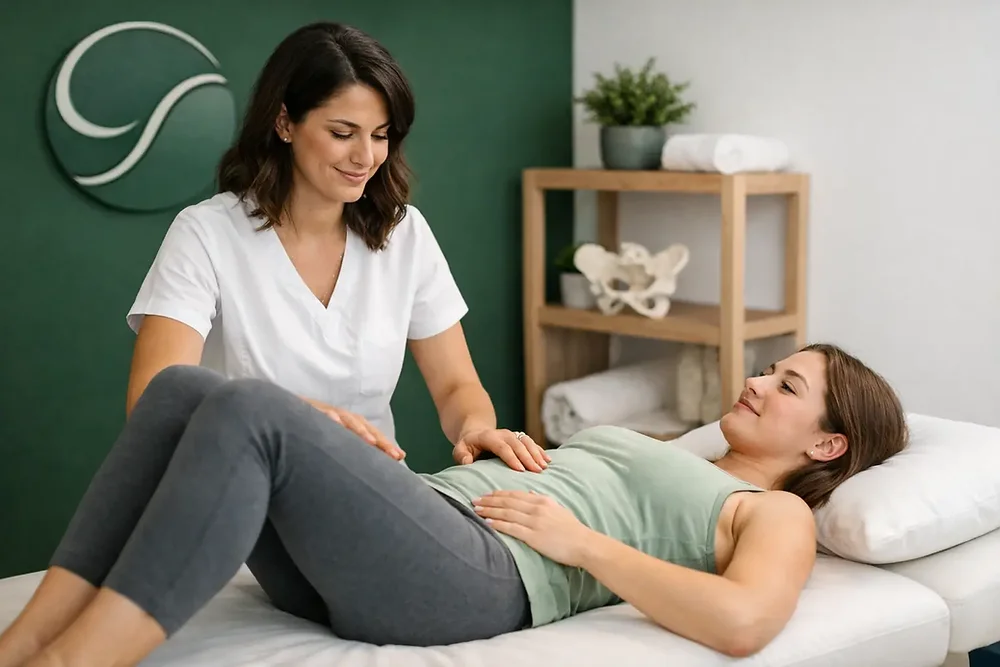
A surprising number of recovery setbacks come down to one thing: the body has lost confidence in a region that does far more work than most people realise. If you have ever wondered how pelvic exercises aid recovery, the short answer is that they help rebuild support, coordination and control in an area that influences movement, continence, breathing, posture and comfort.
That matters whether you are recovering after pregnancy, dealing with persistent pelvic discomfort, returning to exercise, or trying to feel more stable in everyday life. The pelvis is not a separate system working in isolation. It is part of a wider team that includes your abdominal wall, diaphragm, hips, lower back and deep postural muscles. When that team is working well, recovery tends to feel steadier and more sustainable.
Why the pelvis matters more than people think
The pelvic floor is a group of muscles and connective tissues at the base of the pelvis. These tissues help support the bladder, bowel and, in women, the uterus. They also contribute to continence, sexual function, breathing mechanics and trunk stability.
When people hear about pelvic floor exercises, they often think only about squeezing. In practice, good recovery is rarely about gripping harder. It is about timing, coordination and using the right amount of effort. Some people need to build strength. Others need to learn how to let go of tension. Quite a few need both.
This is one reason generic advice can fall short. If your muscles are already overworking, repeatedly tightening them may leave you feeling worse. If they are underactive after surgery, pregnancy or a long period of inactivity, they may need careful retraining. Recovery improves when exercises match what your body actually needs.
How pelvic exercises aid recovery in real terms
When pelvic exercises are chosen well, they can improve support through the lower abdomen and pelvis, reduce strain on healing tissues and help you move with less guarding. That can make day-to-day tasks feel more manageable, from walking to lifting a child, sitting at a desk or returning to the gym.
Pain can also change the way muscles behave. Sometimes the pelvic floor becomes protective and tense. Sometimes it switches off and stops contributing properly. In both cases, the body may compensate elsewhere, which can add to lower back discomfort, hip tightness or a sense of instability. Gentle, specific rehabilitation helps restore a more efficient pattern.
For many patients, one of the biggest benefits is confidence. Recovery is not only physical. It is hard to feel at ease if you are worried about leaking, heaviness, pain with movement or not trusting your core. Pelvic exercises can reduce that uncertainty by giving you a clearer sense of control.
Different stages of recovery need different exercises
A common mistake is assuming there is one standard programme for everyone. In reality, the right approach depends on your history, your symptoms and what you are trying to get back to.
After pregnancy and birth
During pregnancy, the pelvic floor adapts to changes in pressure, posture and hormones. After birth, those tissues may feel weak, sore, stretched or overly tense, depending on the individual experience. Postnatal pelvic exercises often begin with breathing, gentle activation and restoring awareness rather than jumping straight into harder strengthening work.
If there has been perineal tearing, abdominal separation, caesarean birth or ongoing pelvic heaviness, a tailored plan becomes even more important. The goal is not to rush. It is to help the body recover well enough to cope with real life - walking, feeding, carrying, lifting and eventually returning to preferred exercise.
After gynaecological or abdominal surgery
Following surgery, the body may protect the area by becoming stiff and guarded. Scar tissue, pain and altered movement habits can all affect how the pelvic region functions. Pelvic exercises can support recovery by gently reintroducing movement, reconnecting breathing and improving pressure management.
This matters because many people try to return to normal activities before the body has regained that underlying support. They may be doing enough to get through the day, but not enough to recover comfortably. The gap between those two things is where targeted rehabilitation becomes valuable.
With persistent pelvic pain or tension
Pelvic rehabilitation is not always about weakness. For some people, the issue is an overactive pelvic floor that struggles to relax. This can contribute to discomfort, pressure, urinary urgency or pain during intimacy. In that situation, recovery often starts with down-training, breathwork, position changes and reducing protective tension.
That is why assessment matters. The same symptom does not always point to the same cause.
What effective pelvic rehabilitation usually includes
The most useful programmes tend to be simple, repeatable and specific to your life. They often begin with the basics: breathing, awareness and gentle movement. Breathing is especially relevant because the diaphragm and pelvic floor work together. If one is not moving well, the other often has to compensate.
From there, exercises may progress to low-load strengthening, coordination work and functional movement patterns. That might include learning how to contract and relax the pelvic floor in time with effort, using the deep abdominal muscles more effectively, or controlling pressure during lifting, coughing and exercise.
How pelvic exercises aid recovery beyond the pelvis
Although the focus is local, the effects are often wider. Better pelvic support can improve how the lower back and hips share load. It can make walking feel smoother and reduce the sense of dragging or heaviness through the pelvis. It may also help people reconnect with exercise after a period of avoidance.
This is particularly relevant for active adults and busy professionals. If you spend long hours sitting, commuting, training or managing family life on top of work, recovery needs to fit around real demands. Pelvic exercises can be built into ordinary routines rather than becoming another overwhelming task.
That said, more is not always better. Overdoing exercises can create fatigue, irritation or frustration, especially if technique is unclear. Small amounts done well usually beat long, inconsistent sessions.
Signs you may benefit from a tailored plan
If you are noticing leaking, pelvic heaviness, lower abdominal weakness, persistent tension, reduced confidence with impact exercise or discomfort that does not seem to settle, it is worth getting more individual guidance. The same applies if you have returned to activity but feel that something is still not quite right.
A tailored approach can help answer practical questions people often carry for months. Are you bracing too much? Not enough? Holding your breath during effort? Relying on your glutes or hip flexors instead of the muscles that need to support you? These details matter because they shape how well the body recovers over time.
At eve Clinic, this kind of rehabilitation is approached as part of the whole picture. That means looking at how you breathe, move, load your body, manage symptoms and return to the activities that matter to you, not just handing over a sheet of exercises and hoping for the best.
What progress really looks like
Progress is not always dramatic at first. Sometimes it shows up as less heaviness at the end of the day, fewer leaks when sneezing, easier bowel movements, more comfort when walking, or a growing sense that your body is working with you again.
Over time, those small shifts add up. You may find you can move more freely, train with more confidence and rely less on constant symptom management. That is often the turning point in recovery - not perfection, but consistency and trust in your body returning.
When to get support
If symptoms are affecting your routine, your exercise, your confidence or your comfort, there is no prize for struggling on alone. Pelvic rehabilitation works best when it is individual, properly assessed and paced to where you are now rather than where you think you should be.
The right exercises can be quiet, gentle and highly effective. Done well, they do more than strengthen muscles. They help you recover, move better and feel more at ease in your own body, which is often exactly where meaningful progress begins.