
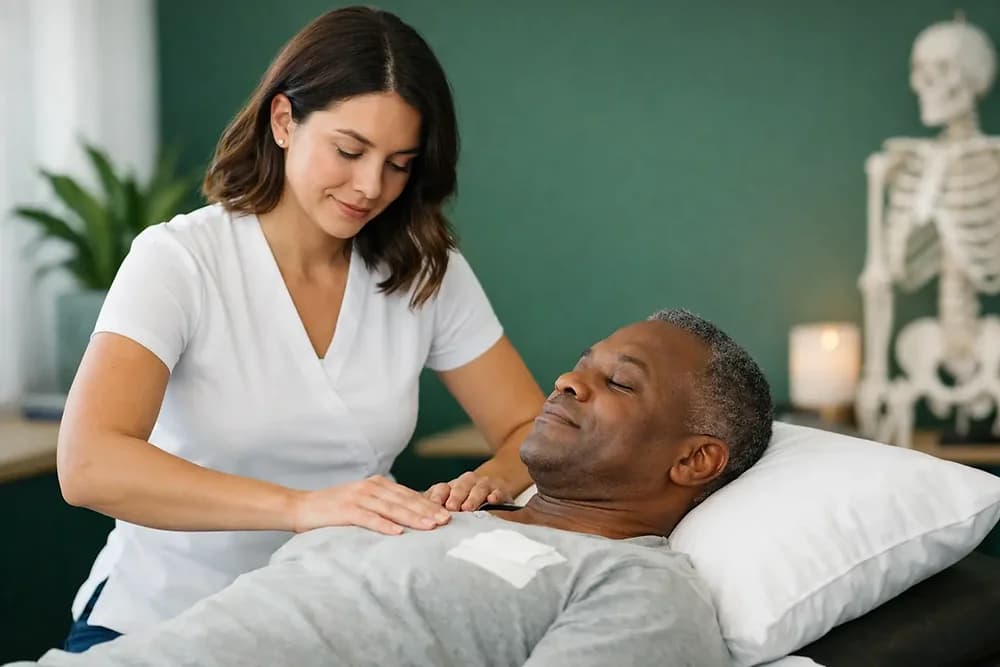
The question is osteopathy safe after surgery usually comes up at a very specific moment - when the operation is over, the scar is healing, but your body still does not feel like your own. You may be dealing with stiffness, protective tension, reduced mobility or pain in areas that were not even operated on. That can feel confusing, especially if you have been told to rest but are also keen to recover, move better and get back to normal life.
The short answer is yes, osteopathy can be safe after surgery, but timing, technique and clinical judgement matter. Post-operative treatment should never be routine or rushed. It needs to fit the type of surgery you had, your stage of healing, your consultant’s advice and how your body is responding.
Is osteopathy safe after surgery in every case?
Not in every case, and that is exactly why proper assessment matters.
After surgery, the body goes through predictable phases of healing. In the early stage, tissues are inflamed and vulnerable. Later, scar tissue starts to form, movement patterns change and nearby joints and muscles often begin compensating. Osteopathy can be useful during recovery, but what is appropriate in week one is very different from what is appropriate in week six or month three.
Safety depends on several factors. These include the kind of procedure you had, whether there were complications, how your wound is healing, whether you have swelling or infection, and whether your surgeon has placed restrictions on movement, weight-bearing or exercise. A gentle hands-on approach may be suitable far sooner than people expect, but direct work over a healing surgical site is not always appropriate early on.
This is also why good osteopathic care after surgery should never be about forcing movement or trying to "break down" scar tissue aggressively. The aim is to support recovery, reduce strain, improve mobility where it is safe to do so, and help you regain confidence in your body.
What osteopathy can help with after an operation
People often assume post-operative care is only about the area that was operated on. In practice, recovery is usually wider than that.
After abdominal surgery, for example, you may notice your breathing changes, your ribcage feels tight, your lower back starts aching or your posture becomes guarded. After a knee or hip procedure, it is common to walk differently, which can irritate the opposite leg, pelvis or back. Following breast surgery or caesarean birth, the scar itself may be healing well while surrounding tissues remain tight, sensitive or disconnected.
A carefully planned osteopathic approach may help ease protective muscle tension, improve joint mobility, support circulation and restore more comfortable movement. It can also work well alongside rehabilitation exercises, pacing advice and practical strategies for day-to-day tasks such as sitting, lifting, returning to work or building activity gradually.
For many patients, the real value is not just pain relief. It is feeling less stuck, less fragile and more able to move with trust again.
When should you wait?
There are times when osteopathic treatment should be delayed, adjusted or avoided altogether until you have medical clearance.
If you have signs of infection, unexplained swelling, increasing redness, wound leakage, fever, severe pain that is worsening rather than settling, or symptoms that suggest a clot, urgent medical advice comes first. The same applies if your surgeon has told you to avoid certain movements or if you are still in a period of strict protection after a procedure.
Even once you are medically stable, not every technique is suitable straight away. Early treatment may need to focus on areas around the surgical region rather than on it, and on calming the nervous system, improving comfort and supporting gentle movement instead of trying to do too much too soon.
Good care after surgery is not about seeing how much treatment you can tolerate. It is about choosing the least forceful input that gives your body the best chance to recover well.
What a safe post-operative osteopathy appointment should look like
If you are wondering whether osteopathy is safe after surgery for you personally, the first appointment should answer that clearly.
A thorough clinician will ask about the operation itself, the date, any complications, medication, current symptoms, scar healing, movement restrictions and what your surgeon or hospital team advised. They should also ask how your recovery is affecting daily life. Are you struggling to sleep, walk comfortably, stand upright, lift your child, commute, exercise or sit at your desk without pain? These details shape treatment.
The assessment should be gentle and relevant. If your tissues are still healing, there is no need for heavy-handed testing. Treatment may include very light manual techniques, support for surrounding joints and muscles, breathing work, posture guidance, and simple rehabilitation exercises matched to your stage of recovery.
You should leave understanding what was done, why it was appropriate, what to expect afterwards and what you can safely do between appointments. That clarity matters. Post-operative patients often feel anxious about making things worse, so reassurance needs to be backed by sound reasoning, not vague optimism.
Is osteopathy safe after surgery for scar tissue?
This is one of the most common concerns, and the answer again is yes - often, but with the right timing.
Scar tissue is a normal part of healing. The issue is not that scars are bad, but that they can sometimes become tight, sensitive or restrictive. Depending on the surgery, this may affect nearby movement, comfort, posture or confidence in using the area normally. Gentle scar-focused work can be helpful once the wound has fully closed and the tissues are ready.
Too early, and the area may still be vulnerable. Too late, and people may already have developed persistent stiffness or guarding that is harder to shift. That does not mean you have missed your chance if your surgery was months or even years ago, but it does mean scar care should be timed and tailored rather than guessed.
This can be especially relevant after procedures involving the abdomen, pelvis, chest or breast, where scars may influence breathing, trunk mobility, pelvic comfort or return to exercise. For women recovering after caesarean birth or gynaecological surgery, sensitive and respectful care is essential. The scar is only one part of the picture. How you move, how supported you feel, and how confident you are in your recovery matter just as much.
The role of exercise and rehabilitation
Hands-on treatment can be valuable after surgery, but it is rarely the whole answer.
Recovery usually improves when treatment is combined with the right level of movement at the right time. That might begin with breathing drills, circulation work and gentle range-of-motion exercises. Later, it may progress to strength, balance, walking tolerance, core control or return-to-sport guidance. The best rehabilitation plans are practical enough to fit real life, not so ambitious that they become another source of pressure.
This matters for busy London patients in particular. If you are commuting, working long hours or juggling family responsibilities, recovery advice has to be realistic. A personalised plan that respects your energy, symptoms and schedule is more useful than a generic sheet of exercises you are unlikely to follow.
At eve Clinic, this is often where patients feel most reassured: having longer one-to-one time to understand what is normal, what needs monitoring and how to rebuild function steadily rather than second-guessing every ache.
Questions worth asking before booking
If you are considering osteopathy after an operation, it helps to ask a few direct questions. Has the practitioner worked with post-operative recovery before? Will treatment be adapted to your stage of healing? Are they comfortable liaising with your wider medical guidance if needed? Will the appointment include rehabilitation advice as well as hands-on treatment?
You do not need someone who promises a quick fix. You need someone who understands recovery well enough to know when to treat, when to hold back and how to help you progress safely.
That balance is what makes post-operative osteopathy useful. Not because it replaces your surgical team, and not because it pushes recovery along by force, but because it can support the body through the awkward middle ground between being medically discharged and feeling fully functional again.
If your recovery feels slower, stiffer or more complicated than you expected, that does not mean you are failing. Sometimes you simply need the right support at the right stage, so your body can settle, strengthen and start feeling like yours again.