
You wake up feeling older overnight. Your knees are stiff on the stairs, your fingers ache around the kettle, and your hips complain after sitting through a meeting. If you are looking for menopause joint pain relief, you are not imagining it and you are certainly not alone. Joint pain and stiffness are common during perimenopause and menopause, yet many women are left to piece the picture together for themselves.
For some, the discomfort is mild and comes and goes. For others, it affects sleep, exercise, concentration and confidence in everyday movement. The good news is that there are sensible, evidence-informed ways to reduce pain, improve mobility and help your body feel more reliable again.
Why menopause can make your joints hurt
Hormonal change affects far more than periods and temperature regulation. Oestrogen has a role in how the body manages inflammation, supports connective tissues and maintains muscle mass. As levels fluctuate and then decline, some women notice more widespread aches, morning stiffness, tendon irritation or a sense that old niggles have become harder to manage.
That does not mean every sore joint is caused by menopause alone. Often, several factors overlap. Sleep may be worse because of night sweats. Stress may be higher. Recovery from exercise can feel slower. If you are spending long hours at a desk, carrying tension through your shoulders and hips, or doing less strength work than you used to, those pieces can amplify the problem.
This is why menopause joint pain relief is rarely about one magic fix. It usually comes from understanding what is driving your symptoms and building a plan that supports your joints from several angles.
What menopause joint pain tends to feel like
The pattern is not identical for everyone, but there are some common themes. Many women describe stiffness first thing in the morning or after sitting still. Hands, wrists, shoulders, hips, knees and feet are frequent problem areas. Some feel generally achy, as though they have overdone it even when they have not. Others notice a clear drop in tolerance for exercise, commuting, lifting or longer walks.
The frustrating part is that pain can seem out of proportion to what you have done. That can be unsettling, especially if you are usually active and capable. It may also lead to doing less, which can then leave joints feeling even more stiff and unsupported.
Menopause joint pain relief starts with the basics
When pain shows up, people often search for stretches or supplements first. Those can help, but the foundation matters more. Joints generally feel better when the surrounding muscles are stronger, movement is regular, sleep is less disrupted and daily load is better paced.
Strength training is one of the most useful tools. It helps support joints, improves bone health and can reduce the sense of fragility that sometimes creeps in during menopause. This does not have to mean punishing gym sessions. A well-structured programme using bodyweight, resistance bands or weights two to three times a week is often enough to make a real difference.
Regular movement through the day matters just as much. If your work keeps you at a desk, long static periods can make hips, neck and back far more irritable. Short movement breaks, a brief walk after lunch, or simply changing position more often can ease stiffness surprisingly quickly.
Sleep is another major piece. Poor sleep lowers pain tolerance and slows recovery. If night sweats, stress or discomfort are waking you repeatedly, it is worth addressing that directly rather than seeing it as separate from your joint symptoms.
The role of hands-on treatment and rehabilitation
When joints are painful, people often get stuck between two unhelpful options - resting completely or pushing through. Neither tends to work well for long. What usually helps more is identifying which tissues are overloaded, which areas have become stiff, and where strength or control has dropped off.
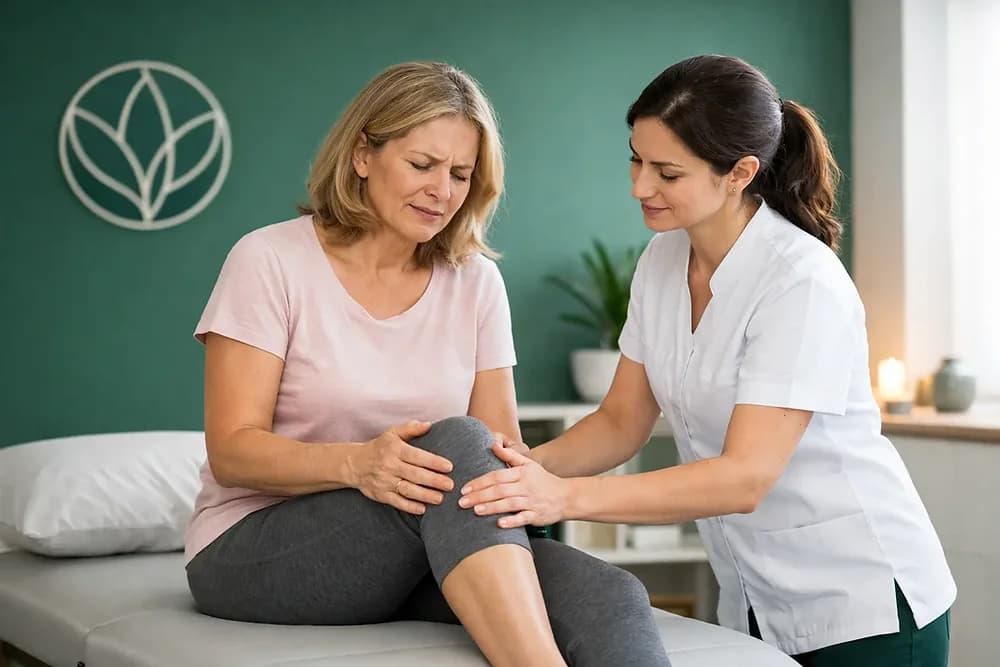
Hands-on treatment can be useful here. Gentle manual therapy may help reduce muscle tension, improve joint mobility and settle irritated areas enough for movement to feel manageable again. On its own, though, it is rarely the whole answer. Lasting change usually comes when treatment is paired with rehabilitation tailored to your body, symptoms and routine.
That might include improving hip strength to reduce knee discomfort, working on thoracic mobility to ease shoulder and neck strain, or rebuilding confidence with graduated loading if exercise has started to feel risky. Good rehabilitation should fit real life. If you commute, work full time and have limited spare time, your plan needs to be practical enough to stick.
Exercise is helpful, but the type and dose matter
One reason women feel disheartened is that advice about exercise can be vague. Being told to move more is not the same as being shown how to move in a way that helps. If joints are sore, too much high-impact work too soon may flare things up. Too little resistance work may leave tissues underprepared. It depends on your starting point, your symptom pattern and what your body is tolerating right now.
Walking, swimming, cycling, Pilates and strength training can all support menopause joint pain relief, but they are not interchangeable. Someone with foot and knee pain may need a different route back into exercise than someone whose main issue is shoulder stiffness and upper back tension. The goal is not to avoid challenge forever. It is to build capacity steadily, so your joints become less reactive over time.
Everyday changes that can make a real difference
Small adjustments are often underrated because they do not sound dramatic. In practice, they can lower the day-to-day strain on sensitive joints.
If you wake up stiff, a short morning mobility routine can help you feel less seized up before work. If your hands are sore, alternating tasks and reducing prolonged gripping may calm things down. If sitting triggers hip or back pain, changing your workstation set-up or using more varied positions through the day can help.
Pacing also matters. On better days, it is tempting to catch up on everything at once. The problem is that a large spike in activity often leads to a flare the next day. A steadier pattern usually works better than the cycle of overdoing it and paying for it later.
Some women also find it useful to keep a simple symptom diary for a few weeks. Not to obsess over every ache, but to spot patterns. Are your joints worse after poor sleep, stressful weeks, long desk days or certain types of exercise? That information can make treatment far more targeted.
When to get support
If joint pain is affecting your sleep, your work, your exercise or your confidence in movement, it is worth getting help. The same applies if you have tried resting, stretching or general fitness classes and are not seeing progress. You do not need to wait until things become severe.
Skilled assessment can be reassuring because it helps separate what is likely load-related and manageable from what needs further medical input. It also saves time. Many women spend months trying generic advice when what they actually need is a plan that reflects their stage of menopause, activity level and specific movement habits.
A personalised approach is especially valuable if your symptoms are broad rather than localised, if you are juggling old injuries alongside new aches, or if you feel your body has become less predictable. In those situations, treatment should not just aim to calm pain. It should help you recover, move better and trust your body again.
A more realistic way to think about recovery
Menopause joint pain relief is often less about chasing a perfect, pain-free body and more about helping your system become calmer, stronger and more adaptable. Some weeks will be better than others. Hormones, stress, sleep and workload can all influence symptoms. That is not failure. It is part of the picture.
What matters is having the right support and a plan that gives you traction. For some women, that means a short course of hands-on treatment and rehabilitation to get things moving in the right direction. For others, it means refining exercise, improving recovery and making a few smart changes to how they work and train. At eve Clinic, that often starts with listening properly, understanding what your pain is stopping you from doing, and building from there.
You should not have to choose between putting up with aching joints and withdrawing from the life you want to lead. With the right approach, things can feel easier, steadier and far more manageable than they do today.