
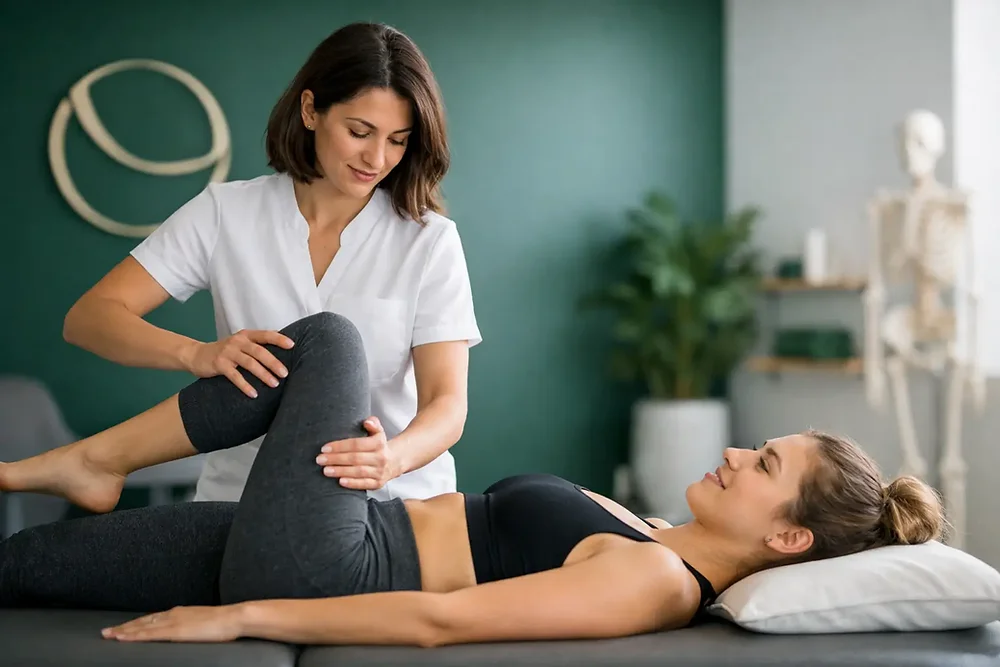
Some people are told they are “just flexible” for years, right up until pain, fatigue, repeated sprains or a sense of instability start affecting work, exercise and daily life. That is often the point when rehabilitation for hypermobility syndrome becomes less about stretching or resting, and more about learning how to support a body that needs control as much as mobility.
Hypermobility exists on a spectrum. For some, it causes very few problems. For others, it can mean joint pain, frequent niggles, muscle tension, poor balance, pelvic discomfort, fatigue, headaches or a feeling that the body is working harder than it should. Many people have also had the frustrating experience of being given generic exercise advice that either flares symptoms or simply does not help.
Good rehabilitation is not about “fixing” flexibility. It is about improving support, reducing overload and helping you move with more confidence. That requires a plan that is specific to your symptoms, your goals and your day-to-day demands.
What rehabilitation for hypermobility syndrome should focus on
The first priority is stability, but stability does not just mean stronger muscles. It means better coordination between muscles, joints, breathing and balance so that movement feels less effortful and less unpredictable. Someone with hypermobility often has enough range already. What they may need is better control within that range.
This is why a sensible rehabilitation plan usually starts with the basics. That may include posture, breathing mechanics, joint awareness and low-load strength work before progressing to more demanding exercises. It can feel surprisingly gentle at first, but that does not mean it is ineffective. In fact, starting too aggressively is one of the common reasons people lose confidence in exercise.
Pain management also matters. If every exercise session leaves you sore for days, the programme is probably not pitched correctly. Progress is rarely linear with hypermobility. There are often periods of improvement mixed with flare-ups, hormonal influences, stress-related setbacks or symptoms that shift from one area to another. A good plan makes room for that reality rather than treating it as failure.
Why generic strengthening programmes often fall short
Many standard gym programmes are built around the assumption that more load and more range are automatically useful. For someone with hypermobility, that can be too simplistic. Deep stretches may feel satisfying in the short term but can sometimes increase irritation if tissues are already being asked to do too much. Likewise, high-repetition exercises done with poor control can reinforce the very patterns that are contributing to pain.
That does not mean people with hypermobility should avoid strength training. Quite the opposite. Strength work is often central to recovery. The difference is in how it is introduced and progressed. Exercise selection, tempo, alignment, rest and recovery all matter more than a one-size-fits-all routine.
There is also a psychological side to this. If you have experienced repeated setbacks, it is understandable to become wary of movement. Some patients arrive convinced they must choose between doing too little and doing too much. Rehabilitation works best when it creates a middle ground - enough challenge to build resilience, without pushing so hard that symptoms spiral.
Key parts of a personalised rehabilitation plan
A thorough assessment should look beyond the bendiness itself. The more useful questions are about where you feel unstable, what triggers pain, how you recover after activity, whether fatigue is a major factor, and what movements or tasks matter most to you. Office work, commuting, lifting children, returning to running and managing pregnancy-related joint discomfort all place different demands on the body.
From there, rehabilitation usually combines a few strands. The first is movement retraining. This helps reduce habits such as hanging into joints, locking knees, gripping through the neck and shoulders, or overusing one part of the body to compensate for another. These patterns are common and often happen without you realising.
The second is strength and endurance. Early exercises may focus on smaller stabilising muscles and short holds, then gradually build towards more functional work such as squats, step-ups, carrying, single-leg balance or sport-specific drills. For some people, hand and foot strength are important. For others, trunk control and hip strength make the biggest difference.
The third is pacing. This is especially relevant if symptoms include fatigue or if good days tend to be followed by bad ones because you naturally try to catch up. Rehabilitation is often as much about learning sustainable loading as it is about any individual exercise.
Manual treatment can also have a role when used thoughtfully. Hands-on work may help settle irritated areas, reduce muscle guarding and make movement feel easier, but it works best as part of a wider plan rather than a standalone answer. Lasting progress usually comes when symptom relief is paired with practical rehabilitation.
Hypermobility, women’s health and symptom changes
For many women, hypermobility symptoms are not static. They may change across the menstrual cycle, during pregnancy, after birth or around menopause. Pelvic girdle discomfort, lower back pain, rib pain, abdominal weakness and feelings of instability can all be influenced by hormonal changes and changing mechanical demands.
This is one reason cookie-cutter advice is so often unhelpful. A person recovering after pregnancy may need support with pelvic floor function, core retraining, scar mobility, lifting mechanics and rebuilding confidence in stages. Someone with endometriosis or persistent pelvic pain may also need rehabilitation that respects flare-ups and sensitised tissues rather than assuming every symptom is solved by pushing harder.
An individualised approach matters here. The right programme should adapt to your current stage of life and recognise that symptoms are shaped by more than one factor.
What progress actually looks like
Progress in hypermobility rehabilitation is not always dramatic at first. Sometimes it begins with fewer minor flare-ups, better sleep after activity, improved balance on one leg, less jaw or shoulder tension at your desk, or being able to walk further without feeling wobbly. These changes count because they are often the foundation for bigger improvements later.
Over time, most people want a few clear outcomes: less pain, fewer recurrences, more confidence in exercise and a body that feels more dependable. That may mean getting back to Pilates, lifting weights safely, commuting without dreading the stairs, or simply finishing a workday with more energy left.
There can still be trade-offs. A very ambitious return to sport may require slower progression than expected. Some people need to accept that recovery is not about doing everything exactly as before, but about doing what matters in a way their body can tolerate and sustain. That is not settling. It is often the route to more freedom.
When to seek support
If you are regularly getting sprains, persistent joint or muscle pain, repeated episodes of your back or neck “going”, or you feel your body is unstable in a way that affects daily life, professional guidance can save a lot of trial and error. The same applies if exercise advice has left you worse, or if you are dealing with hypermobility alongside pelvic health concerns, postnatal recovery or long-standing pain.
At eve Clinic, this kind of work is approached as more than a quick symptom check. It benefits from time, careful listening and a rehabilitation plan built around the way you live and move. For many people, that is what finally turns exercise from something confusing into something constructive.
Building confidence, not just strength
Perhaps the most overlooked part of rehabilitation is confidence. When joints feel unreliable, it is easy to lose trust in your body. You may brace constantly, avoid activity or second-guess every ache. Good rehabilitation helps rebuild that trust through clear explanations, steady progress and exercises that feel purposeful rather than punishing.
The aim is not to make you hyper-aware of every movement forever. It is to give you enough support, knowledge and practical structure that movement starts to feel normal again. That might begin with very small wins, but small wins done consistently often lead to the most meaningful change.
If you have been told to simply stretch more, rest more or “be careful”, it may be time for a better conversation. Rehabilitation for hypermobility syndrome should help you recover, move better and live more freely - with a plan that respects your body, your goals and the reality of daily life.