
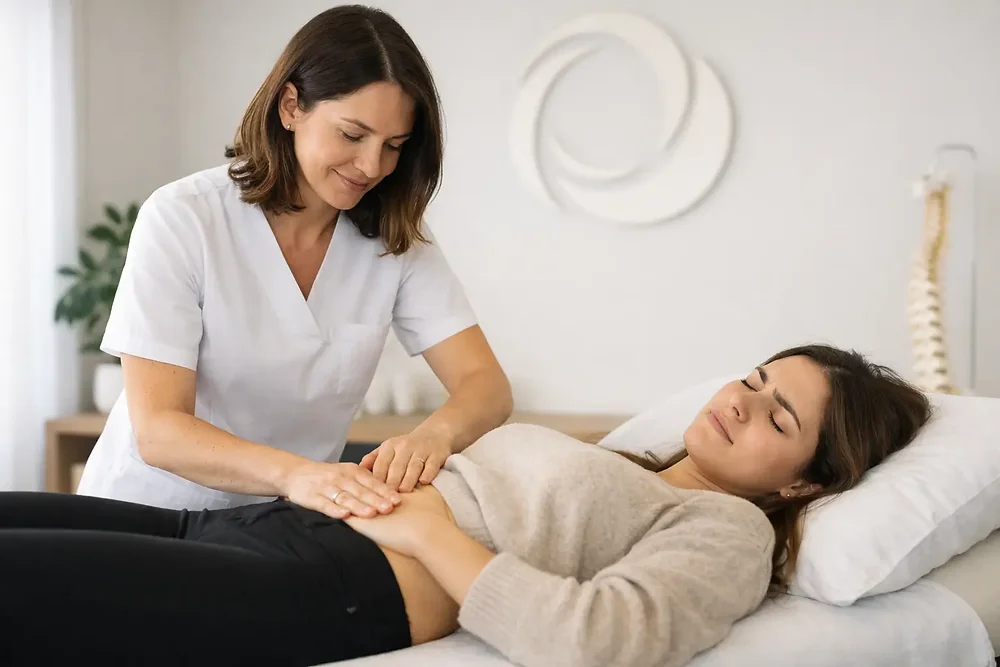
When period pain starts to shape your diary around what you can cancel, avoid or simply push through, it stops feeling like a normal inconvenience. For many women, seeing a period pain osteopath is not about chasing a quick fix. It is about being listened to properly, understanding what may be contributing to pain, and finding practical ways to feel more comfortable and in control each month.
What does a period pain osteopath do?
A period pain osteopath looks at how your body is moving, where tension may be building, and how your muscles, joints and connective tissues may be adding to discomfort around your cycle. The focus is not limited to the area that hurts most. It often includes the pelvis, lower back, hips, rib cage, abdomen and even breathing mechanics, because these areas can all influence how strain is distributed through the body.
This matters because period pain is rarely experienced in isolation. Some women mainly feel cramping low in the abdomen. Others also notice lower back pain, hip tightness, aching legs, fatigue, bloating, or pain that makes sitting at a desk or commuting feel far harder than it should. If the body is already carrying tension or reduced mobility, the monthly increase in discomfort can feel more intense and more disruptive.
Osteopathic care aims to reduce mechanical strain, improve movement and help your body cope better during your cycle. Treatment is hands-on, but it should also include clear explanation and a plan that fits real life - work, travel, exercise, sleep and stress included.
Why period pain can feel worse for some people
There is no single reason why one person has mild discomfort and another is wiped out for days. Hormonal changes are part of the picture, but so are posture, muscle tension, previous injuries, stress, sleep, training load and how much pressure the body is under more generally.
If you spend long hours sitting, you may develop stiffness through the hips and lower back that becomes much more noticeable during your period. If your breathing is shallow and your abdominal wall is always braced, the pelvis can feel more guarded. If you are active but not recovering well, pain can feel sharper and your usual coping strategies may stop working as well.
This is one reason a whole-body assessment matters. Good care does not assume every period pain presentation looks the same. It asks what the pattern is, what makes symptoms better or worse, and how pain is affecting your function - whether that is getting through a workday, sleeping properly, exercising, or simply feeling able to move normally.
How osteopathic treatment may help period pain
Reducing tension around the pelvis and lower back
Hands-on treatment may be used to ease tension in the lower back, hips, pelvic area and surrounding soft tissues. When these areas are stiff or overloaded, they can amplify discomfort during menstruation. Improving mobility does not remove every cause of pain, but it can reduce the amount of extra strain your body is managing at the same time.
Supporting better movement and less guarding
Pain often changes the way you move. You may brace your abdomen, sit asymmetrically, avoid walking at your usual pace or stop exercising for fear of making things worse. Over time, that protective pattern can add another layer of discomfort. Osteopathic treatment can help restore more comfortable movement, so your body does not stay locked into tension between cycles.
Giving you practical strategies between appointments
The best treatment plan is rarely hands-on care alone. Simple mobility work, breathing exercises, heat, pacing advice and changes to training or workstation habits can all make a meaningful difference. The aim is not dependence on regular appointments. It is helping you recover, move better and feel more confident managing symptoms over time.
What happens at an appointment?
A good first appointment should feel thorough and respectful. You should be asked about your symptoms in detail, including where the pain is, when it starts, how long it lasts, and whether it affects your back, hips, digestion, sleep or activity levels. You may also be asked about your general health, exercise, work routine, previous injuries and what you have already tried.
The physical assessment usually looks at posture, spinal and pelvic movement, hip mobility, abdominal and lower back tension, and any areas that seem to be compensating. From there, treatment is tailored to you. That might include gentle joint mobilisation, soft tissue work, stretching, advice on movement, or simple exercises to support the areas under most strain.
For women’s health concerns especially, communication matters. You should know what is being assessed, why it is relevant and what your options are. Care should feel collaborative, not prescriptive.
Period pain osteopath care and the bigger picture
A period pain osteopath should never treat your cycle as a minor complaint you are expected to tolerate. At the same time, good care also avoids pretending there is one universal fix. Sometimes treatment helps quickly because the biggest driver is musculoskeletal tension and poor movement. Sometimes progress is steadier because pain has been present for years, the body is highly sensitised, or there are several contributing factors.
This is where personalised care makes a difference. If your pain is linked with desk-based stiffness, the approach may focus on movement breaks, hip mobility and reducing lower back load. If exercise tends to flare symptoms, your plan may involve adjusting training intensity around your cycle rather than stopping altogether. If stress and poor sleep worsen pain, nervous system regulation and pacing may become part of the treatment strategy.
That broader view is often what patients find most helpful. They are not being told to simply put up with it or to overhaul their lives overnight. They are given a plan that is realistic enough to follow.
When osteopathy may be especially worth considering
You do not need to wait until pain becomes unmanageable to seek support. Osteopathic care may be worth considering if period pain is regularly affecting work, exercise, sleep or daily comfort, or if you also notice recurring lower back, pelvic or hip pain around your cycle.
It can also be helpful if you feel your body never quite settles between periods. Some women describe carrying a constant background of tension through the pelvis and lumbar spine, with menstruation pushing it from manageable to overwhelming. Others find they have become less active because they no longer trust how their body will respond at certain times of the month.
In these situations, treatment is not just about a few painful days. It is about improving your baseline comfort and helping you feel more resilient across the whole month.
A careful, individual approach matters
Women’s health deserves time, skill and proper attention. Rushed appointments and generic advice often leave patients feeling dismissed, especially if they have been trying to manage pain alone for a long time. A more effective approach is one-to-one, specific and grounded in what you actually need.
At eve Clinic, that means looking closely at how pain is affecting your movement, confidence and everyday routine, then building treatment around meaningful progress rather than temporary distraction. For some patients, the priority is getting through the workday without curling over at a desk. For others, it is returning to training, managing childcare more comfortably, or simply not dreading each month in advance.
What results can you realistically expect?
Results vary, and honesty about that matters. Some people notice that their back and pelvic discomfort eases quickly once tension and stiffness are addressed. Others find the biggest early change is that they move more freely, sleep better and feel less overwhelmed by the pain, even before symptoms reduce significantly.
The goal is usually a combination of short-term relief and longer-term change. That may mean fewer pain spikes, better tolerance for sitting or walking, improved confidence with exercise, and less need to structure your life around your cycle. Small gains count, particularly when they build month by month.
If period pain has been affecting your quality of life, you do not have to keep measuring every month by what it takes away. The right support should help you feel more comfortable in your body, more informed about your options, and more able to get on with the parts of life that matter to you.