
Pelvic pain can make ordinary parts of the day feel hard work. Sitting through a meeting, exercising, walking to the station, having sex, sleeping comfortably, even concentrating can become more difficult when pain is persistent or unpredictable. Good pelvic pain treatment is not just about trying to dull symptoms for a few hours. It is about understanding what is driving the pain experience, improving how your body moves and functions, and helping you feel more confident in daily life again.
For many people, pelvic pain is also emotionally tiring. It can feel private, frustrating and easy to put off talking about. That is why the quality of care matters. You should feel listened to, believed and properly assessed, with a treatment plan that makes sense for your body, your goals and your routine.
What pelvic pain treatment should include
Pelvic pain is rarely something that responds well to a rushed, one-size-fits-all approach. The pelvis is an area where muscles, joints, nerves, connective tissues, breathing mechanics, posture, abdominal pressure and past injuries can all play a part. Hormonal changes, pregnancy, postnatal recovery, period-related pain and the effects of stress can shape the picture too.
That means pelvic pain treatment often works best when it combines careful assessment, hands-on treatment where appropriate, targeted rehabilitation and clear advice you can actually use. Some people need help calming an irritated area down. Others need to restore movement, improve load tolerance or address patterns elsewhere in the body that are feeding into pelvic discomfort. Often, it is a combination of both.
A thoughtful assessment should look beyond the exact spot that hurts. For example, stiffness through the lower back, hips or ribcage can change how force moves through the pelvis. Breathing patterns can influence tension through the abdominal wall and pelvic floor. Scar tissue, reduced mobility after surgery, training loads, prolonged sitting or a return to exercise after birth can all matter.
Why the cause is not always obvious
Pelvic pain can present in very different ways. It may feel sharp, aching, heavy, tight, burning or cramp-like. It might be constant, linked to your menstrual cycle, brought on by exercise, worse after sitting, or flare during pregnancy or after birth. Some people notice pain around the pubic bone, tailbone, lower abdomen, groin, hips or lower back rather than one neat location.
This is one reason self-diagnosis can be so unreliable. Two people with similar symptoms may need very different treatment approaches. One person may need more focus on joint and soft tissue mechanics. Another may need graded exercise, pelvic floor down-training, better recovery strategies or support with rebuilding confidence in movement.
There is also a trade-off to keep in mind. Rest can help settle a flare, but too much avoidance may reduce strength and increase sensitivity over time. Equally, trying to push through pain in the hope it will simply go away can keep things irritated. The right balance depends on your symptoms, your triggers and what your body is currently able to tolerate.
A personalised approach to pelvic pain treatment
The most effective care is usually individual. Your treatment should reflect not only your symptoms, but also how long they have been present, what makes them better or worse, what your workday looks like, whether you exercise, whether you are pregnant or postnatal, and what you want to get back to.
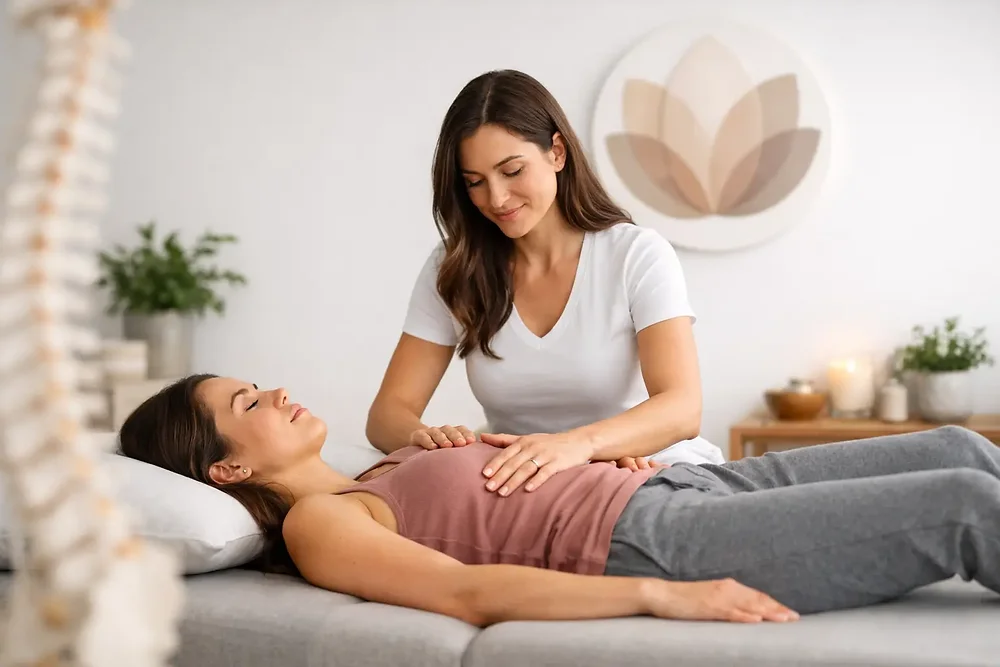
Hands-on treatment may be used to ease muscle tension, improve joint mobility and reduce strain through connected areas such as the lower back, hips or abdomen. This can help create short-term relief, but it should not be the whole plan. For lasting progress, treatment usually needs to be paired with rehabilitation that supports better movement and load management.
That might include exercises to improve pelvic and hip control, mobility work, breathing retraining, gentle strength work or a gradual return-to-exercise plan. It may also involve practical changes to sitting, lifting, training or sleep position. The aim is not to make your world smaller. It is to help you recover, move better and live more freely.
Pelvic pain treatment in pregnancy and after birth
Pregnancy and postnatal recovery deserve specific attention. As your body changes, the way pressure, load and movement are managed changes too. Pain around the pelvis, lower back, groin or pubic area can affect walking, turning in bed, climbing stairs or carrying your baby.
Treatment during pregnancy should feel safe, calm and adapted to each stage. Gentle manual therapy, movement advice and exercises can help reduce strain and improve comfort without asking you to do more than your body can currently manage. Small changes often make a real difference, especially when they are tailored to your symptoms rather than given as generic advice.
After birth, many people are told to wait and see, even when they do not feel right. Sometimes symptoms do improve with time, but not always. If pain is affecting daily tasks, exercise, intimacy or confidence in movement, support can be valuable. Postnatal care should consider abdominal recovery, pelvic floor function, scar mobility where relevant, sleep disruption, feeding postures and the physical demands of caring for a baby.
When exercise helps - and when it needs adjusting
Exercise can be an important part of pelvic pain treatment, but more is not always better. The right kind of movement at the right time matters more than simply being told to strengthen everything.
If an area is already overworking or holding tension, loading it harder may aggravate symptoms. On the other hand, avoiding movement completely can leave the body less resilient. This is where guided rehabilitation is useful. A good programme meets you where you are now, not where you think you should be.
For active people, the question is often how to stay moving without repeatedly flaring symptoms. That may mean temporarily adjusting mileage, impact, intensity or exercise selection while building capacity elsewhere. For people who have stopped exercising because of pain, early rehab may start with simple, manageable movements that rebuild trust in the body.
The value of being properly listened to
One of the most common reasons pelvic pain drags on is that people do not receive care that feels joined up. They may be given a quick explanation, a sheet of exercises and very little room to ask questions. When symptoms are intimate or hard to describe, that can leave people feeling dismissed.
Respectful one-to-one care changes that experience. It gives space to talk openly about symptoms, patterns and concerns without embarrassment. It also means the treatment plan can be adjusted as you respond. Some people improve quickly with a few targeted changes. Others need a steadier process, especially if pain has been present for a long time or has affected confidence, sleep and activity levels.
At eve Clinic, this kind of care is central to treatment. Longer appointments and tailored rehabilitation allow the focus to stay where it should be - on meaningful progress that fits real life.
When to seek support for pelvic pain treatment
If pelvic pain is recurring, limiting your movement, affecting work, exercise, intimacy, sleep or your general quality of life, it is worth getting it assessed. The same applies if you are pregnant, postnatal, returning to sport, or noticing that pain is changing the way you move.
You do not need to wait until symptoms are severe to ask for help. Early support can often prevent unhelpful movement patterns, repeated flare-ups and the frustration of trying random advice that does not match your situation.
Just as importantly, you should never feel that pain in this part of the body is something you simply have to tolerate. Pelvic pain is common, but common does not mean normal for you.
The right treatment is not about quick fixes or generic routines. It is about careful clinical reasoning, skilled hands-on care where appropriate, and a plan that helps you feel stronger, steadier and more in control of your body. If that process is handled with empathy as well as expertise, recovery often feels far more possible.