
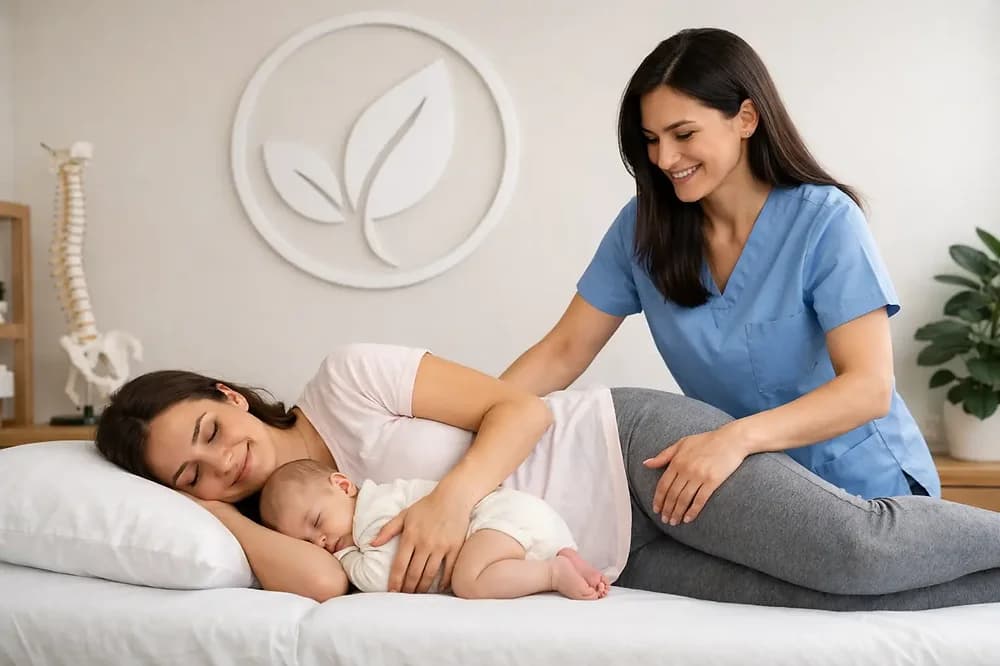
The weeks after birth can feel physically confusing. One day you are being told to rest, the next you are lifting a car seat, feeding for hours in one position and wondering why your back, hips or wrists suddenly feel so strained. Postnatal recovery osteopathy looks at that whole picture - not just where it hurts, but how your body is adapting after pregnancy, birth and the demands of caring for a baby.
For many women, recovery is not simply about waiting for the body to settle. It is about understanding what has changed, what is normal, and where support can make daily life easier. That might mean getting more comfortable when feeding, walking without pelvic heaviness, turning in bed without back pain or feeling steadier as you return to exercise.
What postnatal recovery osteopathy involves
Postnatal recovery osteopathy is hands-on treatment and movement-based support tailored to the changes that happen after birth. It focuses on helping you move more comfortably, reduce strain and rebuild confidence in your body.
A postnatal assessment usually looks beyond one painful area. Your osteopath may consider how your breathing is working, how your ribcage and pelvis are moving, whether your abdominal wall is coordinating well, and how feeding, carrying, sleep positions and lifting are affecting you. If you had a vaginal birth, assisted delivery or caesarean birth, each experience can leave a different physical pattern behind.
Treatment is not about forcing the body back to how it felt before pregnancy. It is about helping your system recover well from where it is now. That often includes gentle manual therapy, practical advice and specific exercises to improve control, mobility and load tolerance.
Why the postnatal period places extra strain on the body
Even when birth goes smoothly, the postnatal period asks a great deal of the musculoskeletal system. Hormonal changes can still influence tissue sensitivity and joint support. Sleep deprivation reduces recovery. Feeding positions can keep the upper back, neck and shoulders under constant tension. Repeated lifting, carrying and bending add up quickly.
There is also the simple fact that postnatal bodies are doing a lot at once. The abdominal wall is recovering from stretch. The pelvic floor is adjusting to pressure changes and load. If you have had abdominal surgery, scar tissue and guarding can alter how you move. None of this means something is wrong, but it does mean pain or stiffness should not be brushed off as something you just have to put up with.
Common reasons women seek postnatal recovery osteopathy
Some women come in with one clear issue, while others simply feel that their body is not moving or coping as it should. Common concerns include lower back pain, pelvic girdle discomfort, neck and shoulder tension, rib pain, hip pain and wrist or thumb strain from lifting and feeding.
Postnatal recovery osteopathy can also be helpful when movement feels restricted after a caesarean birth, when exercise feels difficult to restart, or when everyday tasks such as getting up from the floor, pushing a buggy or carrying your baby are causing discomfort. Sometimes the goal is pain relief. Sometimes it is restoring trust in the body after a demanding pregnancy or birth. Often, it is both.
After a caesarean birth
Recovery after a caesarean is not only about the scar itself. You may notice pulling around the abdomen, stiffness through the trunk, altered posture, reduced confidence with core work or compensatory tension elsewhere, especially in the lower back and hips. Gentle, appropriate treatment can support mobility around the abdomen, ribcage, spine and pelvis while helping you return gradually to stronger movement.
After vaginal birth
After vaginal birth, women may notice pelvic discomfort, a sense of heaviness, lower back pain or difficulty tolerating impact and exercise. These symptoms can have several contributing factors, from muscle overactivity to weakness, altered breathing mechanics or loading patterns that no longer feel efficient. This is where a detailed assessment matters. The right approach depends on what your body is doing, not on a generic timeline.
What treatment may include
The most effective postnatal care is individual. A good session should feel specific to you, your birth experience, your symptoms and your current stage of recovery.
Hands-on treatment may be used to ease stiffness in the spine, pelvis, ribcage, hips or shoulders, reduce protective tension and help movement feel easier. This is usually combined with rehabilitation that fits real life. In practice, that might mean showing you how to improve feeding set-up, adapt lifting technique, reconnect with abdominal support or build strength without aggravating symptoms.
Advice should be realistic. New mothers do not need a perfect routine. They need clear steps they can use when tired, short on time and already carrying a lot of mental load. Sometimes a few carefully chosen exercises done well are more useful than a long programme that is impossible to keep up.
When to seek support
There is no single right moment to book in. Some women want support in the early weeks because pain is already affecting feeding, sleep or mobility. Others reach a few months postnatal and realise things are still not improving as expected. Others again return to running, the gym or yoga and find their body is not tolerating it comfortably.
If pain is persisting, worsening or making everyday tasks harder, it is worth getting assessed. Equally, you do not need to wait until things feel severe. Early support can often stop compensation patterns becoming more established and can make recovery feel more manageable.
What good postnatal recovery osteopathy should feel like
Postnatal care should never feel rushed or generic. You should feel listened to, taken seriously and given space to explain not just your pain, but how it affects your day. A proper assessment should connect symptoms to function. If your back hurts, the question is not only where the pain is, but what happens when you feed, carry, squat, walk or try to exercise.
At eve Clinic, that means taking time to understand the full picture and creating a plan that supports both immediate relief and longer-term progress. For some women, a short course of treatment with tailored rehabilitation is enough. For others, recovery is more layered and benefits from a phased approach. It depends on your body, your goals and what daily life currently demands of you.
Postnatal recovery osteopathy and returning to exercise
One of the biggest frustrations in the postnatal period is not knowing what is safe, sensible or too much. Blanket advice is rarely helpful. Some women are ready for progressive strength work sooner than they expect. Others need to rebuild more gradually because of pain, pelvic symptoms, abdominal weakness or fatigue.
Postnatal recovery osteopathy can help bridge that gap. Rather than focusing only on pain, it can assess how well your body manages load. Can you control pressure through the abdomen? Are you gripping through the ribs or breath-holding with effort? Does walking feel fine but impact work brings symptoms on? These details matter when planning a return to exercise that is both effective and sustainable.
The aim is not to hold you back. It is to help you move forwards with more confidence and fewer setbacks.
The value of a personalised plan
No two postnatal recoveries are the same. The same symptom can come from very different movement patterns, and the same birth experience can affect women in completely different ways. That is why personalised care matters so much.
A thoughtful treatment plan should evolve as you improve. In the early stage, the focus may be on easing pain and improving comfort with daily tasks. Later, it may shift towards strength, endurance and returning to work, sport or longer periods of carrying and activity. The best care supports independence, so you leave with a clearer understanding of your body and practical tools to manage it well.
Recovering after birth does not mean getting back to a previous version of yourself as quickly as possible. It means building a body that feels supported, capable and more comfortable in the life you are living now. If something feels off, you do not need to minimise it or push through. With the right support, recovery can feel more informed, more confident and far less lonely.