
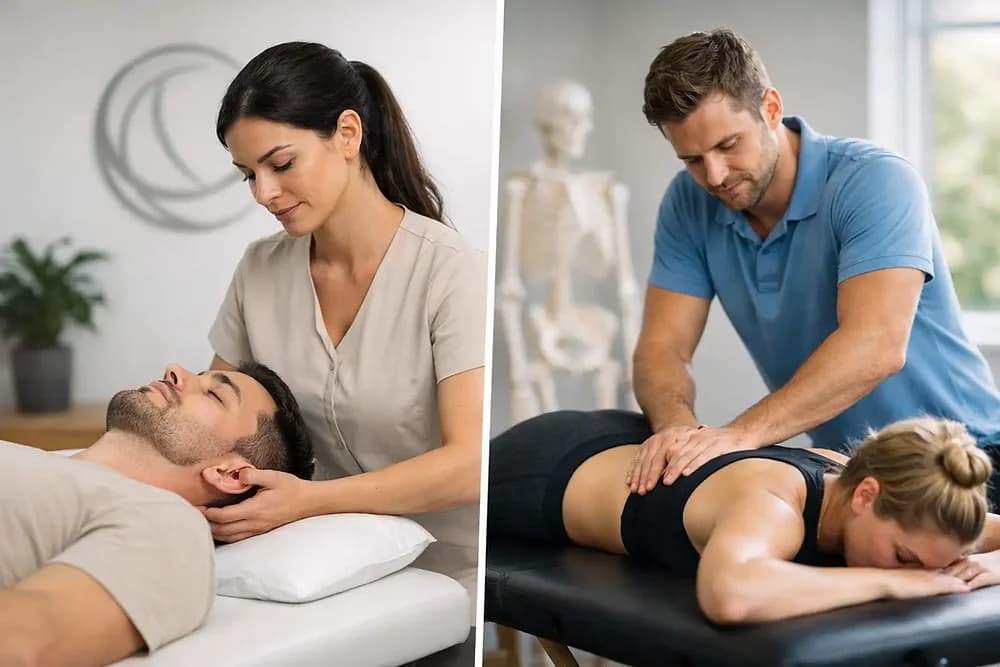
When you are sore, stiff or struggling to get back to normal after an injury, the question is rarely academic. The real issue behind osteopathy versus physiotherapy differences is simple: which approach is more likely to help you recover, move better and feel understood as a whole person?
Both professions work with pain, movement and function. Both can play an important role in musculoskeletal care and rehabilitation. Yet the experience of treatment, the style of assessment and the emphasis of the plan can feel quite different. That matters, especially if you have tried short appointments, generic exercises or care that did not quite fit your life.
Osteopathy versus physiotherapy differences in practice
The biggest distinction is often not one single technique but the overall clinical approach.
Osteopathy typically places strong emphasis on hands-on assessment and treatment, while also looking at how different parts of the body may be affecting each other. An osteopath is likely to consider how your posture, breathing, daily habits, previous injuries, work set-up, stress levels and movement patterns are contributing to the problem in front of you. Treatment often includes manual therapy alongside exercise advice and practical changes that support longer-term improvement.
Physiotherapy is often strongly centred on rehabilitation, exercise prescription and restoring physical function after injury, surgery or pain-related limitation. Many physiotherapists also use hands-on treatment, but the balance can vary depending on the clinician, setting and specialism. In some cases, the programme may lean more heavily towards exercise-based recovery from the outset.
In real life, there is overlap. Good osteopaths prescribe rehabilitation. Good physiotherapists use manual skills. The difference is often about emphasis, depth of hands-on work and how broadly the practitioner looks at the body and the person in front of them.
How assessment usually differs
A first appointment often tells you a great deal.
In osteopathy, the assessment is commonly detailed and whole-body in nature. You may be asked not only where it hurts, but when it started, what aggravates it, what eases it, how you sleep, how you sit, what training you do and whether there have been any relevant changes such as pregnancy, menopause, surgery or stress. The physical assessment often looks beyond the painful area to see what else may be influencing your movement.
In physiotherapy, assessment is also thorough, but it is often more focused on the injured or painful region and the function you want to regain. If you have a running injury, a post-operative knee, shoulder pain from the gym or back pain affecting work, the physiotherapist may concentrate on strength, mobility, loading tolerance and a structured rehab pathway.
Neither style is inherently better. It depends on what you need. If your issue is straightforward and your main goal is progressive rehab, a physiotherapy-led approach may feel very direct. If your pain is more persistent, recurrent or linked with several body regions, an osteopathic assessment may offer a broader perspective.
The treatment experience
For many patients, the felt difference between the two professions comes down to what happens during treatment.
Osteopathic care commonly involves more hands-on treatment within the session. That may include joint articulation, soft tissue work, stretching, mobilisation and techniques aimed at helping the body move with less restriction. The goal is not simply to create short-term relief, but to reduce barriers to better movement so rehabilitation can be more effective.
Physiotherapy treatment may include manual therapy too, but it is often paired with a stronger early focus on exercise progression, strength work, motor control and return-to-activity planning. In sports injury recovery and post-operative care, this can be especially valuable because progress often depends on gradually rebuilding capacity.
That said, the best care is rarely hands-on or exercise-only. Most people do well when treatment combines symptom relief with a clear plan for restoring function. A calm nervous system, better joint mobility and reduced muscle guarding can make exercise easier. Equally, hands-on treatment without a rehab strategy may not hold for long.
Osteopathy versus physiotherapy differences for specific needs
This is where context matters.
If you have acute back pain after lifting something awkwardly, either osteopathy or physiotherapy could help. The right choice may depend on whether you want more immediate hands-on treatment, more exercise-led guidance, or a mix of both.
If you are recovering from surgery, physiotherapy is often the route people expect because rehabilitation milestones are central. However, osteopathic care with strong rehab expertise can also be very useful, particularly when scar tissue, compensation patterns, stiffness and confidence in movement are part of the picture.
For sports injuries, both can be effective. Physiotherapy may feel more performance and loading focused. Osteopathy may be particularly helpful when the injury is not isolated and there are contributing movement patterns elsewhere in the body.
For persistent pain, recurring tension, desk-related aches or complex movement problems, many people appreciate osteopathy’s broader lens. Longer appointments and a more detailed look at lifestyle, stress and body mechanics can make a real difference when the issue is not straightforward.
For women’s health concerns, the quality of the individual clinician matters enormously. If you are dealing with pregnancy-related discomfort, postnatal recovery, pelvic pain, endometriosis-related musculoskeletal strain or menopause-related changes affecting joints and movement, you need someone who understands not just anatomy but the lived experience behind the symptoms. A practitioner who listens properly and adapts treatment to your stage of life can make care feel safer, more respectful and more useful.
Why the practitioner matters more than the label
People often search for the profession when what they really need is the right person.
An excellent clinician in either field should assess carefully, explain clearly and create a plan that makes sense for your goals. They should not leave you dependent on endless treatment, and they should not hand over a sheet of exercises without enough support. Good care is collaborative. You should understand what is being done, why it is being done and what progress should look like.
This is especially important if you have felt dismissed before. Patients with chronic pain, pelvic health concerns or recurring injuries often come in frustrated not only by the pain itself but by the lack of joined-up thinking around it. Being listened to is not a bonus. It is part of effective care.
At a clinic such as eve Clinic, that means combining hands-on treatment with personalised rehabilitation and practical strategies that fit real daily life, rather than expecting people to work around a generic plan.
How to choose between osteopathy and physiotherapy
Start with the kind of support you are looking for.
If you want a strong hands-on approach, a whole-body assessment and treatment that considers how different factors may be feeding into your pain, osteopathy may be the better fit. If you want a highly structured rehabilitation pathway, especially after surgery or a sports injury, physiotherapy may feel more familiar.
But do not stop at the professional title. Look at appointment length, clinical experience, specialist interests and whether the practitioner’s style suits you. If you have a complex history, recurring pain or women’s health concerns, seek someone who has real expertise in those areas and enough time to assess properly.
It is also worth asking how treatment is combined with self-management. The goal should be to help you recover well, not to keep you coming back unnecessarily. The best plans usually include a thoughtful blend of treatment, movement guidance and realistic advice you can actually follow.
The answer is often less about either-or
Many patients assume they must pick a side, but the reality is more flexible. Osteopathy and physiotherapy are not enemies competing for the same ground. They are different clinical approaches that can overlap and complement each other.
The more useful question is this: what does your body need right now, and what kind of care will help you make progress with confidence? Sometimes that means prioritising hands-on treatment to settle pain and improve movement. Sometimes it means a progressive rehab plan that rebuilds strength and trust in your body. Often, it means both.
If your care feels personalised, respectful and clearly targeted towards the life you want to get back to, you are probably in the right place. That is the difference most people feel first, and it is often the one that matters most.