
A twisted ankle on the pavement outside London Bridge, a shoulder that starts to ache halfway through a swim set, a knee that no longer feels right on the stairs after a weekend run - sports injuries rarely arrive at a convenient moment. When people search for sports injury rehabilitation London services, they are usually not looking for theory. They want to know how to get out of pain, move properly again and return to training, commuting and daily life with confidence.
That is where good rehabilitation makes a real difference. It is not just about resting until things calm down, nor is it about being pushed through a generic exercise sheet. Effective rehab should meet you where you are, make sense of what is limiting you, and give you a clear route back to the activities that matter to you.
What good sports injury rehabilitation in London should actually do
In a busy city, it is easy to fall into one of two traps. The first is trying to train through pain because work, life and routine leave little room for recovery. The second is stopping everything for too long, which can lead to stiffness, loss of strength and a growing lack of confidence.
A strong rehabilitation plan sits between those extremes. It aims to reduce pain, improve movement, rebuild strength and restore trust in the injured area. Just as importantly, it should help you understand why the problem happened in the first place. That might relate to training load, technique, mobility, recovery habits, desk-based working, poor sleep, or simply doing too much too soon after a period of inactivity.
For many adults in Central London, sport is only one part of the picture. You may be managing long office days, a packed commute, family life, stress or fluctuating energy levels. For women, there may also be additional factors affecting recovery, including menstrual cycle symptoms, pelvic discomfort, postnatal changes or menopause-related shifts in tissue resilience and recovery capacity. A rehabilitation plan that ignores real life often fails in real life.
Why a personalised approach matters more than quick fixes
Sports injuries can look similar on the surface but feel very different in practice. Two people with Achilles pain may need completely different plans. One may be training for a half marathon and need a graded return to impact. Another may not care about running but simply wants to walk briskly to work without limping.
That is why one-to-one assessment matters. A thorough appointment should look beyond the sore area and consider how you move, what your training or activity pattern looks like, what daily demands you are dealing with and what recovery means for you personally. For some, success is getting back to tennis. For others, it is lifting a child without pain, cycling to the office or sleeping comfortably again.
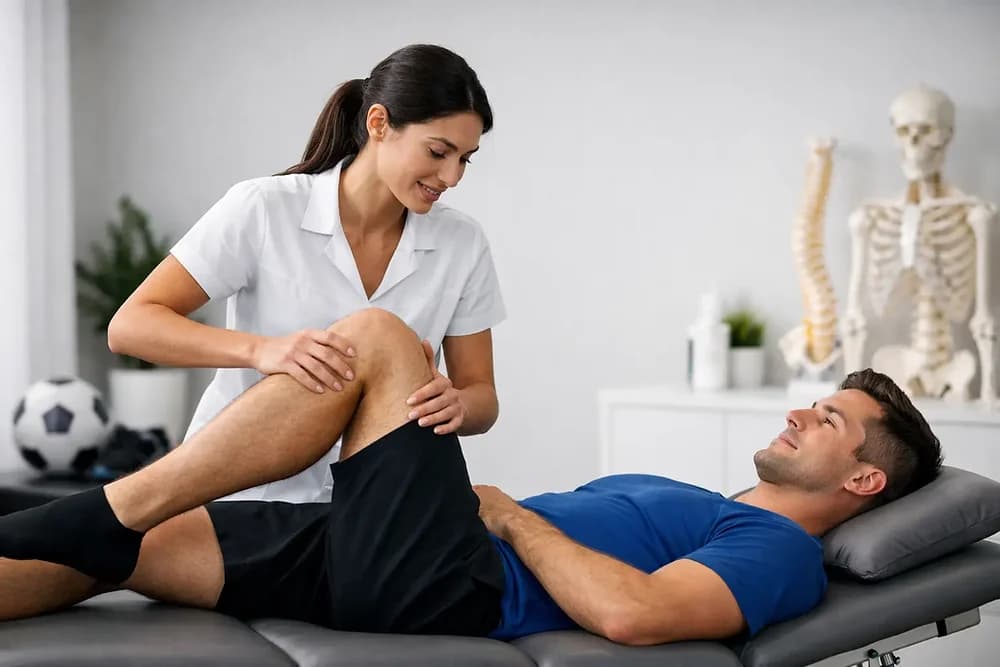
Hands-on treatment can also play an important role, especially when pain and stiffness are making it hard to move normally. Used well, manual treatment is not a stand-alone fix. It should create a window of opportunity - enough comfort and mobility for you to progress with the exercises and movement changes that support longer-term recovery.
Common injuries that benefit from sports rehabilitation
Sports injury rehabilitation is not only for elite athletes. In practice, it often helps recreational runners, gym-goers, cyclists, swimmers, dancers and people who have simply overdone things after a burst of motivation.
Problems commonly seen in clinic include ankle sprains, knee pain, calf strains, hamstring issues, shoulder pain, lower back pain linked to training, tendon irritation and recurring muscle tightness that never quite settles. Some injuries come on suddenly. Others build slowly over weeks or months, often after a change in training volume, pace, intensity or frequency.
The right plan depends on the stage of the problem. Early on, the focus may be pain relief, swelling control and restoring basic movement. Later, rehab usually shifts towards strength, balance, coordination and a gradual return to sport-specific demands. That progression matters. If you skip from rest straight back into full activity, setbacks are common.
Sports injury rehabilitation London patients often need practical, not perfect
There is no point giving someone a beautifully designed programme they cannot realistically follow. In London especially, time is tight. Between work deadlines, travel and family responsibilities, most people need rehabilitation that fits around life rather than taking it over.
That often means a smaller number of focused exercises done well, with clear guidance on what to continue, what to adapt and what to pause temporarily. It may mean changing your running volume rather than stopping entirely, adjusting your gym programme instead of abandoning it, or building strength around the issue while the area settles.
Rehabilitation should also feel collaborative. You should understand why you are doing each part of the plan, what level of discomfort is acceptable, and how progress will be measured. Pain is not always a sign that you are causing harm, but pushing through sharp or escalating symptoms without guidance can slow recovery. Good clinical support helps you judge that difference.
The role of women’s health in injury recovery
This is a part of rehabilitation that is still too often overlooked. Women are frequently given advice that does not take account of pelvic health, pregnancy, postnatal recovery or cycle-related symptom changes, even when these factors clearly affect training and movement.
For example, someone returning to exercise after having a baby may be dealing with abdominal weakness, pelvic floor symptoms, scar discomfort or reduced confidence in impact-based movement. Another person may notice that pain, energy or joint tolerance fluctuate at different times of the month. Someone in midlife may feel that recovery takes longer than it used to, despite doing all the right things.
These experiences deserve thoughtful, informed care rather than dismissal. Rehabilitation should be adapted to the person in front of you, not forced into a standard template. When clinicians take the time to understand the full picture, people often recover more steadily and with less frustration.
What to expect from a thorough rehabilitation process
A good first appointment should leave you feeling clearer, not more confused. You should come away with an understanding of what is being assessed, what may be contributing to the problem and what the first phase of treatment will involve.
That process often includes a detailed discussion, movement assessment, hands-on treatment where appropriate, and a plan for home exercises or training modifications. The strongest plans are usually progressive. They change as your symptoms improve and your capacity increases.
You should also expect honesty. Some injuries respond quickly. Others need patience, especially if they have been present for a while or keep flaring because the underlying load has never been addressed. Fast relief is welcome, but the real goal is durable progress - less pain, better movement and a reduced chance of the same issue returning.
At eve Clinic, this is why longer one-to-one sessions and tailored rehabilitation matter. They create space to assess properly, explain clearly and build a plan that works for your body and your routine, rather than rushing you through a standard appointment.
When should you seek help?
If pain is changing the way you move, stopping you from training, interrupting sleep or lingering beyond what you would expect, it is worth getting it assessed. The same applies if an old injury keeps returning every time you try to increase activity.
You do not need to wait until the problem becomes severe. In fact, earlier guidance often makes rehabilitation simpler because you can address movement restrictions, training errors or strength deficits before they become more ingrained. Equally, if something has been bothering you for months, it is still worth seeking support. Longstanding problems can improve with the right approach.
Choosing sports injury rehabilitation in London
London offers plenty of options, but not every clinic will be the right fit. Technical knowledge matters, but so does the quality of the interaction. You want a practitioner who listens, explains things in plain English and creates a plan that respects both your goals and your limits.
Look for care that combines hands-on treatment with exercise-based rehabilitation, pays attention to the wider context of your life and does not rely on passive treatment alone. If your needs include pelvic health, pregnancy-related concerns, postnatal recovery or other women’s health factors, that expertise should not be an afterthought.
The best sports injury rehabilitation London patients receive is not just about getting back to sport as quickly as possible. It is about coming back stronger, moving with more confidence and understanding your body better than you did before the injury.
If you are dealing with pain that is keeping you from running, lifting, cycling, swimming or simply moving comfortably through the day, the right support can make recovery feel less uncertain. A well-built rehabilitation plan should help you recover, move better and live more freely - one realistic step at a time.