
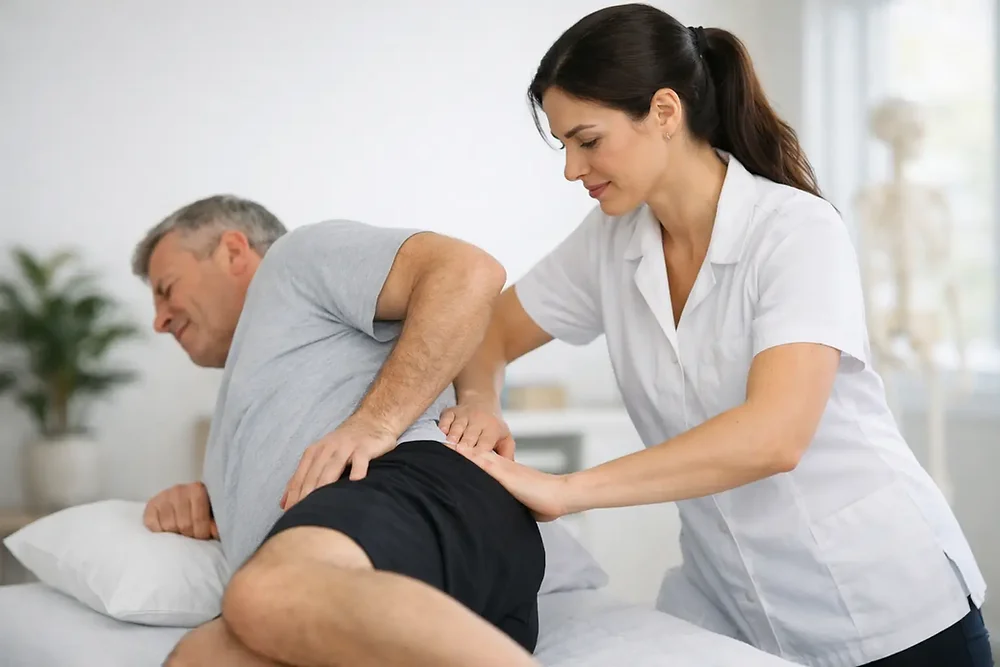
Sciatica has a way of taking over ordinary life. Sitting through a commute, turning in bed, walking up the stairs, even putting on your shoes can suddenly become difficult when pain starts in the lower back or buttock and travels down the leg. If you are wondering, can osteopathy help sciatica, the short answer is often yes - but the right answer is a little more nuanced.
Osteopathy can be helpful when treatment is tailored to the person in front of you, not just the label of sciatica. That matters because sciatica is not one single experience. For some people it is sharp, shooting nerve pain. For others it feels like burning, tingling, cramping, heaviness or a dull ache that never quite settles. The pattern, intensity and cause can all vary, which is why a careful assessment comes first.
Can osteopathy help sciatica in a meaningful way?
In many cases, yes. Osteopathic care aims to reduce pain, improve movement and help you return to normal activity with more confidence. That may involve hands-on treatment, advice on positions that ease irritation, exercises to restore movement, and a rehabilitation plan designed around your work, training, childcare or commute.
The most useful way to think about osteopathy is not as a quick fix, but as part of a practical recovery process. If your symptoms are being aggravated by stiffness through the lower back, reduced hip movement, muscle guarding, poor tolerance to sitting, or fear of moving because everything feels vulnerable, osteopathic treatment may help calm things down and improve how you move. For many people, this combination is far more useful than being told simply to rest and wait.
That said, sciatica does not always settle at the same speed. Some episodes improve relatively quickly, while others need a more gradual approach. The goal is not to chase temporary relief alone, but to help you recover, move better and feel less at the mercy of the pain.
What sciatica actually feels like
Sciatica usually refers to pain that follows the path of the sciatic nerve, often from the lower back or buttock into the back or side of the leg. Some people also notice pins and needles, numbness or weakness. Coughing, sneezing, prolonged sitting or bending may make it worse.
A lot of patients are understandably anxious when nerve pain appears. It can feel intense, unpredictable and quite different from an ordinary back strain. That anxiety is real, and it deserves to be taken seriously. At the same time, sciatica is not always a sign that you should stop moving altogether. In fact, the right kind of movement is often part of recovery.
This is where a one-to-one assessment is so valuable. Two people may both say they have sciatica, but one may need help easing sensitivity around the lower back and nerve, while another may need more focus on hip mobility, walking tolerance or confidence with bending and lifting again.
How osteopathic treatment for sciatica usually works
An osteopath will usually start by understanding how your symptoms behave. Where is the pain? Does it go below the knee? Is sitting the worst trigger, or is it walking, standing, bending or rolling in bed? Has it happened before? Are you noticing changes in strength, sensation or sleep?
From there, the physical assessment looks at how your back, pelvis, hips and legs are moving and where strain may be building. The aim is to understand the pattern of irritation and what is keeping it going.
Hands-on treatment may then be used to reduce muscle tension, improve joint movement and settle protective guarding around the lower back, hips and surrounding tissues. This is not about forcing the body through pain. Good osteopathic care should feel thoughtful and responsive, adapting to how sensitive the area is on that day.
Treatment often works best when paired with rehabilitation. That might mean gentle movements to improve tolerance to bending, walking strategies for flare-ups, simple nerve mobility exercises when appropriate, or strength work to support your back and hips as symptoms settle. Advice should be specific enough to fit your life. Someone who sits at a desk all day needs different guidance from someone who is training regularly or lifting a baby several times a day.
Why osteopathy can help - and where its limits are
One reason osteopathy can be helpful is that sciatica often affects more than one thing at once. There is the pain itself, but also stiffness, altered movement, disturbed sleep, reduced activity, worry about making it worse, and frustration at how much normal life has narrowed. A broader treatment approach can address several of those factors together.
Hands-on treatment may help reduce sensitivity and make movement feel easier. Clear explanation often reduces fear, which can lower muscle guarding and improve confidence. Rehabilitation gives you something practical to work on between appointments, so progress does not depend on treatment alone.
Even so, there are limits. Osteopathy is not about pretending every case can be solved with manual treatment. Some people improve with a short course of care, while others need co-management, medical review or a slower rehabilitation plan. Good care should be honest about that. If your symptoms are severe, worsening or not following the expected course, you may need further investigation or referral.
When can osteopathy help sciatica most?
Osteopathy may be especially useful when pain is affecting movement, daily function or confidence, and you want a plan that combines treatment with practical self-management. It can also help when symptoms have not fully settled and you are stuck in the cycle of short-lived relief followed by another flare-up.
For active people, the focus is often on returning to training without repeatedly aggravating the area. For desk-based professionals, it may be about making sitting, travelling and working more manageable. For women during pregnancy or after birth, lower back and leg pain can feel particularly disruptive because rest is not always realistic and the body is already under extra demand. In these situations, personalised treatment and pacing advice can make a real difference.
An individualised approach matters because recovery is not just about the irritated nerve. It is about sleep, stress, workload, movement habits, previous episodes, general strength and what your body is being asked to cope with day to day.
What to expect from a good treatment plan
A good plan should leave you clearer, not more confused. You should understand what seems to be driving the pain, what the treatment is aiming to change and what you can do at home to support progress.
Early treatment may focus on settling pain and making key activities more tolerable. That could mean helping you sit more comfortably, sleep with less disruption or walk with less limping. As symptoms improve, the focus usually shifts towards restoring fuller movement, building strength and reducing the chance of repeated flare-ups.
This is one reason longer, more personalised appointments can be so useful. They create space for assessment, treatment, explanation and progression, rather than rushing through a standard set of techniques. At eve Clinic, that one-to-one approach is central to helping patients recover in a way that feels both supported and practical.
When to seek urgent medical advice
While many cases of sciatica respond well to conservative care, some symptoms should be assessed urgently. Seek prompt medical attention if you develop new loss of bladder or bowel control, numbness around the saddle area, rapidly worsening weakness in the leg, or severe symptoms that escalate suddenly.
A responsible practitioner will always screen for this and guide you appropriately.
The question is not just can osteopathy help sciatica - it is what kind of help you need
The best osteopathic care does not treat sciatica as a generic problem with a generic answer. It looks at how your pain behaves, how it is affecting your life and what will help you move forwards with less pain and more trust in your body.
For some people, that means a short period of hands-on treatment and a few targeted exercises. For others, it means a more gradual rehabilitation plan with support to rebuild strength, movement and confidence over time. Both are valid. What matters is having care that listens properly and gives you a realistic route back to living more freely.
If sciatica is making everyday life smaller, you do not have to simply put up with it or guess your way through recovery. The right support should help you feel understood, informed and steadily more capable again.