
Pain that has been present for months can change far more than your comfort. It can affect how you move, how well you sleep, how much you trust your body, and even how you plan your week. A good guide to persistent pain rehabilitation should not promise a quick fix. It should help you understand why pain can linger, what sensible treatment looks like, and how recovery is built step by step.
Persistent pain is rarely just about one structure staying “damaged”. By the time pain has been around for a while, the nervous system often becomes more protective, movement habits may change, strength and stamina can drop, and everyday activities can start to feel loaded with uncertainty. That is why rehabilitation matters. The aim is not simply to get through the day with less discomfort, but to help you recover function, move better and feel more confident in your body again.
What persistent pain rehabilitation really means
Persistent pain rehabilitation is a personalised process that helps reduce the impact of ongoing pain by improving movement, strength, tolerance, confidence and self-management. It may include hands-on treatment, exercise therapy, education, pacing strategies, sleep and stress support, and careful guidance around flare-ups.
Crucially, rehabilitation should fit your life. If you commute into London, sit for long hours, train regularly, care for children, or are navigating pregnancy, postnatal recovery or menopause, your plan needs to reflect that reality. Generic advice often falls short because persistent pain does not affect everyone in the same way.
For some people, the main problem is fear of movement after months of discomfort. For others, it is reduced fitness, poor sleep, pelvic pain that disrupts daily life, or a repeated cycle of doing too much on a good day and paying for it later. Effective rehabilitation starts by identifying the pattern, not by forcing everyone into the same programme.
Why pain can continue even when scans do not explain everything
This is one of the most frustrating parts of long-term pain. You may have been told that imaging is “not too bad”, yet you still hurt. Or you may have findings on a scan that sound alarming, even though they are not the full reason for what you feel day to day.
Pain is influenced by more than tissue sensitivity alone. The nervous system, previous injury, sleep quality, stress, hormones, movement confidence, workload and general health can all shape how pain behaves. That does not mean the pain is imagined. It means it is real, and also more complex than a single mechanical fault.
This matters because it changes the rehabilitation approach. If pain is being amplified by poor sleep, guarded movement and repeated flare-ups, the answer is not always more rest or harder exercise. Sometimes progress starts with calming the system, improving baseline activity and rebuilding trust in movement at the right pace.
The role of reassurance and clarity
Many people with persistent pain have had conflicting advice. They may have been told to stop exercising, push through at all costs, stretch more, rest more, or simply wait. That uncertainty can make the body feel less predictable.
Clear explanation is part of treatment. When you understand why pain behaves the way it does, flare-ups become less frightening and decisions become easier. That alone can reduce the feeling of being stuck.
A practical guide to persistent pain rehabilitation
The best rehabilitation plans are structured, but flexible. They have a direction of travel, yet they adapt to setbacks, busy periods and changes in symptoms. In practice, several elements tend to matter most.
Start with a full assessment, not a one-size-fits-all plan
A useful assessment looks at more than where it hurts. It explores when pain started, what aggravates it, what eases it, how you move, how you sleep, your work set-up, exercise history, stress levels and goals. In women’s health, it may also consider menstrual cycles, pregnancy, postnatal demands, pelvic symptoms and menopause-related changes, because these can influence pain, recovery and training tolerance.
That broader view is what allows treatment to be tailored properly. If your main goal is getting through a workday without neck pain, your programme should look different from someone trying to return to running after pelvic discomfort or rebuild confidence after surgery.
Build activity gradually
A common mistake is swinging between two extremes - avoiding activity until everything feels better, or trying to return to normal too quickly. Neither tends to work well for persistent pain.
Gradual exposure is usually more effective. That means finding a level of movement or exercise you can tolerate consistently, then building from there. The starting point may feel modest, but consistency matters more than intensity. A short daily walk, a few targeted strength exercises or regular mobility work done well often creates more progress than occasional heroic efforts.
Use hands-on treatment thoughtfully
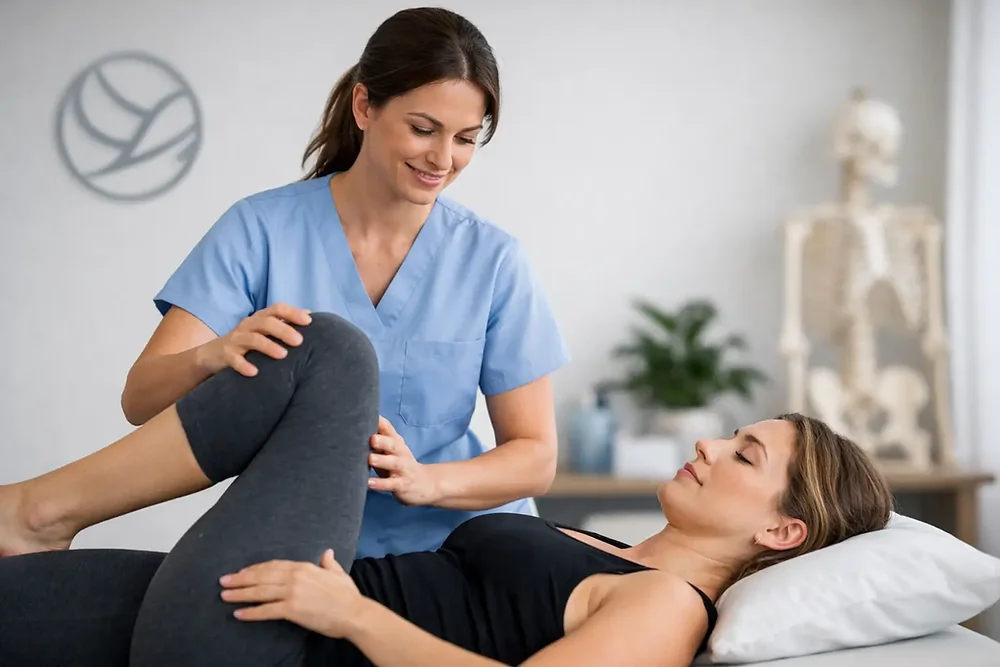
Manual treatment can be a helpful part of rehabilitation, especially when pain and stiffness are making movement difficult. It may reduce discomfort, improve ease of movement and create a window where exercise feels more manageable.
But it works best when it supports an active plan rather than replacing one. Lasting change usually comes from combining symptom relief with strength, movement retraining and practical strategies you can use between appointments.
Retrain confidence as well as movement
People often think rehabilitation is only about muscles and joints. In persistent pain, confidence is just as important. If you have started bracing, avoiding bending, stopping exercise or worrying that every flare-up means harm, those responses can keep the cycle going.
Rehabilitation helps you test movement safely, notice what your body can do, and reduce the fear attached to certain activities. That might mean learning to squat again, returning to the gym with modified loading, or becoming comfortable walking further without constantly checking for symptoms.
How to handle flare-ups without losing progress
Flare-ups are common in persistent pain rehabilitation. They do not automatically mean you have gone backwards. Often they reflect a temporary increase in sensitivity after stress, poor sleep, extra activity, hormonal shifts, prolonged sitting, travel or simply doing more than your current baseline allows.
The key is responding calmly and proportionately. Rather than stopping everything, it is usually better to adjust. You might reduce volume, shorten walks, modify exercises or increase recovery time for a few days, then build back up. This is very different from starting from zero each time pain spikes.
It also helps to look for patterns. If symptoms reliably worsen after busy workweeks, late nights or heavier training, the plan may need better pacing rather than more treatment. Good rehabilitation teaches you how to interpret these signals without panic.
When rehabilitation needs a broader lens
Persistent pain does not happen in a vacuum. If your body is constantly under strain from poor sleep, long hours at a desk, caring responsibilities or high training loads, those pressures need to be part of the plan.
This is especially relevant in women’s health. Pelvic pain, period-related pain, endometriosis, pregnancy discomfort and postnatal recovery can all overlap with musculoskeletal pain in ways that are easy to miss if care is too narrow. Hormonal changes can affect sensitivity, fatigue and recovery capacity. That does not mean exercise is off limits. It means programming needs thought, timing and respect for what your body is managing.
A clinician who listens carefully and adjusts treatment around your daily life can make rehabilitation feel possible rather than overwhelming. At eve Clinic, that personalised approach is central to helping patients make measurable progress, not just collect short-term relief.
What good progress actually looks like
Improvement in persistent pain is not always linear. Some weeks are clearly better. Others feel flat. Progress is often seen first in function rather than pain scores alone.
You may notice you are walking further, sitting longer without tensing, sleeping more soundly, returning to the gym, lifting your child with less hesitation, or recovering faster after a busy day. Pain may still be present at times, but it has less control over what you can do. That is meaningful progress.
It is also worth being realistic. Rehabilitation is not about perfection or never feeling discomfort again. It is about changing the overall trend - fewer setbacks, better capacity, more predictable symptoms and a stronger sense that your body can cope.
Choosing the right support
If you have been dealing with pain for a long time, you deserve care that takes your experience seriously. Look for a practitioner who assesses thoroughly, explains clearly, and builds a plan with you rather than talking at you. You should feel listened to, not rushed.
The most helpful rehabilitation combines expertise with partnership. You need clinical guidance, but you also need practical tools that work in real life - around commuting, deadlines, childcare, sport and everything else your week holds.
Recovery from persistent pain is rarely about finding one magic technique. More often, it comes from a thoughtful process, delivered consistently, with enough support to help you stay the course. Given the right plan, your body can become less reactive, more capable and far easier to trust again.