
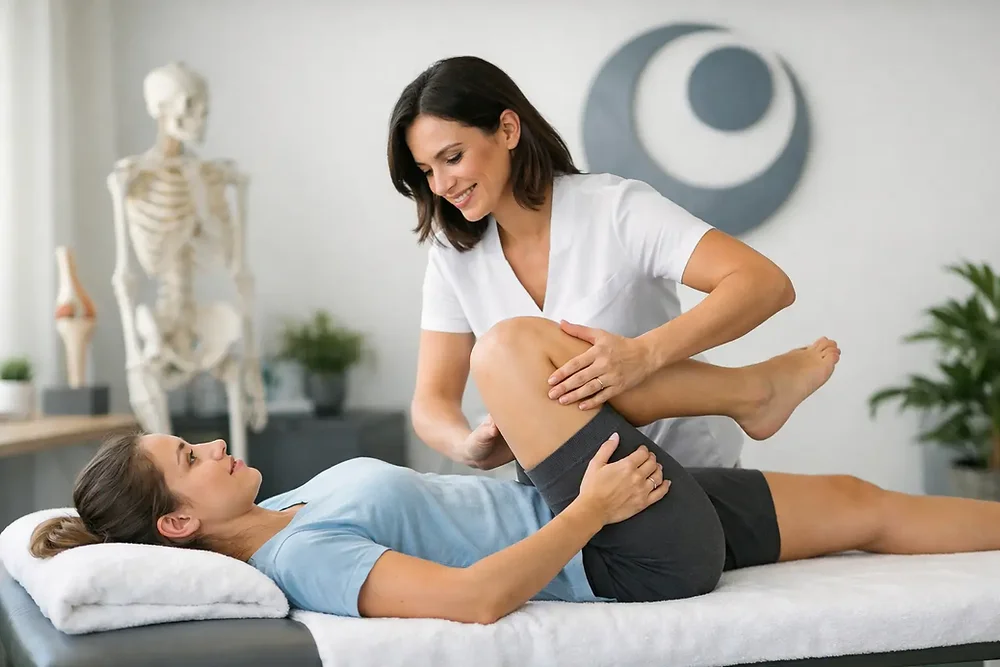
Surgery may be over, but that does not mean recovery is straightforward. Many people in need of post-operative rehabilitation support in London are dealing with a frustrating gap between being medically cleared and actually feeling ready for daily life again. You might be walking, but not comfortably. Sleeping, but not well. Back at work, yet still stiff, tired or hesitant with movement.
That stage matters more than people often expect. A successful operation is only one part of the picture. The quality of your rehabilitation can shape how well you move, how confidently you return to activity, and how fully you recover over the months that follow.
What post-operative rehabilitation in London should actually do
Good rehabilitation is not simply about doing a few exercises and hoping for the best. It should help you rebuild movement in a way that is safe, progressive and tailored to your body, your procedure and your routine.
In practice, that often means addressing several issues at once. Pain and swelling may still be present. Scar tissue can feel tight or sensitive. Strength usually drops quickly after surgery, especially if movement has been limited before or after the procedure. Balance, coordination and stamina may also need work, even when the surgical site itself is healing well.
For some people, the biggest challenge is not pain but uncertainty. They are unsure what is normal, worried about doing too much, or concerned that they are falling behind. That is where one-to-one rehabilitation is particularly valuable. Clear guidance can reduce anxiety and make recovery feel more manageable.
Why recovery is rarely linear
Post-operative rehabilitation sought by London patients is often shaped by the pace of city life. Many people want to get back to commuting, working long hours, exercising, caring for children or simply moving around without planning every step. The difficulty is that recovery rarely follows a neat timetable.
You may have a good week and then feel sore after doing more. You may regain range of movement quickly but still feel weak. You may be physically healing while your confidence lags behind. None of that automatically means something is wrong. It usually means your body needs the right amount of support at the right stage.
This is why a personalised approach matters. Standard advice has its place, but it cannot account for every variable. Someone returning to desk work has different demands from someone training for sport. A new mother recovering after surgery will have different pressures from someone living alone in a third-floor flat. Rehabilitation needs to fit real life, not an ideal version of it.
The parts of recovery that are often overlooked
People often assume rehabilitation is mainly about strengthening, but that is only part of the process. Early on, comfort and confidence can matter just as much as physical conditioning.
Hands-on treatment may help ease muscle guarding around the affected area and reduce tension that builds when you are moving differently. Gentle mobility work can improve how nearby joints and tissues are functioning, which is often important after a period of compensating. Scar tissue work, where appropriate and timed correctly, can also support comfort and movement.
There is a practical side too. Sleep position, pacing, workstation set-up, walking tolerance and return-to-exercise decisions all influence progress. If these are ignored, patients can feel stuck even when they are doing their exercises faithfully.
Women’s health is another area where post-operative care deserves more attention. Recovery after abdominal or pelvic surgery can affect posture, breathing, core control, pelvic comfort and confidence with daily movement. Patients are often told what they should avoid, but not always shown how to rebuild strength and function in a calm, supported way.
Scar tissue, sensitivity and movement confidence
Scar healing is not only about appearance. A scar can feel tight, numb, tender or strangely unfamiliar, and that can change how you move. Some people start guarding the area without realising it. Others avoid twisting, stretching or loading because it feels vulnerable.
A thoughtful rehabilitation plan takes this seriously. That may include education around healing timelines, gentle manual work when appropriate, and graded movement that helps you trust the area again. The aim is not to force progress but to create it steadily.
What a personalised rehabilitation plan may include
A strong plan usually starts with a detailed assessment rather than assumptions. That includes how you are moving now, what your operation involved, what activities matter to you, and what is getting in the way of recovery.
From there, treatment may combine hands-on osteopathic care with tailored rehabilitation exercises. The exercise side is rarely one-size-fits-all. At one stage, the priority may be swelling management, breathing work and gentle mobility. Later, it may shift towards strength, balance, endurance and return to higher-level activity.
The best plans also make room for adjustment. If you are flaring up after every session, the programme may be too much or too soon. If you are coping well and feeling stronger, progress should not stall just because a generic protocol says to wait. Clinical judgement matters.
At eve Clinic, this kind of work is built around longer one-to-one sessions and a clear understanding of the person behind the surgery. That creates space to explain what is happening, respond to concerns properly and build a recovery plan that feels realistic.
Choosing post-operative rehabilitation in London that patients can rely on
When looking for support, it helps to think beyond convenience alone. Location matters, especially in Central London, but so does the quality of the clinical relationship. You want someone who listens carefully, explains clearly and adapts treatment to your stage of healing.
It is worth asking whether appointments are long enough for meaningful assessment and treatment. Short sessions can be difficult when your recovery involves pain, movement retraining, scar work and questions about returning to normal activity. You should also feel that your goals are being taken seriously, whether that means walking to the station comfortably, carrying your baby without strain, or returning to sport with confidence.
For many patients, the right support is the difference between simply getting through recovery and actually recovering well.
When to start rehabilitation
The timing depends on your surgery, your consultant’s guidance and how you are feeling. In some cases, rehabilitation begins quite early with gentle support around breathing, circulation, comfort and safe movement. In others, there is a period of protection before more active work starts.
What matters is that you do not wait until problems become entrenched if you are struggling. Persistent stiffness, fear of movement, compensatory aches and delayed return to function can all become harder to shift when they are left unaddressed.
Signs you may need more support
Sometimes people assume they should simply push through, especially if the operation itself went well. But there are common signs that more tailored rehabilitation could help.
You may still feel unusually stiff or weak. You may be relying heavily on one side of your body. Walking may feel uneven, or ordinary tasks may leave you sore for hours afterwards. Some patients notice they are avoiding movement because they no longer trust the area. Others are technically doing more, but with poor quality movement that creates new strain elsewhere.
These issues are not a personal failure, and they are not unusual. They often mean your body needs a clearer route from healing to function.
Recovery should fit your life, not interrupt it forever
One of the biggest frustrations after surgery is the sense that life is on hold. Good rehabilitation aims to change that. It should help you return to the things that matter in a staged, sensible way, while reducing the risk of setbacks caused by doing too much too soon or too little for too long.
That includes your working day, your caring responsibilities, your exercise habits and your confidence in your own body. Progress is not only measured by pain levels. It is also seen in how you sit, walk, lift, sleep, travel and manage a full week without feeling that recovery is controlling everything.
There is no single version of a successful outcome. For one person it may be getting back to the gym. For another it may be moving through the day with less fear and less fatigue. The point is that rehabilitation should support meaningful function, not just tick off milestones.
If surgery has left you feeling better in some ways but still far from yourself, that does not mean you have to settle. The right rehabilitation can help you recover, move better and live more freely - with a plan that respects both your body and your life.