
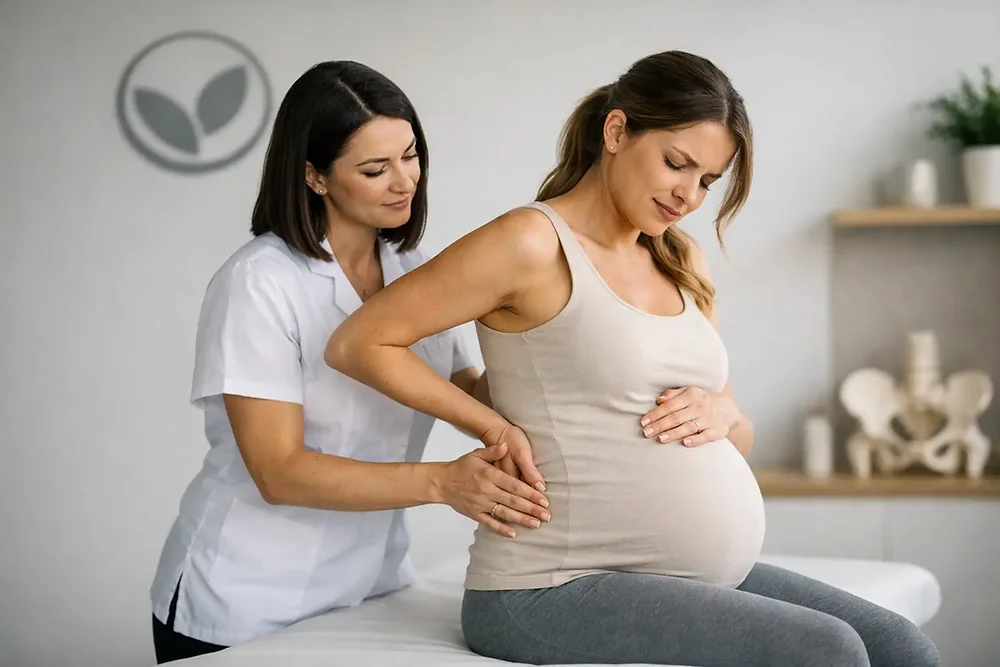
Some people first notice it when rolling over in bed. Others feel it getting out of the car, climbing stairs, or taking that first step after standing up from a chair. If you are looking for a pregnancy pelvic girdle pain example, that pattern is a very common one - sharp, catching or aching pain around the front of the pelvis, buttocks, lower back or inner thighs, often made worse by uneven weight-bearing.
Pelvic girdle pain in pregnancy can feel unsettling, particularly when your body is already changing quickly. It can also be frustrating because the pain may come and go, vary from day to day, or appear during ordinary tasks that used to feel effortless. The good news is that it is common, it is real, and with the right support many people can move more comfortably and feel more confident in daily life.
A pregnancy pelvic girdle pain example in real life
Imagine you are 24 weeks pregnant and commuting into London a few days a week. You have started to notice pain low down at the front of your pelvis, close to the pubic bone, along with an ache on one side of your buttock. It is worst when you separate your legs - stepping out of the tube, getting dressed standing up, or getting in and out of bed. Walking for more than ten minutes starts to feel uncomfortable, and stairs have become a challenge.
That is a very typical pregnancy pelvic girdle pain example. The discomfort may sit at the front, the back, or both. For some, it feels sharp and localised. For others, it is more of a deep ache, with a sense that the pelvis feels strained, unstable or tired. You may also notice clicking, though pain can exist with or without it.
What matters is not whether your symptoms match someone else perfectly, but whether your pain is affecting movement, sleep, work, exercise or day-to-day tasks. If it is, it deserves proper attention.
What pelvic girdle pain can feel like
Pelvic girdle pain is an umbrella term for pain arising around the joints and muscles of the pelvis. During pregnancy, symptoms often involve the pubic symphysis at the front and the sacroiliac joints at the back, though the surrounding muscles and soft tissues also play a big part.
People describe it in different ways. It may feel like pain over the pubic bone, low back pain that sits more to one side, discomfort in the buttocks, groin pain, pain spreading into the hips, or aching into the inner thighs. It can be mild and irritating, or severe enough to make walking difficult.
The pattern often gives the clearest clue. Pain may increase with turning in bed, standing on one leg, putting trousers on, getting in or out of a car, climbing stairs, carrying a toddler on one hip, or walking quickly. These movements all ask the pelvis to transfer load, especially when one side is working more than the other.
Why it happens during pregnancy
Pregnancy changes how your body manages load. As your bump grows, your centre of gravity shifts and the muscles around the trunk, hips and pelvis have to adapt. Hormonal changes may also affect tissue laxity, but that is only part of the picture. Strength, previous injuries, activity levels, fatigue, stress, sleep, and how much time you spend sitting or commuting can all influence symptoms.
This is why two pregnant people at the same stage can feel very different. One may run comfortably into the third trimester. Another may struggle with short walks by mid-pregnancy. Neither experience is a failure. It simply reflects that pelvic pain is multifactorial.
It also means management should not be reduced to a single explanation. Telling someone that their pelvis is just "loose" rarely helps. A more useful approach is to understand which movements aggravate symptoms, where support is lacking, and how to improve comfort and function without creating fear around movement.
When symptoms are often worse
There are some very common triggers. Long walks can aggravate symptoms, but so can sitting still for too long and then standing up. Busy days with lots of transitions - on and off the train, up and down stairs, in and out of meetings - can be more provocative than steady movement.
Asymmetrical tasks are often the biggest issue. Standing with weight dropped into one hip, crossing one leg over the other, carrying bags on one side, or lifting with a twist can all add strain. Sleep may also become more disturbed because turning over in bed requires the pelvis to rotate under load.
That said, it depends. Some people are more affected by walking, while others struggle most with rest after activity. Some feel better with exercise, others need a short period of modification first. Good care starts by identifying your pattern rather than forcing a generic rule.
What helps day to day
Most people do best with a combination of hands-on support, practical movement changes and targeted exercise. The goal is not to stop moving, but to make movement more manageable and efficient.
A few simple changes can reduce irritation. Keeping your knees together when getting in and out of bed or the car can help. Sitting down to get dressed is often easier than balancing on one leg. Smaller steps, especially on stairs or uneven ground, may feel better than striding. If walking is painful, shortening the distance and breaking journeys into manageable chunks is usually more helpful than pushing through.
Exercise also needs a tailored approach. Some people benefit from gentle work for the deep abdominals, glutes, breathing mechanics and hip control. Others need to temporarily reduce single-leg loading, stretching that pulls the pelvis apart, or activities that leave symptoms flaring for hours afterwards. There is no badge for tolerating pain in pregnancy. Progress usually comes from the right amount of movement, not the maximum amount.
Manual treatment can also be valuable when used thoughtfully. Hands-on care may help reduce muscle tension, improve comfort around the lower back and hips, and make movement feel easier. The most effective treatment plans usually combine this with clear advice, reassurance and a rehabilitation plan that fits your week.
Pregnancy pelvic girdle pain example: when to get support
If your pain is affecting sleep, walking, work, exercise, parenting, or your confidence in movement, it is worth seeking support sooner rather than later. Early help can make a meaningful difference, especially before compensatory patterns become more established.
Assessment should look at more than the painful area. A good clinician will consider how you move, what aggravates symptoms, how strong and supported you feel through the hips and trunk, what your daily demands are, and what matters most to you. For someone working in an office near London Bridge, that may mean focusing on commuting, desk set-up and getting through the workday with less discomfort. For someone caring for older children, the plan may need to centre around lifting, floor transfers and sleep disruption.
This is where individualised care matters. At eve Clinic, that often means longer one-to-one appointments, a deeper look at movement and loading patterns, and a plan built around real life rather than a generic handout.
When pain should be checked promptly
Pregnancy-related pelvic girdle pain is common, but not every ache around the pelvis should be self-managed without question. If pain is severe, rapidly worsening, associated with fever, bleeding, unusual swelling, loss of sensation, significant weakness, or changes in bladder or bowel control, you should seek urgent medical advice. If you are unsure, it is always sensible to get checked.
Even when symptoms are more typical, trust your instincts. If something feels different, more intense than expected, or hard to explain, asking for advice is not overreacting. Reassurance is part of good care.
Can it improve before birth?
Yes, often it can. Some people find symptoms settle with a few changes to activity and rest. Others need more structured support. Improvement does not always mean the pain vanishes completely during pregnancy, but it can mean easier walking, better sleep, less pain turning in bed, and more confidence with daily tasks.
There may still be fluctuating days. A long commute, poor night’s sleep or a busy weekend can create a setback. That does not mean you are back to square one. Pregnancy is a dynamic period, and management often needs adjusting as your body and routine change.
A calm, practical approach usually works best. Reduce unnecessary aggravation, keep moving in ways that feel manageable, and get support that helps you understand your body rather than fear it.
Pelvic girdle pain can make pregnancy feel smaller at a time when life is already asking a lot of you. With the right guidance, though, many people can recover comfort, move better and feel more in control - one ordinary daily movement at a time.