
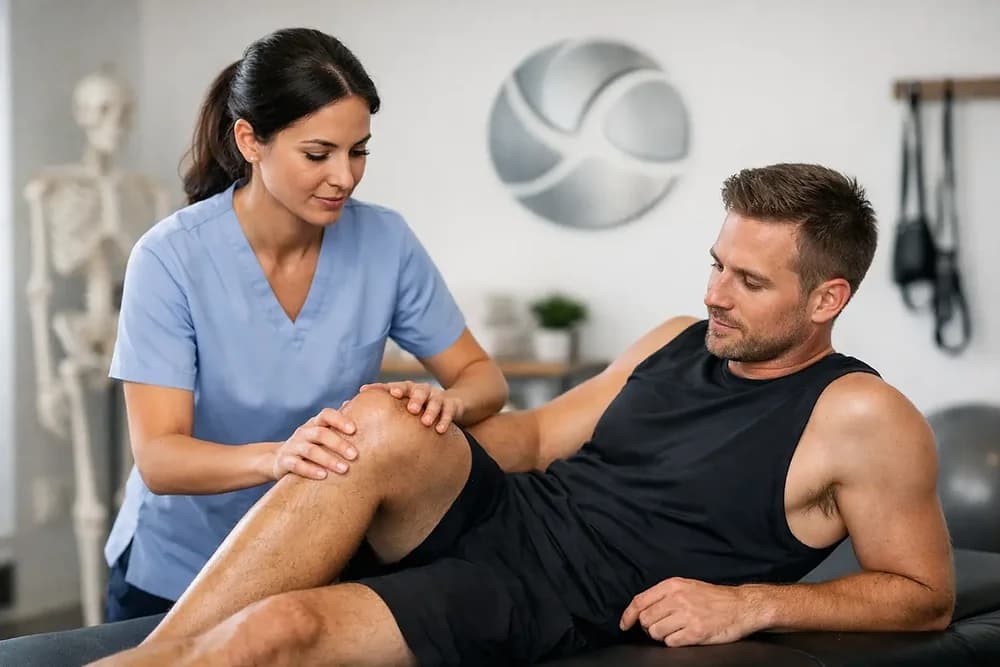
A sprained ankle that keeps giving way on the stairs. Back pain that settles, then returns after a long week at your desk. A postnatal niggle that flares every time you try to get back into exercise. This is exactly where understanding how rehabilitation prevents injury recurrence matters - not just for getting out of pain, but for staying well in real life.
Pain settling is not always the same as recovery. Many people feel significantly better once the sharp symptoms calm down, and that can create a false sense that the problem has fully resolved. But if the body is still moving around stiffness, weakness, poor load tolerance or altered coordination, the same area may be placed under strain again as soon as daily demands rise.
That is why rehabilitation is so much more than a few stretches at the end of treatment. Done properly, it helps you restore strength, movement, control and confidence so your body can cope with work, parenting, commuting, training and the small unexpected moments that often trigger a setback.
Why injuries come back
Most recurrent injuries are not simply bad luck. They often return because the original reason the body became overloaded has not changed enough.
Sometimes that is straightforward. After an ankle sprain, the pain may ease, but balance, calf strength and joint control can still be reduced. In other cases, it is more layered. Neck pain may be influenced by desk posture, stress, sleep disruption and reduced upper back movement. Knee pain might be linked to hip weakness, training errors or poor tolerance to impact rather than the knee itself.
This is also why generic advice can fall short. Two people can have the same painful area and need very different rehabilitation. One may need mobility work, another may need gradual strengthening, and another may need support rebuilding trust in movement after months of guarding.
For women, the picture can be even more individual. Pregnancy, postnatal recovery, pelvic health symptoms, hormonal changes and menopause can all affect tissue sensitivity, load tolerance and recovery patterns. A plan that ignores those factors is less likely to hold up over time.
How rehabilitation prevents injury recurrence in practice
At its best, rehabilitation closes the gap between feeling better and being ready. That gap is where many repeat injuries happen.
A well-designed rehabilitation plan starts by identifying what the affected area can and cannot do yet. That might include range of movement, strength, endurance, balance, breathing mechanics, pelvic control, impact tolerance or how well you manage repeated daily tasks. The goal is not to chase perfect movement. It is to rebuild enough capacity for your actual life.
Strength is one part of this, but not the whole story. Tissues need to tolerate load again. If you have had shoulder pain, for example, it is not enough to move the arm without discomfort in the clinic. You also need the endurance to lift, carry, reach and work without the area becoming irritated later in the day. If you are returning to running after a calf or Achilles issue, your rehabilitation needs to prepare you for repeated force, not just a single comfortable stretch.
Rehabilitation also improves coordination and timing. After pain, the body often adopts protective movement patterns. These are understandable, but if they linger, they can shift load elsewhere and keep the cycle going. Targeted exercises help restore more efficient movement so one area is not constantly compensating for another.
Then there is confidence, which is often underestimated. If you have been hurt before, it is common to feel wary of bending, lifting, twisting or returning to sport. That hesitation can make movement stiff and guarded, which sometimes increases discomfort rather than reducing it. Gradual rehabilitation gives you safe, measurable exposure to movement again, helping your nervous system recognise that activity can be manageable.
Rehabilitation is not just exercise sheets
People often think rehabilitation means being handed a printed programme and left to get on with it. Good care should feel more personal than that.
The most effective plans are built around your symptoms, your goals and your routine. A city professional who sits for long hours and travels on crowded trains has different demands from a recreational runner, a new parent carrying a baby, or someone recovering after surgery. The exercises themselves matter, but so does when you do them, how they progress, and whether they fit your energy, schedule and confidence level.
That is one reason one-to-one care can make such a difference. With longer appointments and a deeper assessment, it becomes easier to identify what is driving the problem, what is slowing recovery and what realistic progress looks like for you. Hands-on treatment may help ease pain and improve movement, but rehabilitation is what helps those gains hold.
At eve Clinic, this combination is central to care. The aim is not simply to provide short-term relief, but to help patients recover, move better and live more freely with a plan that makes sense for their body and their daily life.
The role of progression
One of the clearest answers to how rehabilitation prevents injury recurrence is progression. If recovery stops too early, the body may cope with basic tasks but struggle when demand increases.
A common example is returning to exercise because walking feels fine. Walking is useful, but it does not prepare most people for sprinting, jumping, heavy lifting or repeated directional changes. In the same way, being comfortable at rest does not always mean you are ready for a full day at work, a long journey or carrying a child up the stairs several times.
Progression means building the right challenge at the right time. Early rehabilitation may focus on reducing irritation, restoring comfortable movement and reintroducing gentle muscle activity. Later stages usually involve heavier strength work, more dynamic control, impact preparation or task-specific drills. For postnatal recovery, this might mean moving from breathing and deep abdominal control into lifting, carrying and return-to-fitness work that reflects everyday life.
Too little progression can leave you vulnerable. Too much too soon can flare symptoms and damage confidence. The art is in finding the middle ground where the body is challenged enough to adapt without being pushed beyond what it can currently tolerate.
Why education matters as much as treatment
Rehabilitation works better when you understand what your body is doing and why certain steps matter. Clear explanations reduce fear, improve consistency and help you make better decisions between appointments.
That may mean knowing which level of discomfort is acceptable during exercise and which signs suggest you need to scale back. It may mean understanding that recovery is rarely perfectly linear, and that a temporary flare does not always mean harm. It may also mean recognising patterns that contribute to recurrence, such as doing too much on a good day after several quiet ones.
Education is especially valuable in persistent or recurring pain. When symptoms have come and gone for months, it is easy to lose trust in your body. Reassurance on its own is not enough. What helps is a clear plan, sensible pacing and evidence through experience that you can move safely again.
When rehabilitation needs to be broader
Not every recurrence is caused by a single weak muscle or tight joint. Sleep, stress, workload, caring responsibilities, training volume and hormonal changes can all shape recovery.
That does not mean the answer is vague or out of your hands. It means the plan may need to look wider. If pain repeatedly flares during high-stress weeks, rehabilitation may include pacing strategies and short movement breaks you can actually maintain at work. If symptoms worsen around your menstrual cycle or during menopause, exercise loading may need adjusting with that pattern in mind rather than judged as a failure.
For active people, prevention also means respecting the basics. Returning to sport after injury is not simply about being brave enough to try again. It requires enough capacity, enough recovery and enough structure that the body can keep adapting instead of repeatedly being pushed into overload.
What good rehabilitation feels like
Good rehabilitation should feel purposeful. You should know what you are working on, why it matters and how it connects to the things you want to get back to.
It should also feel achievable. A plan that looks impressive on paper but does not fit around your commute, job, family or energy levels is unlikely to be followed for long. Small, consistent steps are usually more protective than ambitious programmes that are abandoned after a week.
Most importantly, you should notice that you are not just less painful, but more capable. You move with less hesitation. You recover better after busy days. You trust the area more. Setbacks become less frequent, less intense or easier to settle.
That is the real value in understanding how rehabilitation prevents injury recurrence. It gives your body the support it needs to cope with life after the pain has eased, not only while you are in the treatment room.
If you have an injury that keeps returning, the question is often not why it hurts again, but what your body still needs in order to stay well. The right rehabilitation can answer that gently, clearly and with results that last.