
Pregnancy can change the way your whole body feels in a matter of weeks. One month you are moving as usual, and the next you may notice your lower back aching on the commute, your hips tightening in bed, or a sharp pull through the ribs when you turn quickly. Osteopathy during pregnancy is often sought for exactly these kinds of physical changes - not because pregnancy is a problem to be fixed, but because your body is adapting quickly and sometimes needs support to keep up.
At its best, osteopathic care during pregnancy is calm, practical and individual. It should help you feel more comfortable in your body, understand why certain aches are happening, and leave with a clearer sense of what may help between appointments.
Why pregnancy can feel so physically demanding
Pregnancy places real mechanical demands on the body. As your baby grows, your centre of gravity shifts, your breathing pattern can change, and the way you load through your pelvis, spine and feet often changes too. Add in hormone-related ligament laxity, fatigue, disrupted sleep and the realities of work, childcare or commuting, and it is not surprising that ordinary movement can start to feel less ordinary.
Some people mainly notice low back pain. Others struggle more with pelvic girdle discomfort, tightness around the mid-back and ribs, neck tension, headaches, or aching through the glutes and hips. For some, symptoms build gradually. For others, they appear suddenly after a long walk, a poor night’s sleep, or one awkward movement getting out of the car.
This is where thoughtful manual treatment can be useful. The goal is not to force the body into an ideal posture or chase perfect alignment. It is to reduce strain, improve movement where things feel restricted, and help you move through pregnancy with less discomfort and more confidence.
How osteopathy during pregnancy may help
Osteopathy during pregnancy usually focuses on supporting joints, muscles, connective tissues and movement patterns that are under increased pressure. Treatment is adapted to your stage of pregnancy, your symptoms and your comfort. In practice, that often means gentle hands-on techniques alongside advice on sleep position, movement, pacing and simple exercises.
If your lower back feels stiff and overloaded, treatment may aim to reduce tension around the lumbar spine, hips and surrounding muscles. If pain is more pelvic, an osteopath may assess how you are moving through walking, standing, turning in bed or climbing stairs, then work with the tissues and joints that seem to be contributing to that strain. If rib pain or breathlessness is making everyday tasks harder, treatment may focus on improving mobility through the thoracic spine and rib cage so breathing and movement feel easier.
The benefit is often not just pain relief. Many pregnant patients also want to sit more comfortably at work, sleep with fewer interruptions, keep exercising safely, or simply walk without feeling their body is fighting them. Those functional gains matter. Feeling able to get through the day with less effort can make a significant difference to wellbeing.
What happens at an appointment
A good appointment should never feel rushed. You should have time to explain what you are feeling, when it started, what makes it worse and how it is affecting daily life. That wider picture matters because pregnancy discomfort rarely exists in isolation. Sleep, stress, previous injuries, exercise habits and work setup can all shape how symptoms present.
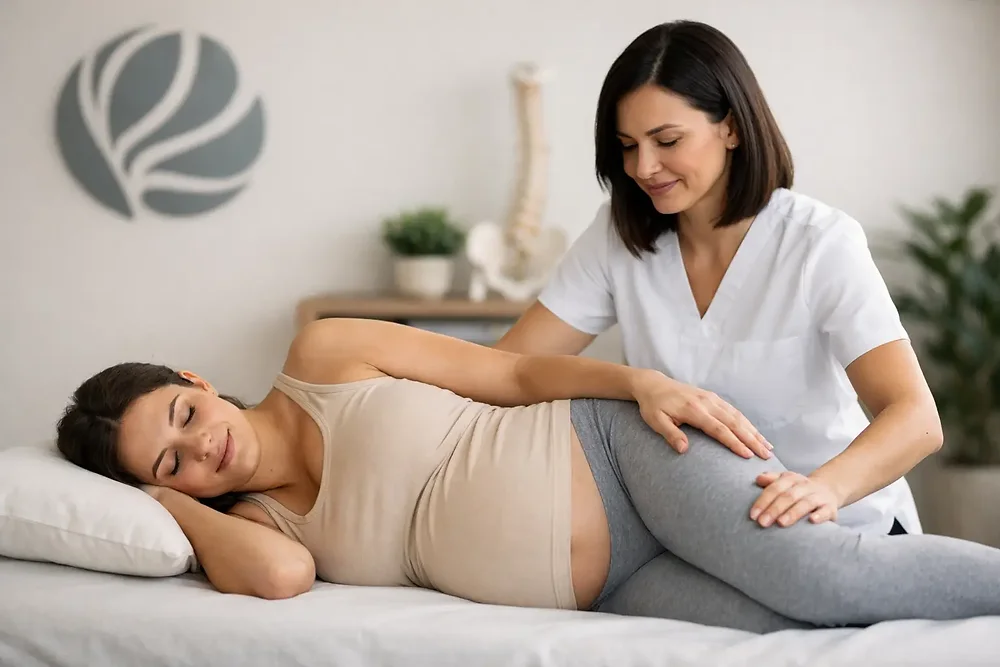
Assessment is usually gentle and tailored. Your osteopath may look at how you stand, walk and move, and assess areas such as the spine, pelvis, hips and ribs. Treatment positions are adapted for comfort and safety. That may mean side-lying, seated treatment, or supported positioning rather than lying flat.
Hands-on care is then combined with practical advice. This could include how to roll in bed with less pelvic strain, which stretches are worth your time and which are not, how to modify gym work, or how to organise your desk so that long hours feel more manageable. At a specialist clinic such as eve Clinic, this blend of treatment and rehabilitation tends to be where patients get the most value - not just relief in the room, but a plan that makes day-to-day movement easier.
Common reasons people seek pregnancy osteopathy
There is no single pregnancy symptom profile, but certain patterns come up often. Low back pain is common, particularly as the bump grows and movement patterns change. Pelvic girdle pain can make walking, stairs and turning in bed surprisingly difficult. Hip discomfort, sciatica-like irritation, rib pain, neck and shoulder tension, and postural fatigue are all frequent reasons for seeking support.
It depends, though, on your baseline. Someone who is already active may notice symptoms when running or strength training but feel fine at work. Someone with a desk-based job may struggle most after sitting for long periods. Someone with a history of hypermobility, older injuries or recurring back pain may find pregnancy exposes an area that was previously manageable.
That is why generic advice can fall short. Two people at the same gestation can have very different symptoms, loads and priorities. Individual assessment matters.
Is osteopathy during pregnancy safe?
This is a sensible question, and one many people ask before booking. Osteopathic treatment during pregnancy should always be adapted appropriately, with techniques, positioning and treatment goals chosen to suit the individual and the stage of pregnancy. Gentle, responsive care is the standard, not an optional extra.
You should feel listened to throughout. If something feels uncomfortable, your osteopath should change approach. If a position does not work for you, there are alternatives. The best care is collaborative and respectful, especially during pregnancy when bodies can feel less predictable from week to week.
There are also times when hands-on treatment is not the whole answer. Some patients benefit most from a combination of treatment, rehab advice and pacing strategies. Others may need shorter, more regular support during a flare-up, then less input once symptoms settle. The right plan depends on how you respond, not on a fixed package of care.
When in pregnancy can you see an osteopath?
Many people attend in the second or third trimester, when physical changes become harder to ignore, but support can be helpful earlier too. In the first trimester, some patients seek care for pre-existing back or neck tension that is becoming more noticeable as energy levels dip. Later on, the focus often shifts towards managing increasing load through the pelvis, spine and ribs.
Near the end of pregnancy, comfort tends to be the priority. Treatment may help with mobility, sleep positions, pelvic and low back strain, and keeping you moving as freely as possible in the final weeks. That said, timing is always individual. You do not need to wait until symptoms are severe before getting support.
What osteopathy can and cannot do
It is worth being clear here. Osteopathy during pregnancy is not about promising a perfect, pain-free nine months. Pregnancy is dynamic, and symptoms can fluctuate even when you are doing everything right. Some discomfort may ease quickly with treatment, while other issues need ongoing management because your body is still changing.
What good osteopathic care can do is help reduce physical strain, improve movement, support comfort and give you practical ways to manage symptoms more effectively. It can also help you feel less apprehensive about moving, which matters more than many people realise. When pain leads to guarding and worry, everyday tasks can become harder than they need to be.
The trade-off is that treatment works best when it is part of a wider plan. Hands-on care may help settle symptoms, but pacing, strength, positioning and rest still matter. The aim is not dependence on appointments. It is helping you recover, move better and live more freely during pregnancy.
Choosing the right practitioner
Pregnancy care should feel informed, respectful and specific to you. If you are looking for an osteopath, it helps to choose someone with clear experience in women’s health and pregnancy-related musculoskeletal care. That usually means better understanding of how pelvic pain behaves, how to position you comfortably, and how to tailor advice to real life rather than ideal routines.
It also helps to look for a clinic that gives enough time for proper assessment and explanation. Pregnancy symptoms are rarely helped by a rushed, one-size-fits-all approach. You should leave understanding what seems to be driving the discomfort, what treatment is aiming to change, and what you can do at home to support progress.
If you are unsure whether osteopathy is right for you, a short introductory conversation can be a useful first step. Sometimes reassurance and a clearer sense of options are exactly what is needed before deciding how to proceed.
Pregnancy asks a lot of the body. The right support does not need to be dramatic to be effective. Often, it is the steady combination of skilled treatment, good advice and feeling genuinely heard that helps you move through this stage with more ease.