
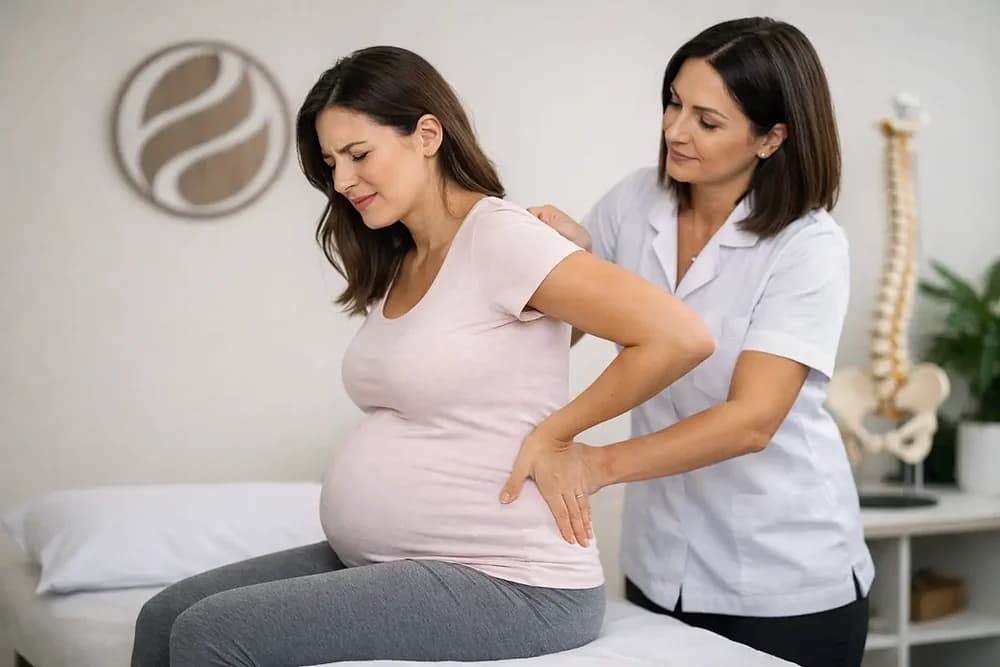
That sharp pull when you roll over in bed, the ache across your lower back after a short walk, the sense that your body is working much harder than usual - these are common reasons people look for pregnancy back pain osteopath support. Back pain in pregnancy can be unsettling, especially when you are already adapting to fatigue, changes in sleep and a body that feels different from week to week. The right care should help you feel more comfortable, more confident in movement and better supported through those changes.
Why back pain is so common in pregnancy
Pregnancy places new demands on the body, and those demands rarely show up in just one area. As your bump grows, your centre of gravity shifts. Your rib cage may flare slightly, your pelvis may feel less stable and the muscles that usually share load efficiently can start working in a different pattern. Add in hormonal changes, disrupted sleep and the practical reality of sitting, commuting, lifting shopping or chasing older children, and it is easy to see why the back often becomes one of the first places to complain.
Pain may be felt in the lower back, around the sacroiliac joints, across the buttocks or higher up between the shoulder blades. Some people notice stiffness first thing in the morning. Others feel worse at the end of the day, after desk work or after standing for too long. It can also change quickly. What felt manageable at 20 weeks may feel very different by 30 weeks.
That variation matters, because pregnancy back pain is not one-size-fits-all. A desk-based professional travelling across London has different daily pressures from someone on their feet for work. Someone who was very active before pregnancy may need a different rehabilitation plan from someone whose movement has become more limited because of pain. Good osteopathic care starts there - with your body, your symptoms and your life.
What a pregnancy back pain osteopath can do
A pregnancy back pain osteopath focuses on easing mechanical strain, improving how you move and helping your body cope better with the load of pregnancy. Treatment is hands-on, but it is not only about the treatment couch. It should also include a careful assessment, practical advice and a plan that fits around your daily routine.
Hands-on osteopathic treatment may be used to reduce tension in overworked muscles, improve mobility through the spine and pelvis and make everyday movement feel easier. During pregnancy, this approach is adapted to your stage of pregnancy, comfort levels and preferences. Positions for assessment and treatment should feel safe and supported, and nothing should be forced.
Just as important is understanding what is driving your pain. Sometimes the issue is clearly linked to prolonged sitting, poor sleep positions or the way you are lifting and carrying. Sometimes there is a wider pattern involving hip stiffness, reduced rib movement, previous injuries or pelvic discomfort. When that pattern is identified properly, treatment becomes more targeted and often more effective.
Treatment should be tailored, not generic
Many pregnant patients worry they will be told to simply rest, stretch a bit and put up with it. That can feel dismissive, especially if the pain is affecting work, sleep or mental wellbeing. While there are times when rest is helpful, too little movement can also make stiffness worse.
A more useful approach is tailored support. That may include hands-on treatment, gentle mobility work, strengthening for the glutes and trunk, advice on sleeping positions and simple changes to work set-up or commuting habits. The aim is not to create a long list of chores. It is to give you a few practical strategies that genuinely reduce strain.
This is where one-to-one care makes a real difference. If getting through your workday is the biggest challenge, your plan should reflect that. If your pain spikes when walking, climbing stairs or turning in bed, those movements deserve attention. If anxiety about movement has started to build, you should be given clear explanations and realistic guidance, not vague reassurance.
When osteopathy may help most
Osteopathic care can be particularly helpful when pain is linked to movement, posture, muscle tension or changing load through the pelvis and spine. Common examples include aching in the lower back after sitting, discomfort around the pelvis when walking, tension through the mid-back from changes in breast size or rib position, and stiffness that makes it hard to get comfortable at night.
It can also help when pain starts to alter your habits. You may notice you are avoiding walks, taking longer to stand up, or feeling hesitant about bending and lifting. Those are important signs, because once movement confidence drops, the body can become more guarded. Gentle treatment and the right rehabilitation can help restore trust in your body at a time when things may already feel unfamiliar.
That said, the best approach depends on the person. Some patients respond quickly to a few sessions and a simple home programme. Others need more regular support because symptoms are being driven by the physical demands of pregnancy, work or previous musculoskeletal issues. There is no prize for needing less help, and no benefit in pretending all pregnancies feel the same.
What to expect at an appointment
If you have never seen an osteopath before, you might wonder what actually happens. A thorough appointment should begin with questions about your symptoms, stage of pregnancy, general health, activity levels and any factors that make pain better or worse. You should feel listened to, not rushed.
Assessment usually looks at how you stand, walk and move, along with the areas that may be contributing to strain. Treatment is then adapted accordingly. During pregnancy, comfort is a priority. You may be treated in side-lying, seated or other supported positions depending on what works best for you.
You should also leave with a clearer understanding of what is happening and what to do next. That might include advice on how to get in and out of bed with less discomfort, how to set up your desk to reduce strain, or which exercises are worth doing between appointments. At eve Clinic, this kind of support is part of the wider aim to help patients recover, move better and live more freely, rather than becoming dependent on repeated short-term fixes.
Self-management matters too
Even excellent hands-on treatment works best when paired with the right day-to-day support. In pregnancy, the smallest adjustments can make a noticeable difference. A pillow between the knees at night, changing position more often during the workday, reducing time spent standing on one leg, or breaking up longer walks can all help calm irritated areas.
Exercise is often part of the answer as well, but only when it is matched to your current capacity. If your back is already aggravated, a generic online workout may make things worse. Usually, the most effective exercises are simple, specific and easy to repeat consistently. Think less about intensity and more about building tolerance, improving control and reducing the effort your body has to spend on ordinary tasks.
Hydration, stress and sleep also influence pain. Not because the pain is 'all in your head', but because a tired, overloaded system often feels pain more strongly. That is why compassionate care matters. You should never feel judged for struggling with movement during pregnancy.
Knowing when to seek support
If back pain is starting to affect sleep, walking, work or your confidence in daily movement, it is worth getting assessed. The earlier you understand what is driving the problem, the easier it usually is to make useful changes. Waiting until every movement feels difficult can leave you more limited than you need to be.
Equally, if you have tried rest, heat, stretching or changing your routine and the pain keeps returning, that is useful information. Persistent symptoms often need a more individual approach. You do not have to wait until things become severe to ask for help.
Pregnancy asks a lot of your body. Back pain may be common, but feeling unsupported should not be. The right osteopathic care can give you relief, clearer answers and practical ways to move through pregnancy with more ease and confidence.