
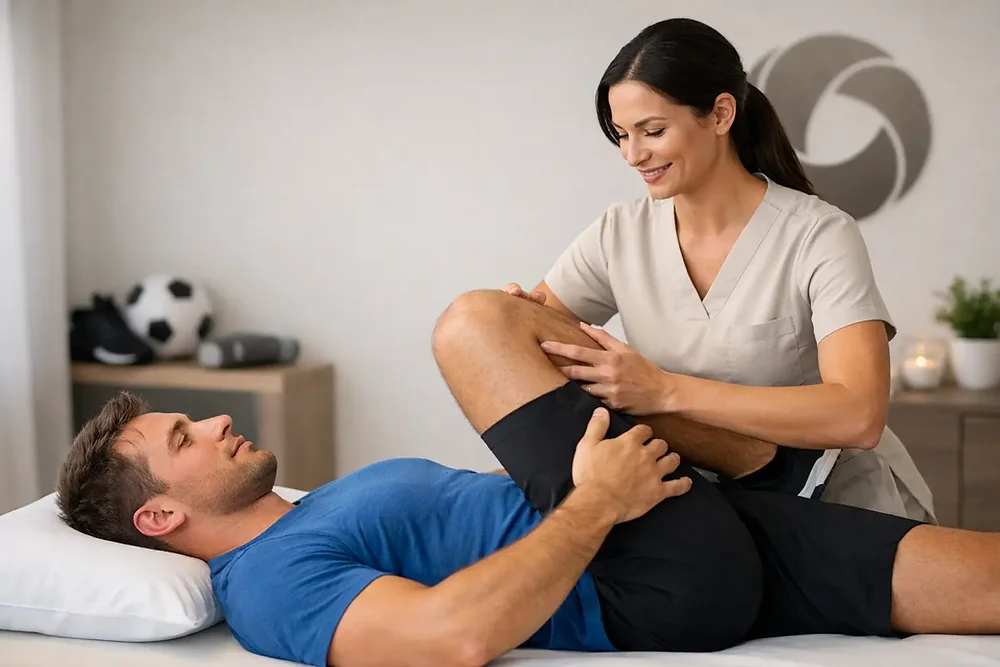
A rolled ankle before your commute, a knee that starts complaining halfway through a run, a shoulder that never quite settles after tennis - sports injury recovery rarely arrives at a convenient moment. For most people, the real frustration is not just pain. It is the knock-on effect on work, sleep, exercise, confidence and the simple freedom of moving without second-guessing every step.
The good news is that recovery is rarely about waiting passively for things to improve. In many cases, the best results come from understanding what has been irritated, calming it down, and then rebuilding strength, control and trust in the area so that your body can return to sport and daily life with more confidence.
What sports injury recovery really involves
A common misconception is that recovery means getting pain down to zero and then going straight back to normal. In practice, lasting improvement is usually more layered than that. Pain relief matters, of course, but so do movement quality, tissue capacity, balance, coordination, training load and the habits that may have contributed to the problem in the first place.
That is why a good recovery plan tends to include more than one element. Hands-on treatment can help settle discomfort and improve movement. Rehabilitation exercises then help restore strength and control. Advice around pacing, sleep, work set-up and training volume can reduce the risk of the same issue flaring up again. None of this needs to feel overwhelming, but it does need to be tailored.
The right plan for a recreational runner training for a 10K will not look the same as the right plan for a new parent trying to get back to exercise after a shoulder strain, or for someone managing pelvic discomfort while staying active. Bodies, lifestyles and recovery timelines differ.
Why rest alone is often not enough
Rest has its place, especially in the early stage when an area is sore, swollen or reactive. But prolonged rest can create a different set of problems. Muscles lose conditioning, joints stiffen, confidence drops and the return to activity starts to feel harder than it should.
There is usually a balance to strike. Too much too soon can aggravate symptoms. Too little for too long can delay progress. This is where guided rehabilitation becomes particularly valuable. Rather than asking you to stop everything, it helps you identify what you can do safely while building towards what you want to do again.
For example, someone with Achilles pain may need a temporary reduction in running distance, but not complete inactivity. Someone with a back strain after sport may benefit from modified movement and progressive loading rather than days of avoiding all activity. The details depend on the presentation, but the principle is similar: sensible movement often supports recovery better than fear-driven avoidance.
The stages of sports injury recovery
Most injuries move through recognisable phases, even though the timeline is not identical for everyone.
Early stage: settle pain and irritation
At the start, the focus is often on reducing aggravation and helping the area feel safer to move. This may include hands-on treatment, advice on relative rest, gentle mobility work and small changes to daily routine or training. The aim is not simply to mask discomfort, but to create the conditions for progress.
Middle stage: rebuild movement and strength
Once symptoms are calmer, rehabilitation becomes more active. This is often the most important part of the process. Strength, control, stability and tolerance need to be restored gradually, with exercises that match the demands of your sport and your life.
This stage can require patience. Many people start to feel better before the body is truly ready for full return to activity. That gap between feeling better and being ready is where setbacks often happen.
Later stage: return to sport with confidence
The final phase is not just about ticking a box and getting back out there. It is about preparing the body for the speed, impact, repetition or unpredictability of the activity you enjoy. A runner may need progressive loading and route planning. A gym-goer may need better control through certain lifts. A footballer may need sharper change-of-direction work before returning fully.
Confidence matters here as much as strength. If you are guarding an area or waiting for it to fail, your movement often changes with it. Good rehabilitation helps reduce that hesitation.
When to seek help for sports injury recovery
Some minor injuries improve with a short period of modified activity and a sensible return to movement. Others benefit from earlier assessment. If pain is worsening, limiting normal daily tasks, recurring each time you restart exercise, or leaving you unsure what is safe to do, it is worth getting proper advice.
Early support can help in two ways. First, it may shorten the period of uncertainty. Second, it can stop well-meaning but unhelpful habits from taking hold, such as stopping all movement, repeatedly testing the painful area, or copying generic exercises that do not fit your situation.
This matters particularly for busy Londoners trying to fit recovery around work, commuting and family life. A plan only works if it is realistic. The best rehabilitation programmes are not the most complicated ones. They are the ones you can actually follow consistently.
What personalised treatment should look like
Good care starts with a proper conversation. How the injury began matters, but so does what your week looks like, what sport means to you, what movements you fear, and what you need your body to do in the short and long term.
From there, treatment should be specific rather than formulaic. Hands-on osteopathic care may help reduce pain, improve joint and soft tissue mobility, and make movement feel easier. Exercise rehabilitation should then build on that progress, not sit separately from it. When these two elements are integrated well, patients often feel both immediate support and a clearer sense of direction.
For some people, there are added considerations. Women may be managing hormonal changes, pregnancy-related changes, postnatal recovery or pelvic health symptoms alongside a sports injury. These factors can influence loading, recovery and confidence in movement. Sensitive, informed care should make space for that, not treat it as an awkward side note.
At eve Clinic, this kind of one-to-one approach is central to treatment: looking at the whole picture, listening carefully, and building a plan that supports measurable progress rather than quick fixes.
The trade-offs nobody tells you about
There is often an understandable urge to return to sport as soon as pain starts to ease. Sometimes that works well. Sometimes it creates a stop-start cycle where symptoms settle, flare, settle again and never fully resolve.
On the other hand, being excessively cautious can also hold people back. If you wait for your body to feel perfect before you resume meaningful movement, you may stay stuck longer than necessary. Recovery often involves tolerating some uncertainty and progressing in a measured way.
That is why context matters. A small amount of discomfort during rehab may be acceptable in one case and unhelpful in another. A return to training at 70 per cent intensity may be sensible for one person and too much for someone else. The answer is often, it depends - on irritability, sport, training history, recovery goals and how the body responds between sessions.
How to support recovery between appointments
Appointments can guide the process, but recovery happens mostly in the hours and days in between. Sleep, pacing and consistency make a real difference. So does honest communication with yourself. If you push through every warning sign because you do not want to lose fitness, progress can stall. If you avoid all challenge because you are worried about pain, progress can stall as well.
A practical middle ground usually works best. Keep moving in ways your body is coping with. Follow the loading plan you have been given. Notice patterns rather than reacting to every small symptom change. And remember that recovery is rarely perfectly linear. A slightly sore day does not always mean you have gone backwards.
Sports injury recovery is about more than getting back
The strongest recovery plans do not just aim to return you to where you were the week before the injury. They use the process to help you move better, understand your body more clearly and build resilience for the future.
That may mean improving strength in areas that were not coping well with demand. It may mean adjusting training patterns, warming up more purposefully, or recognising how stress and fatigue affect your body. It may mean finally addressing a recurring issue you have been trying to work around for months.
If you are dealing with a sports injury, you do not need to choose between carrying on and hoping for the best or stopping everything indefinitely. With the right support, sports injury recovery can be active, practical and reassuring - a process that helps you feel stronger, more informed and more confident in your body than you did before.